White Hall Tavern
Walking through the historic streets of Harpers Ferry, buildings like White Hall Tavern help tell another side of the town’s story. John Brown’s raid and the Civil War dominate the history here, but Harpers Ferry was also a working industrial community filled with ordinary people who needed places to eat, drink, gather and exchange news.
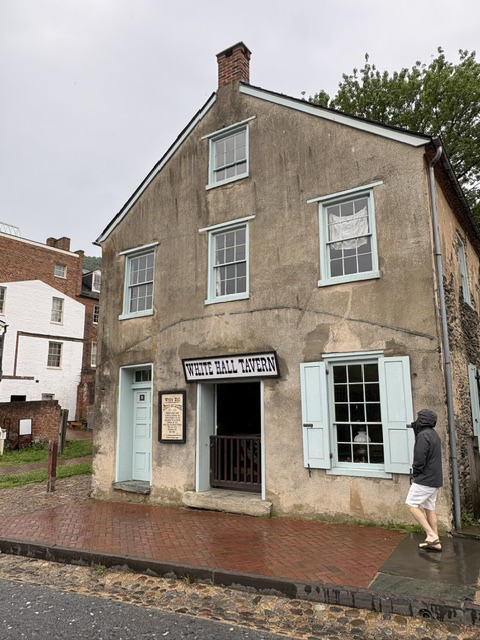
White Hall Tavern dates to the early nineteenth century and was associated with the nearby United States Armory. Rather than being a tavern in the modern sense, it functioned as a gathering place for armory workers and residents of the community. Taverns were important social centers in nineteenth-century towns, particularly in places like Harpers Ferry where workers, travelers, canal boatmen and railroad passengers regularly passed through.
The building is especially useful in understanding what life was like in the federal armory town. The establishment served food and drink, but it also provided a place where men could socialize after long days working in the armory and its associated shops. Alcohol consumption became enough of a concern that temperance efforts eventually became part of the community’s story as well.
That everyday history is important because Harpers Ferry was not created by the events of October 1859. By the time John Brown arrived, generations of families had already lived and worked here. The federal armory, established at the end of the eighteenth century, had transformed the town into an important manufacturing center. Skilled craftsmen produced firearms and experimented with new methods of manufacturing interchangeable parts.
White Hall Tavern helps preserve that quieter part of the story—the community that existed here before the events that would make Harpers Ferry known throughout the nation.
Read More From Nancy
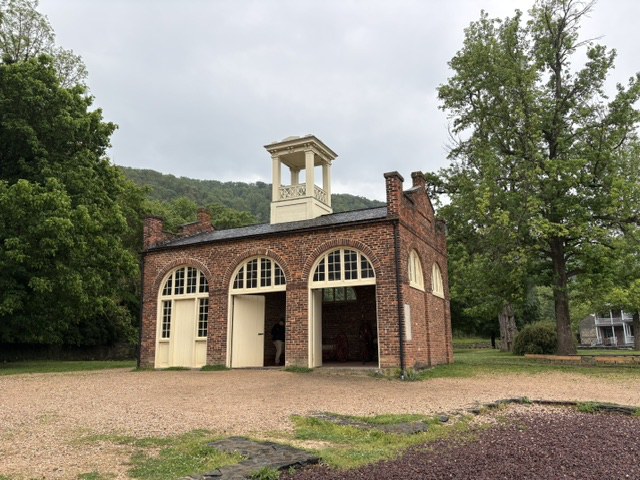
John Brown’s Fort
This small brick building is one of the most historically significant structures in Harpers Ferry. It is known today as John Brown’s Fort, although when the events that made it famous occurred, it was the fire engine and guard house for the United States Armory. On October 16, 1859, abolitionist John Brown led a group of 21 men into […]
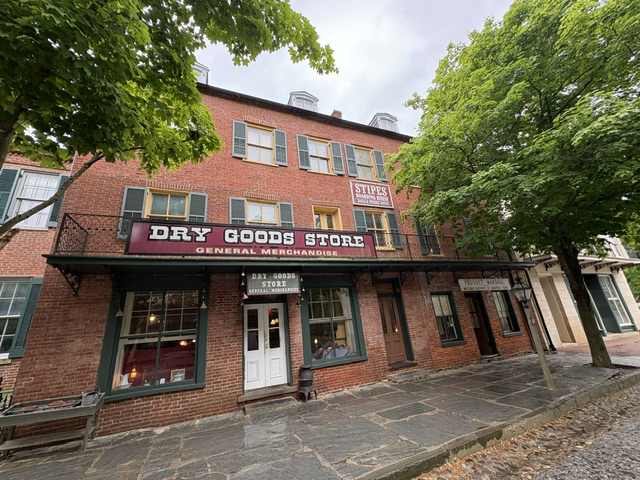
The Dry Goods Store
Walking along the streets of Lower Town Harpers Ferry, the restored Dry Goods Store offers a glimpse into something much more ordinary than the major events usually associated with the town. It gives us the experience of everyday shopping in a nineteenth-century community. A dry goods store was an important part of town life. The […]
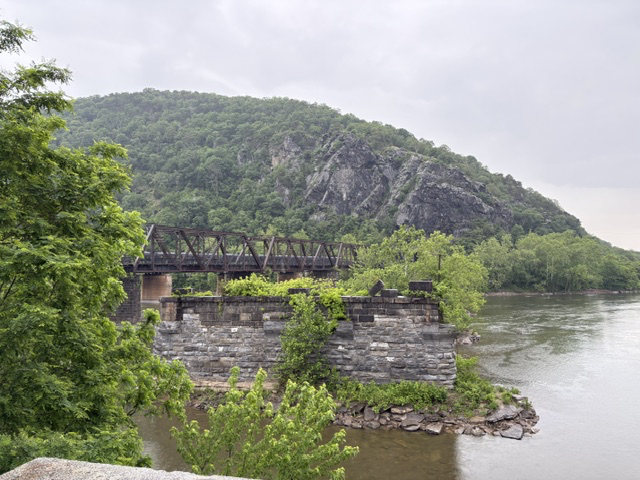
The Remains of the Railroad Bridge
These stone piers standing in the Potomac are remnants of the long transportation history that made Harpers Ferry such an important crossroads. The narrow opening through the Blue Ridge created by the Potomac provided a natural route through the mountains, and in the nineteenth century the Baltimore & Ohio Railroad used that route as it […]

