Doughboy Statue
This monument in Amesbury is a classical American “Doughboy” statue, built in honor of the local men who served during World War I. Following the war, communities across the United States erected these monuments as public expressions of remembrance, grief, patriots, and civic pride.
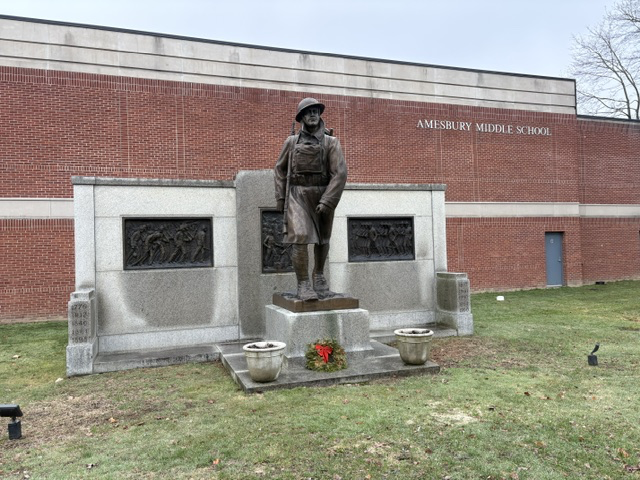
The term “Doughboy” was the common nickname given to American infantry soldiers during World War I. These statues became one of the most recognizable forms of war memorials in the early 20th century, especially throughout New England towns. The soldier is usually shown standing alert in uniform, representing the ordinary citizen-soldier who left home to fight overseas during what was then called “The Great War”.
In Amesbury, the memorial reflects how deeply the war affected even small American communities. Nearly every town lost young men during World War I, and these monuments became places where families gathered for Memorial Day ceremonies, parades and public remembrance.
These monuments are more than pieces of sculpture. They represent the hopes, fears, sacrifices, and memories of entire communities trying to honor those who never fully came home from one of the defining events of the 20th century.
Read More From Nancy
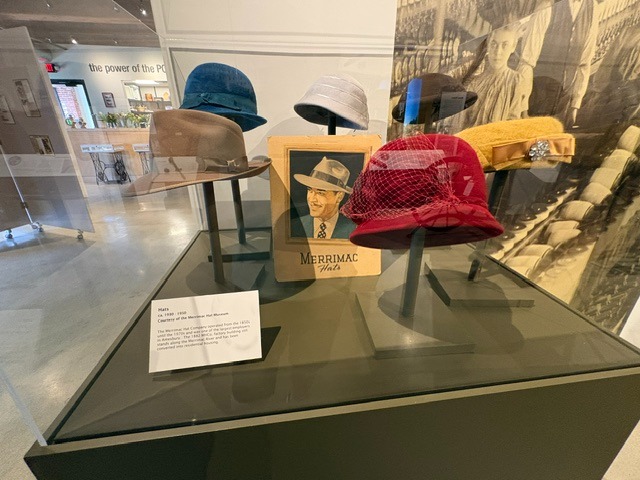
Merrimac Hats
The hats preserved at Amesbury’s Industrial History Center represent an industry that connected local factory workers with customers across the country. Dating from approximately 1930 to 1950, the display includes both men’s and women’s styles. Their varied shapes, colors and decorative details reveal the range of products associated with the Merrimac name. Established in 1856, […]
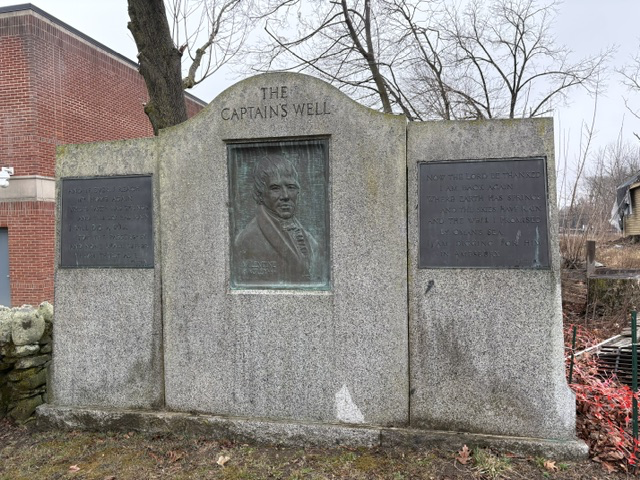
The Captain’s Well
This monument in Amesbury is known as The Captain’s Well, and it quietly preserves pat of the town’s maritime past. The restored stone wall, complete with its long wooden sweep and bucket arm, reflects a time when wells were central gathering places within a community. Before modern plumbing, places like this supplied water not only for homes, but […]
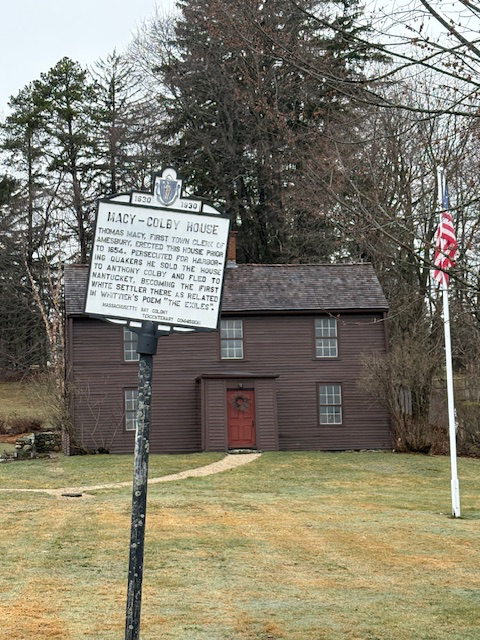
Macy-Colby House
Standing quietly along the road in Amesbury is the Macy – Colby House, one of the town’s oldest surviving homes and a reminder of the deep colonial roots woven into this New England landscape. Built in 1654 by Thomas Macy, one of the original founders of Amesbury, the house connects directly to the earliest settlement period of the […]

