John Greenleaf Whittier House
John Greenleaf Whittier was the reason I first visited Amesbury many years ago. A poet, writer, and one of the leading abolitionists of the 19th century. Whittier used both his words and public influence to speak out against slavery during one of the most divided periods in American history.
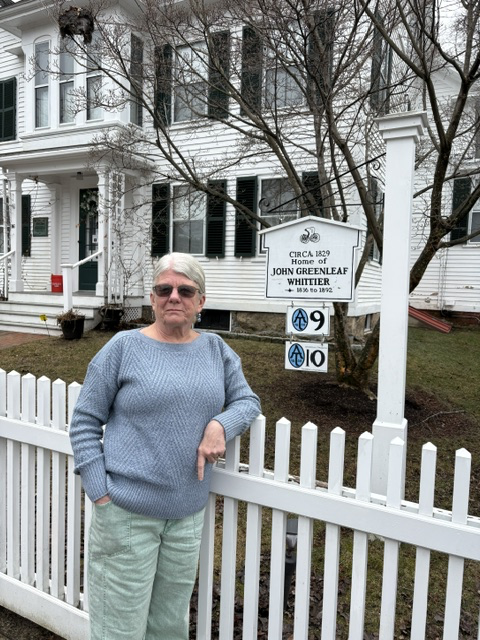
The home behind me, The John Greenleaf Whittier House, became closely associated with him during the later years of his life. Built around 1829, the house became a gathering place for admirers, writers, reformers, and ordinary visitors who wanted to meet the famous poet. In many ways, people came to see Whittier much like paparazzi follow celebrities today. His fame spread far beyond New England, and visitors regularly arrived hoping to catch a glimpse of the man whose poems and abolitionist writings had made him nationally known.
Whittier was born in nearby Haverhill in 1807 into a Quaker farming family, and much of his writing reflected the values of simplicity, faith, morality, and social justice that shaped his upbringing. Although he had only limited formal education, his talent for writing was recognized early, and he eventually became one of the most widely read poets in America. His poem, Snow-Bound, written later in life, became enormously popular and financially successful, allowing him to live comfortably after years of modest means.
But Whittier was more than a poet. He was deeply involved in the anti-slavery movement and often risked his own safety for the cause. He edited abolitionist newspapers, worked alongside reformers like William Lloyd Garrison, and faced angry mobs because of his outspoken opposition to slavery. His writing reflected themes of morality, faith, social justice and New England life. Even after the Civil War, his popularity continued to grow, and his home became a literary pilgrimage site.
Walking through Amesbury today still has that sense of a quiet New England town that inspired much of his work. It is easy to imagine visitors arriving by carriage, eager to meet the famous writer whose words had reached across the country during one of America’s most turbulent times.
Read More From Nancy
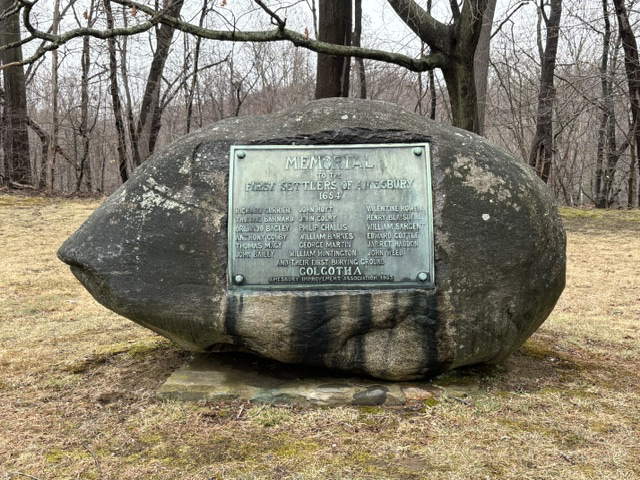
First Settlers Memorial
One of the things I enjoy most while exploring small towns is discovering the smaller memorials that quietly preserve the memory of the people that first settled these communities. This monument in Amesbury honors the first settlers of Amsbury in 1654, listing many of the families who helped establish the town during the early colonial period. What […]
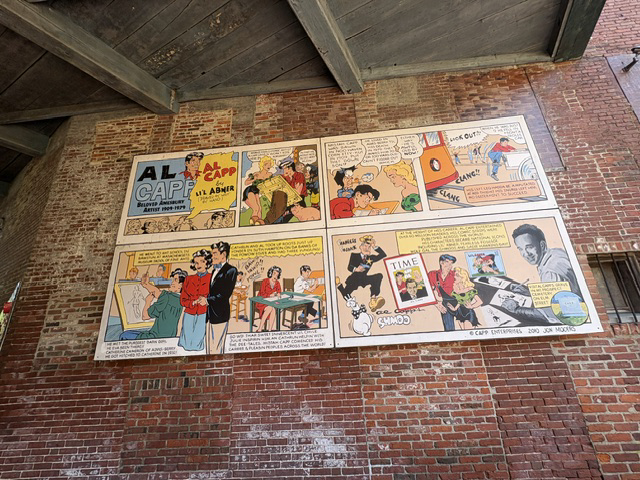
Al Capp and Li’l Abner
Walking through the old mill area in downtown Amesbury, I came across this enormous comic strip painted directly onto the brick wall beneath the archway. It honors cartoonist Al Capp and the remarkable career he built while making Amesbury his home. Al Capp was born Alfred Gerald Caplin in New Haven, Connecticut, in 1909. He […]
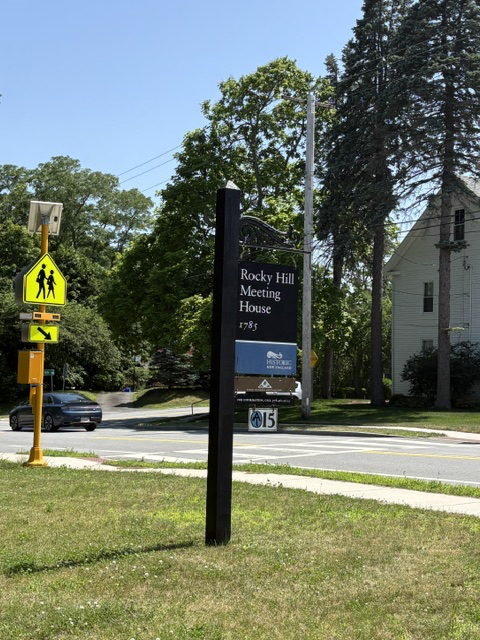
Rocky Hill Meeting House
Driving through Amesbury, it would be easy to pass the Rocky Hill Meeting House without realizing how special it is. Standing on a rise above the road, this simple white building has been part of the landscape since the eighteenth century and remains one of the best-preserved early meeting houses in New England. Built in […]

