Captain Bagley House
The Currier-Bagley-Huntington House is one of the oldest surviving structures connected to Amesbury’s early maritime and colonial history. Though now weathered and in disrepair, the house still carries the appearance of an early New England home that evolved over generations as families added rooms and altered the structure over time.
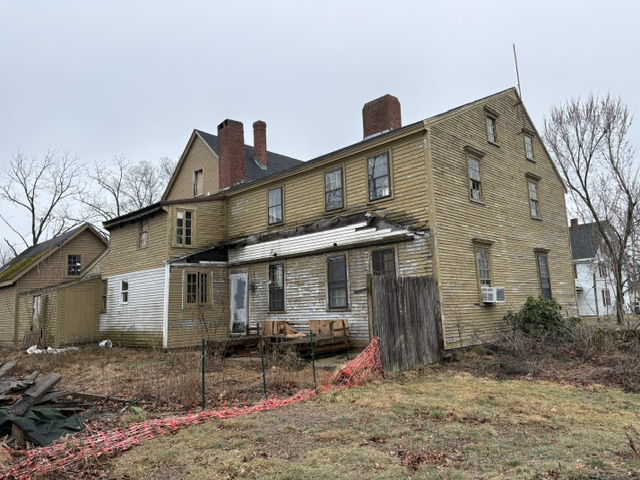
The house is closely tied to Captain Valentine Bagley, the sea captain associated with the nearby well. Bagley represented the type of New England mariner who helped shape the economy, and identity of coastal towns during the later 1700s and early 1800s. Men like him spent long periods at sea involved in trade, navigation, and shipping while their families-maintained life at home in these small communities. Though not nationally famous, local captains like Bagley were deeply respected figures whose work connected towns such as Amesbury to the wider world.
One detail of Bagley’s life is that he dug the nearby well in 1796, creating something for the town that survived long after his voyages ended. Generations later, John Greenleaf Whittier would immortalize the well in his writing, transforming an everyday place of town life into part of Amesbury’s literary and historical identity. In many ways, the survival of the well-preserved Bagley’s memory more than the house itself
Looking at the aging structure today, it seems that this house has not been chosen to be fully preserved. Time and neglect seem to be slowly overtaking it. Some landmarks become carefully restored museums, while others quietly deteriorate. Standing outside this house, you realize how fragile local history can be and even buildings connected to important stories can slowly disappear.
Read More From Nancy
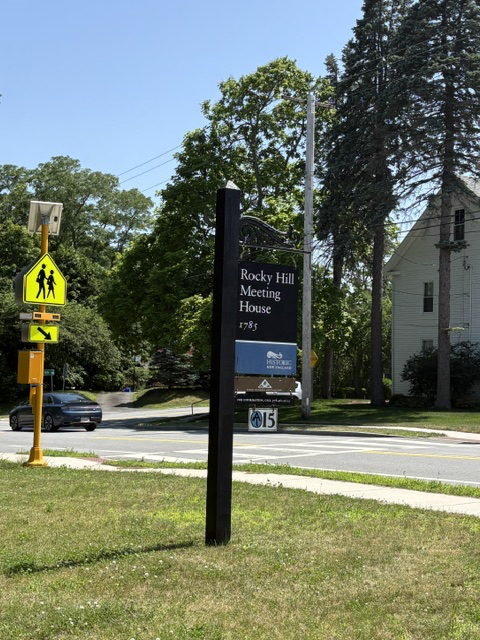
Rocky Hill Meeting House
Driving through Amesbury, it would be easy to pass the Rocky Hill Meeting House without realizing how special it is. Standing on a rise above the road, this simple white building has been part of the landscape since the eighteenth century and remains one of the best-preserved early meeting houses in New England. Built in […]
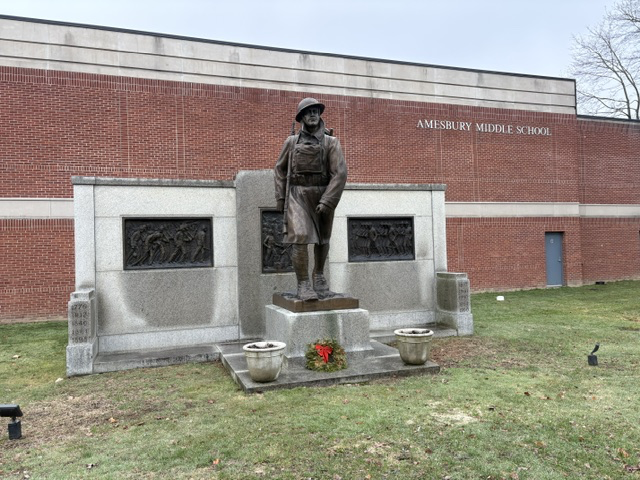
Doughboy Statue
This monument in Amesbury is a classical American “Doughboy” statue, built in honor of the local men who served during World War I. Following the war, communities across the United States erected these monuments as public expressions of remembrance, grief, patriots, and civic pride. The term “Doughboy” was the common nickname given to American infantry soldiers during World War […]
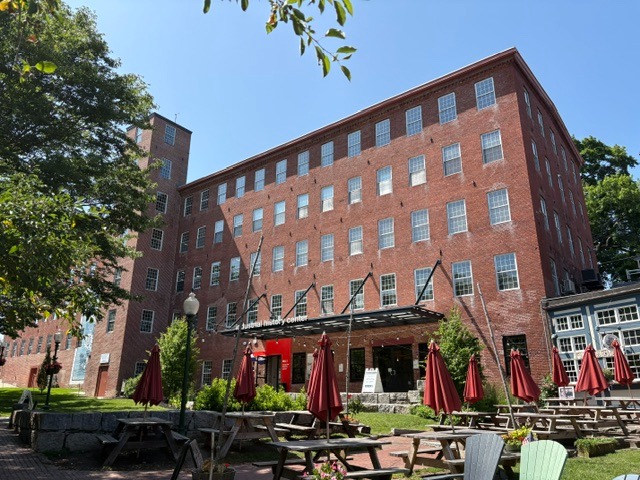
Mill 2
Mill 2 in Amesbury’s Upper Millyard preserves nearly two centuries of changing industry. Begun in 1825 and completed in 1827, the substantial brick building first housed textile manufacturing. Later occupants produced automobile bodies, sold hardware and interpreted the community’s industrial history. Its successive uses trace the changing work of a New England manufacturing town. The […]

