The Mayflower
Standing along the Plymouth waterfront, Mayflower II immediately connects the town to the story that has defined it for more than four centuries. The ship behind us is not the original Mayflower, but a full-scale reproduction built in England and sailed across the Atlantic in 1957 as a symbol of friendship between the United States and Great Britain.
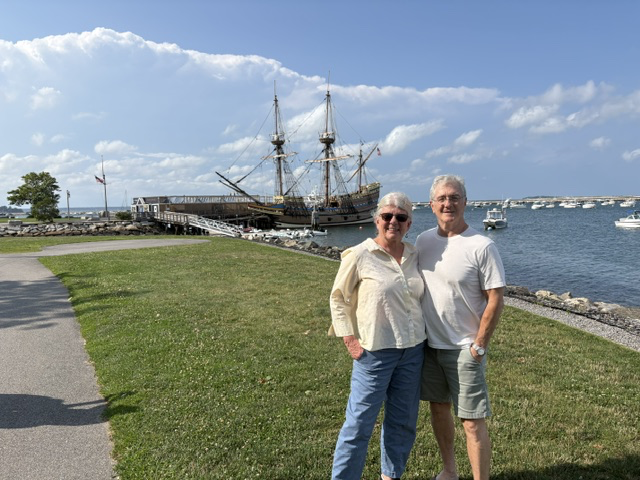
The original Mayflower arrived off the coast of what is now Massachusetts in November 1620 carrying 102 passengers. After first anchoring at Cape Cod and exploring the region, the passengers eventually crossed Cape Cod Bay and established their settlement at Plymouth. Their first winter was devastating, with nearly half of the passengers dying from disease, exposure, and inadequate food. Those who survived built a community whose story became inseparable from the history of Plymouth and from the much larger and more complicated story of European settlement in New England and its consequences for the Indigenous peoples who had lived here for thousands of years.
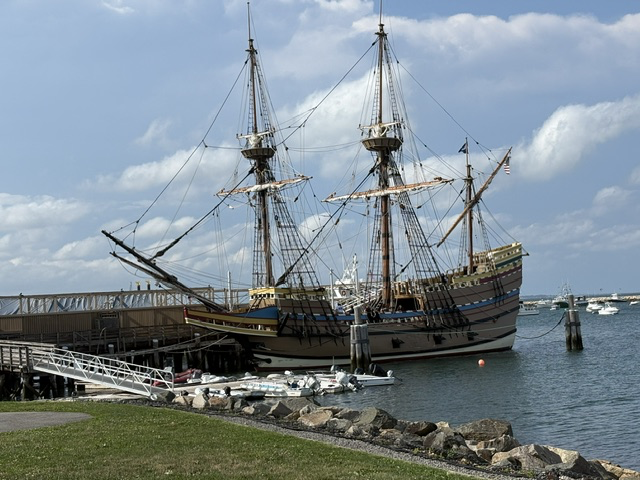
Mayflower II helps make that history tangible. At just over 100 feet long, the ship gives us some sense of how confined the Atlantic crossing must have been for the passengers who spent more than two months at sea. Walking its decks, it is difficult not to imagine what it meant to leave behind everything familiar and cross an ocean without knowing exactly where the journey would end.
Today, Mayflower II remains one of the most recognizable sights on the Plymouth waterfront. Carefully preserved as a living-history vessel, it allows each generation to step aboard and experience something that photographs, books, and monuments cannot quite convey: the physical reality of the ship itself. Its size, its wooden decks, the cramped spaces below, and its position beside Plymouth Harbor give us a more immediate understanding of the remarkable Atlantic voyage that brought the Mayflower to these shores in 1620.
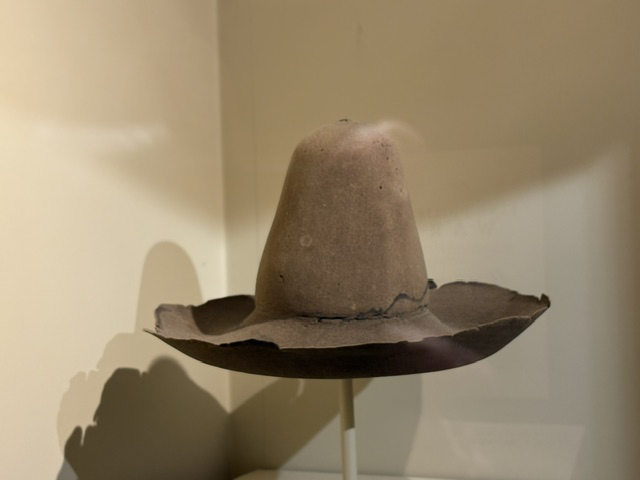
Read More From Nancy
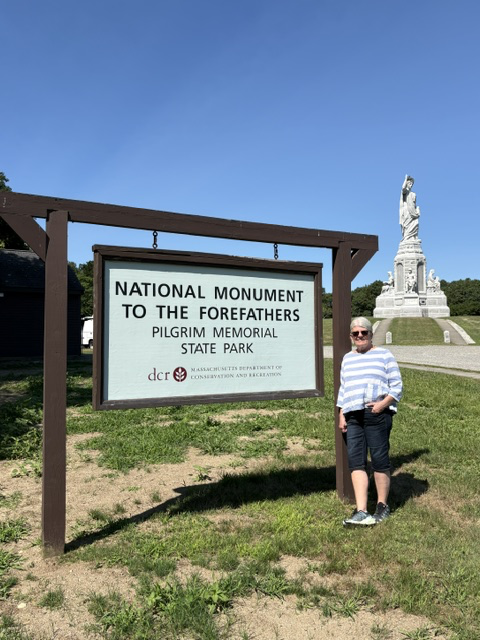
National Monument to the Forefathers
We have visited Plymouth many times over the years, so I am still amazed that it took us this long to discover the National Monument to the Forefathers. When we finally visited this year, I found it almost mind-blowing. Rising more than 80 feet above us, the monument is enormous, intricately sculpted, and filled with […]
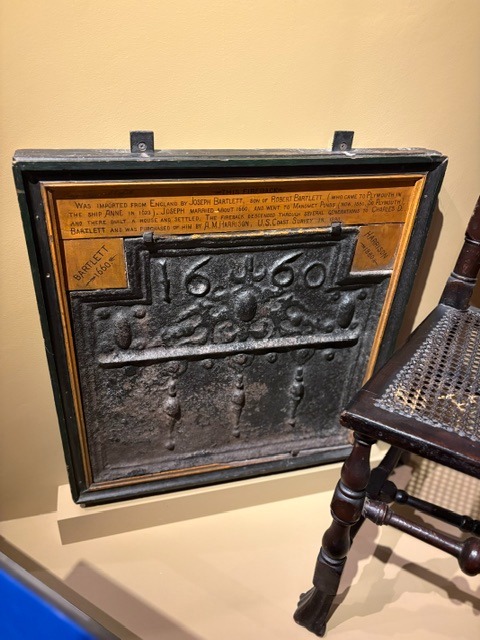
The Bartlett Fireback
Dated 1660, the Bartlett fireback at Pilgrim Hall Museum preserves a substantial piece of an early Plymouth household. Its raised decoration and prominent numerals made it both a useful fireplace fitting and an ornament within the home. A fireback stood against the rear wall of a fireplace, protecting the masonry from direct heat and reflecting […]
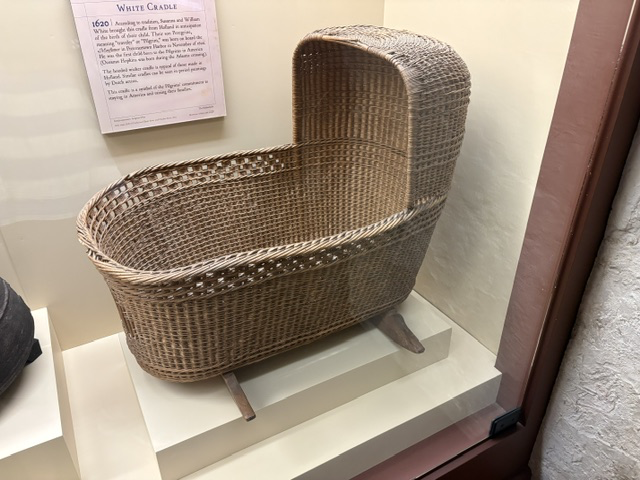
The White Cradle
Among the objects we encountered while exploring Plymouth was this simple wicker cradle. According to tradition, it belonged to Susanna and William White and was brought with them from Holland when they sailed aboard the Mayflower in 1620. Susanna White was pregnant during the Atlantic crossing. The Mayflower left Plymouth, England, in September with more […]

