Clerk and Attorney’s Table
Directly in front of the justices’ bench in Plymouth’s 1749 Court House sits the clerk and attorneys’ table. Its position at the center of the courtroom reflects the important work that took place here as each case moved through the colonial court.
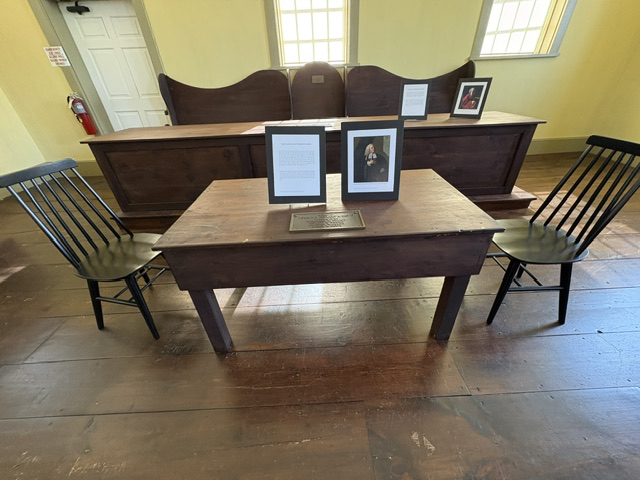
The court clerk was responsible for creating the official written record of the proceedings. He recorded cases, pleas, judgments, fines, and other actions taken by the court and maintained the documents that allowed decisions made in this room to become part of the permanent legal record. In an era when every entry was written by hand, careful recordkeeping was essential.
The attorneys also worked from this area, presenting their arguments and questioning those who appeared before the court. Colonial courtrooms were less formalized than the courtrooms we know today, and not every person appearing before the justices would have been represented by a lawyer. Over time, however, attorneys became an increasingly familiar part of courtroom proceedings.
What I find interesting about this simple table is its location. Sitting here, an attorney would face the justices only a few feet away. The prisoner’s dock, sheriff’s box, court crier, and spectators were all nearby. There was little physical distance between the people deciding a case and those whose lives were being affected by those decisions.
Looking at the courtroom from this position helps bring all of its individual pieces together. The large justice’s bench dominates the room, but much of the everyday work of the court happened at this much simpler table: arguments presented, decisions recorded, papers prepared, and another day of justice in colonial Plymouth preserved in writing.
Read More From Nancy
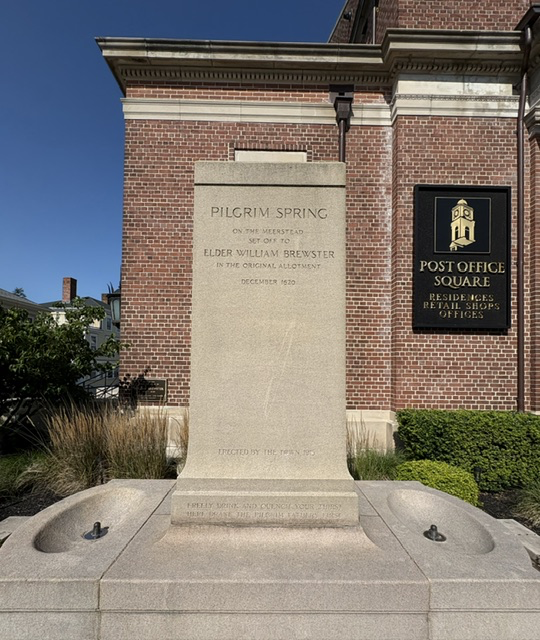
Pilgrim Spring
This monument in Plymouth marks Pilgrim Spring, identified on the stone as being “on the same land set off to Elder William Brewster in the original allotment, December 1620”. For the newly arrived Mayflower passengers, finding a dependable source of fresh water was essential. After weeks aboard ship and their explorations of Cape Cod, the […]
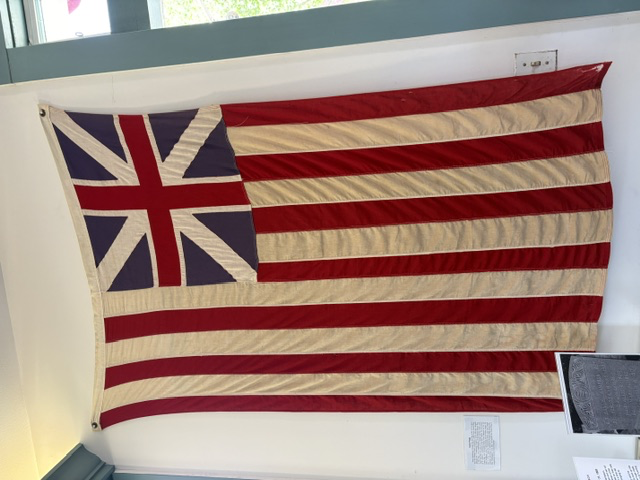
The Grand Union Flag
While exploring Plymouth’s 1749 Courthouse, I came across this flag. At first glance it seems almost contradictory: thirteen red and white stripes like an early American flag, but with the British Union flag occupying the canton. That contradiction is exactly what makes the Grand Union Flag so important. The thirteen stripes represented the thirteen American […]
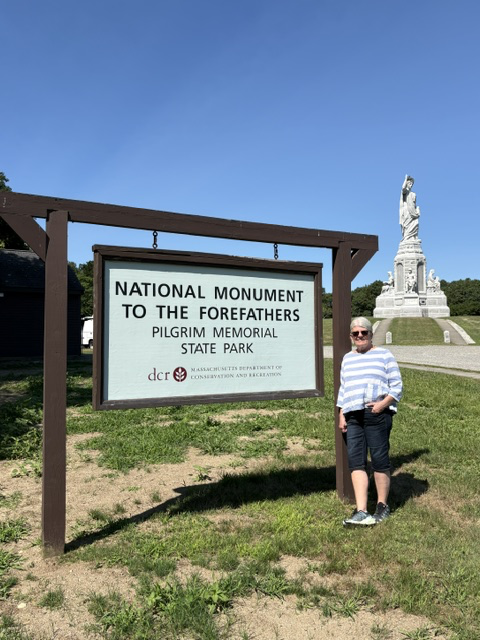
National Monument to the Forefathers
We have visited Plymouth many times over the years, so I am still amazed that it took us this long to discover the National Monument to the Forefathers. When we finally visited this year, I found it almost mind-blowing. Rising more than 80 feet above us, the monument is enormous, intricately sculpted, and filled with […]

