The Jury Box
The jury box in Plymouth’s 1749 Court House gives us another glimpse into how justice was administered in colonial Massachusetts. Enclosed by a wooden railing and positioned directly before the justices, this was where local citizens sat to listen to testimony, consider the evidence, and reach a verdict.
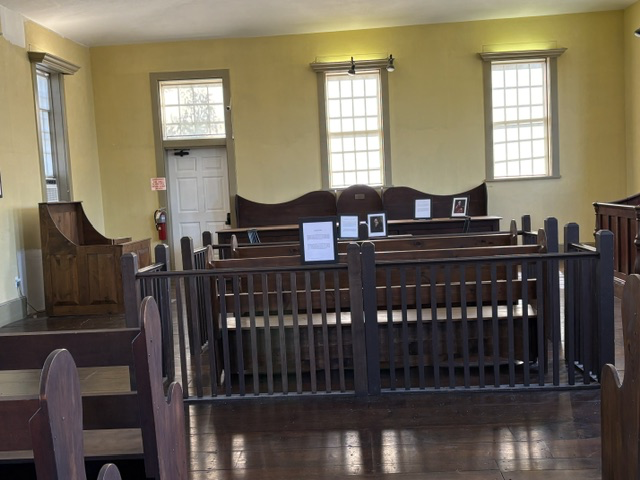
Serving on a jury was considered an important civic responsibility. As the exhibit explains, each town in Plymouth County was required to provide potential jurors for service. Two sheriffs were responsible for preparing the lists of prospective jurors, and the names were then drawn randomly from a container called a jury box, the origin of the term we still use today.
Jury service could also be inconvenient. Jurors sometimes had to travel considerable distances to Plymouth and remain for several days while the court was in session. The exhibit notes that some jurors were excused because of age, illness, or other circumstances, while those who failed to appear without an acceptable reason could be fined.
What I particularly like about seeing the entire courtroom is how clearly its arrangement explains the judicial process. From these benches, jurors could see the justices directly ahead of them and hear the testimony and arguments presented nearby. The accused stood in the prisoner’s dock, the sheriff-maintained order, attorneys presented their cases, and the clerk recorded what occurred.
More than 275 years later, the concept represented by these simple wooden benches remains remarkably familiar. Ordinary citizens were being asked to listen to the evidence and participate directly in the administration of justice. The courtroom looks very different from one we would enter today, but the idea of judgment by a jury of fellow citizens has endured.
Read More From Nancy
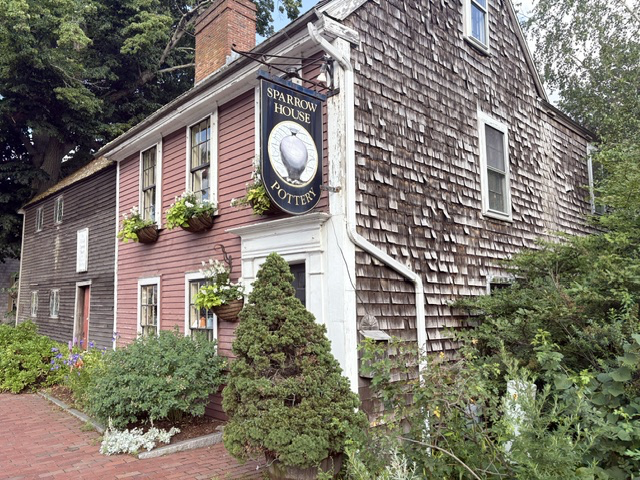
Richard Sparrow House
Tucked along a quiet street in Plymouth is the Richard Sparrow House, a wonderful reminder that some of the town’s history survives not in grand monuments but in the homes where ordinary families lived. Built around 1640, it is considered the oldest surviving house in Plymouth and one of the oldest wooden buildings in Massachusetts. […]
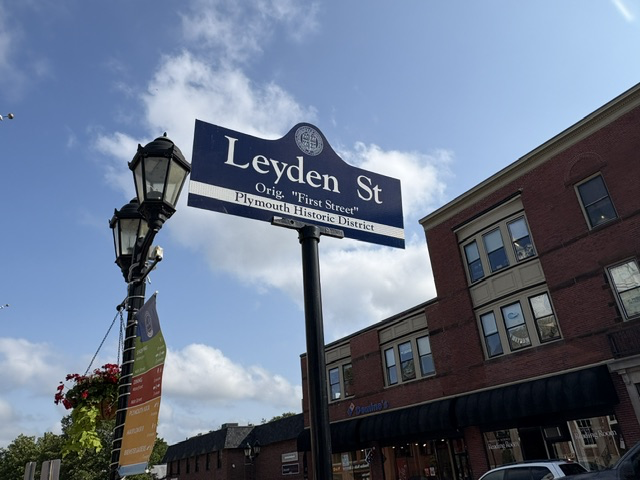
Leyden Street
Leyden Street is easy to overlook among Plymouth’s better-known landmarks. It is not lined with houses preserved from 1620, nor does it resemble a reconstructed colonial village. Modern businesses, homes, vehicles, and signs now occupy the street. Its importance lies beneath those later changes: the route itself follows the first street laid out by the […]
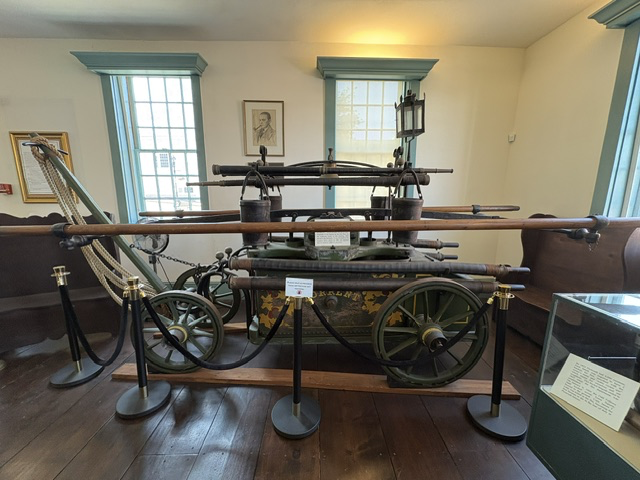
Torrent No. 4
Inside Plymouth’s historic courthouse, we found another remarkable piece of the town’s everyday history: Torrent No. 4, a hand-drawn suction fire engine built in Boston by Stephen Thayer in 1828. Long before motorized fire trucks and modern hydrants, equipment like this represented some of the best technology available to a community trying to protect its […]

