Richard Sparrow House
Tucked along a quiet street in Plymouth is the Richard Sparrow House, a wonderful reminder that some of the town’s history survives not in grand monuments but in the homes where ordinary families lived. Built around 1640, it is considered the oldest surviving house in Plymouth and one of the oldest wooden buildings in Massachusetts.
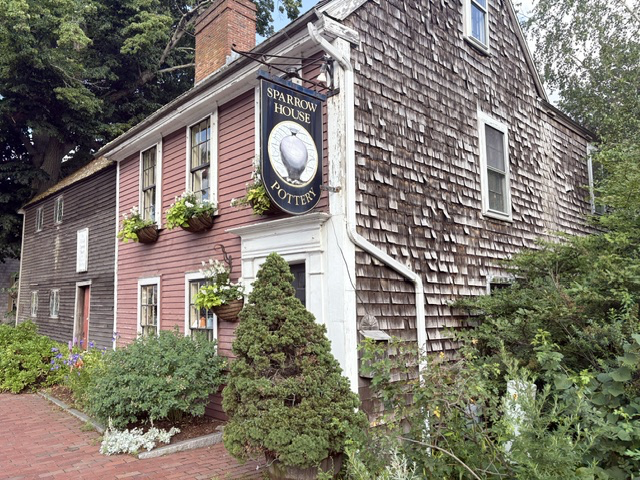
The house was built for Richard Sparrow, an English immigrant who arrived in Plymouth Colony with his family in the 1630s. Sparrow was a surveyor and played a role in laying out property boundaries and roads as the colony expanded. His house originally consisted of a much smaller structure than we see today, reflecting the relatively simple homes constructed by Plymouth’s early settlers. Later owners enlarged it as their needs and fortunes changed.
What makes the Sparrow House particularly interesting is its date. By 1640, the dramatic story of the Mayflower’s arrival was already twenty years in the past. Plymouth was becoming an established community. Families were building more permanent homes, cultivating land, raising children, conducting businesses, and creating the roads and property divisions that would shape the growing town. The Sparrow House allows us to move beyond the story of arrival and see what came next.
Today the house has found another life as the Sparrow House Pottery and gallery. Its weathered shingles, uneven lines, small windows, and low proportions still give it the unmistakable appearance of an early New England building, while artists and craftspeople continue to use the space.
Read More From Nancy
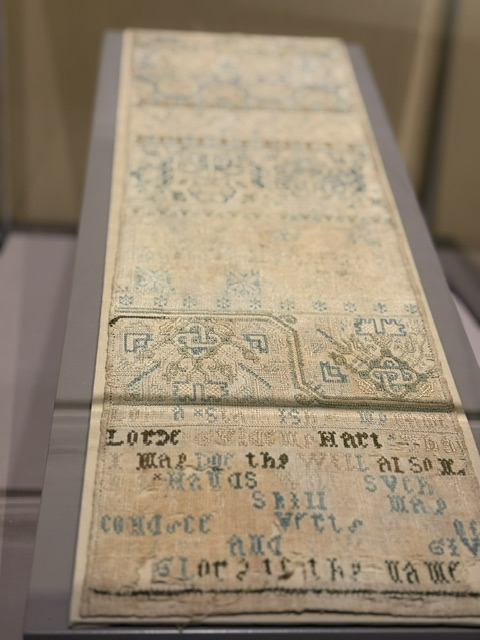
The Standish Sampler – 1653
This is a remarkable survival from the earliest years of colonial New England. Made around 1653 by Loara Standish, the teenage daughter of Mayflower passenger Captain Myles Standish, it is considered the earliest surviving sampler embroidered in America. Loara grew up in Duxbury, Massachusetts, where the Standish family settled after the establishment of Plymouth Colony. […]
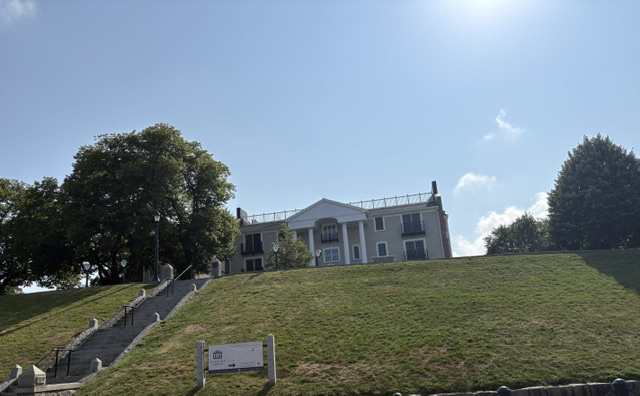
Cole’s Hill
Rising steeply above Plymouth’s waterfront, Cole’s Hill was the colony’s first burial ground. During the devastating winter of 1620–1621, nearly half of the Mayflower’s passengers died from disease, exposure, and the effects of their difficult voyage. Many were buried here in graves overlooking the harbor where their ship remained anchored. According to tradition, the settlers […]
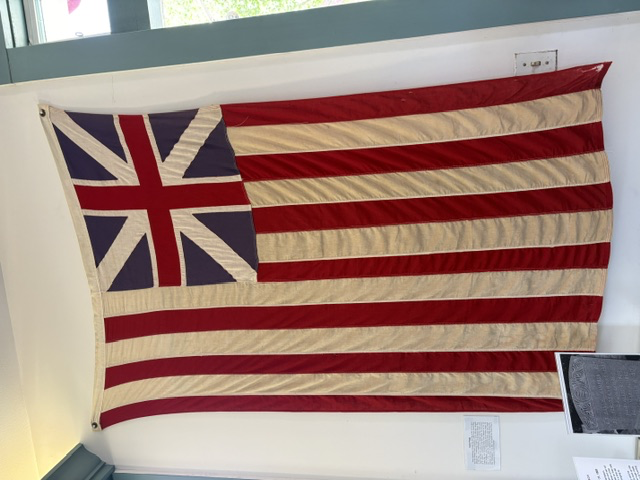
The Grand Union Flag
While exploring Plymouth’s 1749 Courthouse, I came across this flag. At first glance it seems almost contradictory: thirteen red and white stripes like an early American flag, but with the British Union flag occupying the canton. That contradiction is exactly what makes the Grand Union Flag so important. The thirteen stripes represented the thirteen American […]

