The Paul Revere House
Many of our visits to Boston lead us along the Freedom Trail, even if we follow only a small portion of it. As we meandered through the North End, we returned to the Paul Revere House in North Square. Its wooden exterior, overhanging second story, and diamond-paned windows stand apart from the taller buildings surrounding it. Returning to this familiar landmark offered another opportunity to consider the family life, craftsmanship, and revolutionary activity associated with the house.
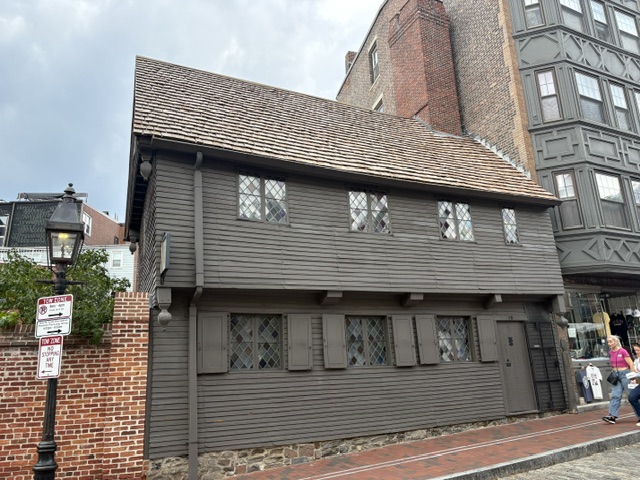
Built around 1680, the Paul Revere House is the oldest surviving residence in downtown Boston. Its history began almost a century before Revere purchased it. The first owner was Robert Howard, a wealthy merchant, and the dwelling originally reflected the means of a prosperous household in a growing colonial seaport. By Revere’s time, it was a more modest home compared with the grander residences of Boston’s wealthiest citizens.
Revere bought the house in 1770 and moved there with his wife Sarah, their children, and his mother Deborah. The North End was a neighborhood of artisans, merchants, and waterfront businesses, placing him close to his work as a silversmith. The house helps bring him into view as a working craftsman and family man, alongside the patriot remembered for his nighttime ride.
Family life here included both growth and loss. Sarah died in 1773 following the birth of her eighth child. Later that year, Revere married Rachel Walker, who helped raise the surviving children from his first marriage and had eight children with him. Sixteen children were born across his two marriages, though they did not all live in the house together, and several died young. Behind the familiar historical name was a household shaped by responsibilities and grief as well as the uncertainty of the Revolutionary era.
Revere retained ownership of the North Square house until 1800, although his family lived elsewhere during part of that time. After its sale, the building became a boarding house for sailors and later a tenement accommodating immigrant families. Its ground floor was adapted for shops and businesses. These changes made the house part of the North End’s continuing history, serving successive generations as the neighborhood developed around it.
By the early twentieth century, the building’s survival was uncertain. Revere’s great-grandson, John P. Reynolds Jr., purchased it in 1902 to protect it from demolition. The Paul Revere Memorial Association organized the preservation effort, and architect Joseph Everett Chandler directed its restoration in 1907–1908. The house opened to the public on April 18, 1908, becoming one of the earliest historic house museums in the United States.
The restoration removed some later alterations to recover aspects of the house’s seventeenth-century appearance. Consequently, the building does not represent precisely how it looked during Revere’s occupancy. Its architecture and furnished rooms interpret different chapters of its history, allowing visitors to consider both the earlier merchant’s residence and the home associated with the Revere family.
For us, returning to the house offered a closer connection to the person behind the familiar name. Here, Revere’s life can be considered through the rooms his family occupied, the trade that supported them, and the neighborhood in which they lived.
Read More From Nancy
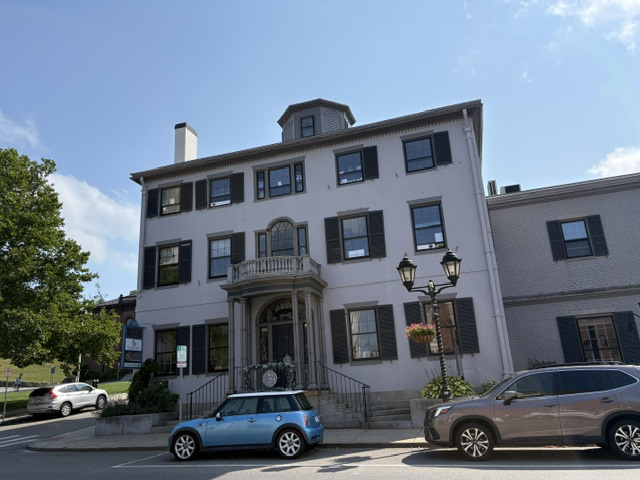
The Bartlett–Russell–Hedge House
Standing prominently on Court Street, the Bartlett–Russell–Hedge House is one of Plymouth’s finest examples of Federal-style architecture. Its symmetrical façade, Palladian window, entrance balcony, and rooftop cupola distinguish it from the surrounding commercial buildings. The house was constructed in 1803 for Joseph Bartlett, a Plymouth Sea captain. Its design has been attributed to Charles Bulfinch, […]
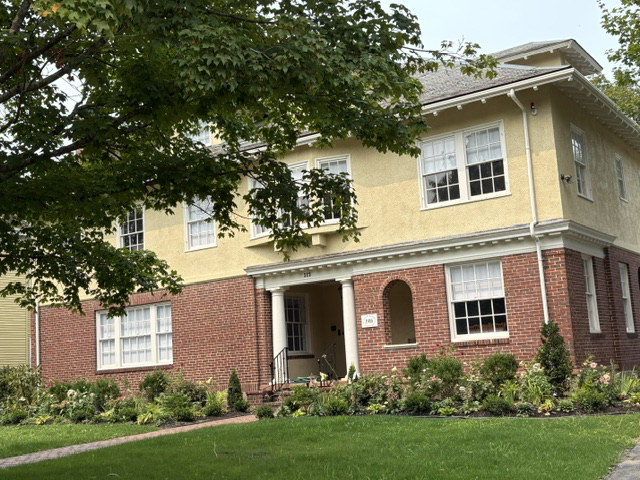
The Stanwood House
Standing at 323 Washington Street in Wellesley Hills, the Stanwood House has been part of this neighborhood for more than a century. Today it is the home of the Wellesley Historical Society and the Wellesley History & Exhibit Center, but the building began as both the family home and medical office of one of Wellesley’s longtime physicians. […]
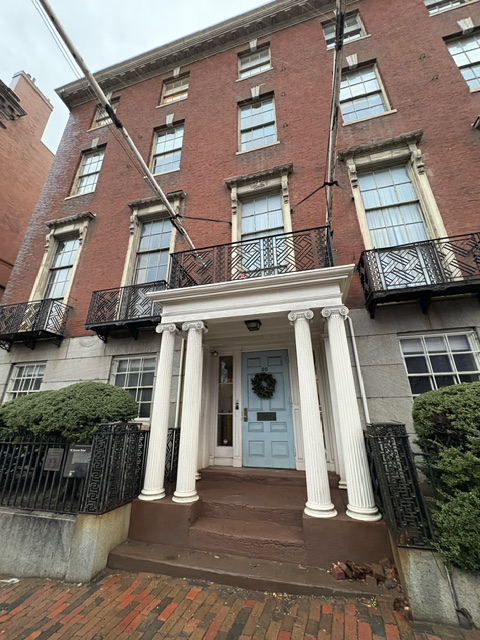
The Third Harrison Gray Otis House
When I came across this house at 45 Beacon Street, I recognized the Otis name because I had already visited the Harrison Gray Otis House near Massachusetts General Hospital. What I didn’t realize was that the Cambridge Street house was only the beginning of the family’s story. Harrison Gray Otis eventually built three Boston houses, […]

