Boston National Historical Park
Standing here in front of Faneuil Hall, you feel both the energy of the present and the weight of the past at the same time.
Built in 1742 as a marketplace and meeting hall, it quickly became something more. This is where the people of Boston gathered to speak openly about their future, and where some of the most influential voices of the American Revolution were heard. Samuel Adams spoke here, rallying support for resistance. James Otis argued against British policies. Meetings held in this hall helped organize opposition to the Stamp Act and later the Tea Act, shaping the course of events that would lead to independence.
That is how it came to be known as the “Cradle of Liberty”.
Today, the setting feels very different. The crowds move through the marketplace, vendors line the walkway, and the rhythm of the city surrounds you. The purpose of the space hasn’t really changed it is still a place where people come together.
What connects it all is the effort to preserve that history. The Boston National Historical Park, established in 1974 by Congress and signed into law by President Gerald Ford, brought sites like this to ensure that these stories would remain part of the city, not just remembered, but experienced.
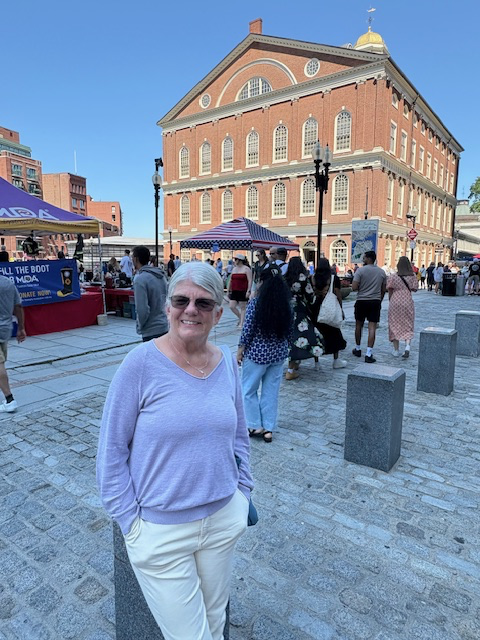
Standing here is not just about the building, it’s about the continuity. A place that has remained relevant, preserved and never stopped being used as a marketplace, a meeting place and a place where voices once helped shape a nation, and where people still gather today.
Read More From Nancy
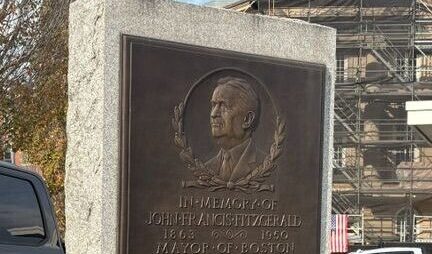
John Francis “Honey Fitz” Fitzgerald
Near St. Stephen’s Church in Boston’s North End, a bronze portrait set into a granite memorial honors John Francis Fitzgerald, remembered as “Honey Fitz”. His name connects the neighborhood with Boston’s political history and the Kennedy family, but his own story began here long before his grandson became president. Born in the North End in […]
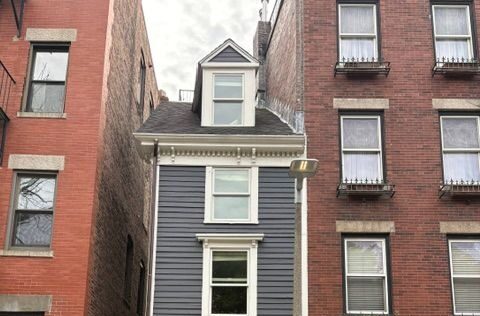
The Skinny House
Across from Copp’s Hill Burying Ground, a remarkably narrow wooden house stands among the larger brick buildings of Boston’s North End. At 44 Hull Street, the Skinny House rises four stories while measuring only about ten feet across its street-facing exterior. Its entrance is tucked into the alley beside it, allowing the slender front to […]
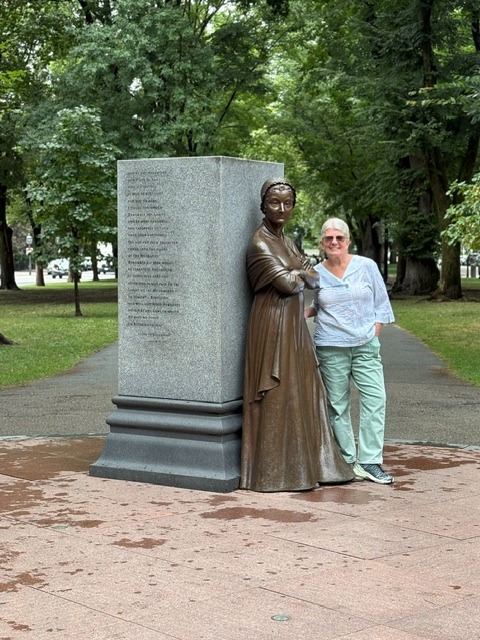
Abigail Adams: Wife of a President, Mother of Another
On Boston’s Commonwealth Avenue Mall, Abigail Adams stands beside a granite pedestal, her arms folded and her expression resolute. Part of the Boston Women’s Memorial, her figure honors a woman whose life connected the American Revolution with two generations of presidential leadership. She was the wife of John Adams, the second president of the United […]

