Union Oyster House
Walking along the Freedom Trail in Boston, it is easy to miss the plaque outside the Union Oyster House. But if you pass it by, you are missing not only a good meal, but an extraordinary chapter in American history.
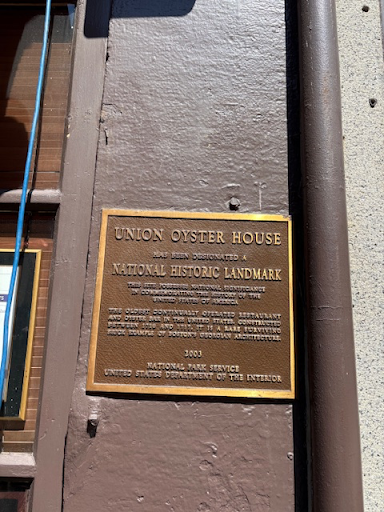
The Union Oyster House is the oldest continuously operating restaurant in the United States, serving diners since 1826. But the building itself reaches even deeper into Boston’s past. In the years leading up to the American Revolution, the building housed the shop of Ebenezer Hancock, the brother of John Hancock. It is here that local patriots exchanged news as tensions grew with Britain. Members of the Sons of Liberty frequented this area and the walls of the Oyster House witnessed the revolutionary spirit that shaped the city.
When the Union Oyster House opened as a restaurant in 1826, it helped popularize the American oyster bar. Fresh oysters are still served on the wooden counter that still stands today.
Over the centuries, countless public figures have passed through the doors of the Oyster House. John F. Kennedy, as a senator, would slip upstairs to a booth that is now known as the “Kennedy Booth.”
Today, the Union Oyster House is a living piece of the Freedom Trail and a place that holds nearly 300 years of stories.

Read More From Nancy
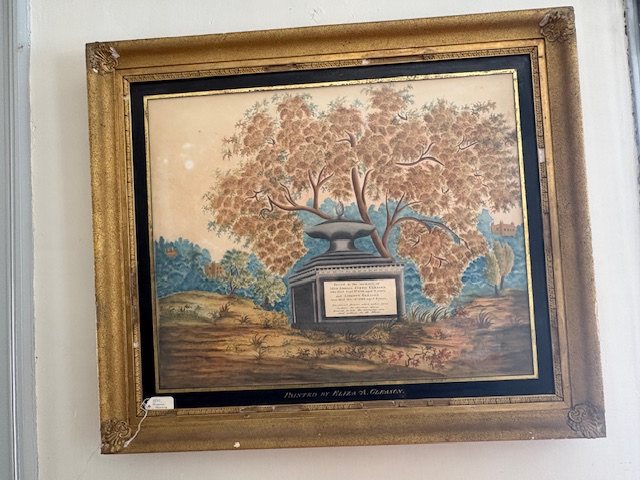
Mourning Painting
One of the unexpected discoveries during our visit to the Dedham Museum was this small watercolor known as a mourning painting. At first glance, it appears to be a peaceful landscape—a willow tree shading a funerary urn and memorial tablet. Looking more closely, however, it becomes a deeply personal expression of love and loss. The […]
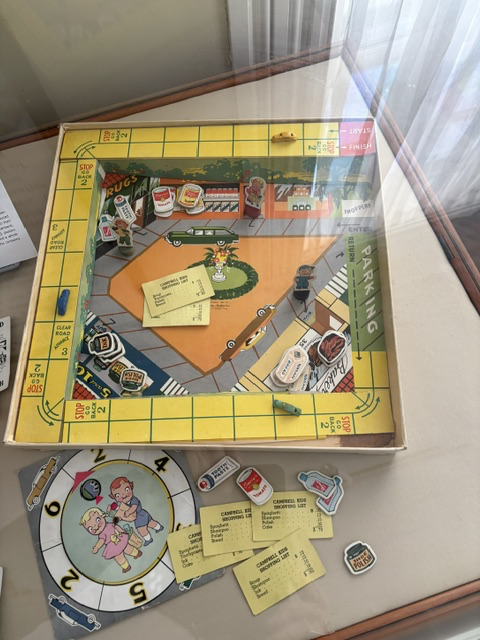
The Campbell Kids Shopping Game
One of the things I enjoy most about visiting local history museums is discovering artifacts that tell the story of everyday life. Community museums often preserve the objects that filled ordinary homes. This 1955 Campbell Kids Shopping Game is one of those treasures. Produced by Parker Brothers in partnership with the Campbell Soup Company, the […]
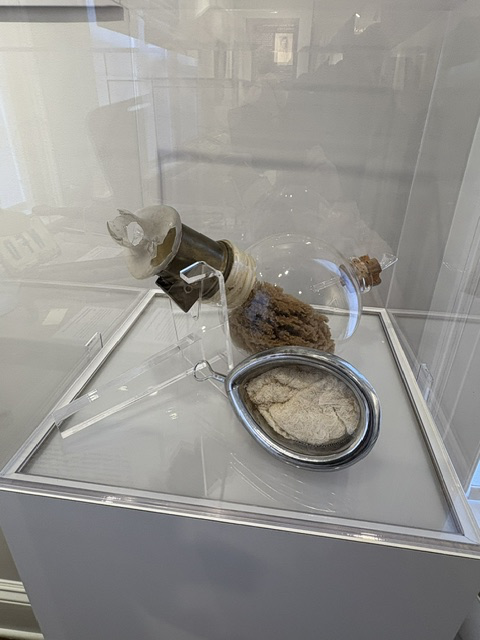
William T. G. Morton and the Ether Mask
This exhibit at the Wellesley Historical Society tells a surprisingly important story in the history of medicine and connects that story directly to Wellesley. Dr. William T. G. Morton was a dentist who became one of the central figures in the introduction of ether anesthesia. Born in 1819, Morton studied dentistry and eventually established a […]

