Surgery Before Anesthesia
Among the small historical displays in Massachusetts General Hospital’s Bulfinch Building, this one caught my attention because it asks us to imagine something that is almost incomprehensible today: undergoing surgery while fully conscious and able to feel what was happening.
Before reliable surgical anesthesia became available in the nineteenth century, physicians had surprisingly few ways to control pain. For centuries, different cultures experimented with alcohol, opium, cannabis, mandrake and other plant preparations. Some physicians tried hypnosis or other methods of altering consciousness. These might dull pain or calm a patient, but their effects were unpredictable, and doses strong enough to produce unconsciousness could themselves be dangerous or fatal.
For many patients, therefore, surgery meant being awake. Assistants might physically restrain the patient while the surgeon operated. The patient’s fear and suffering were not incidental problems. They fundamentally determined what surgery could be.
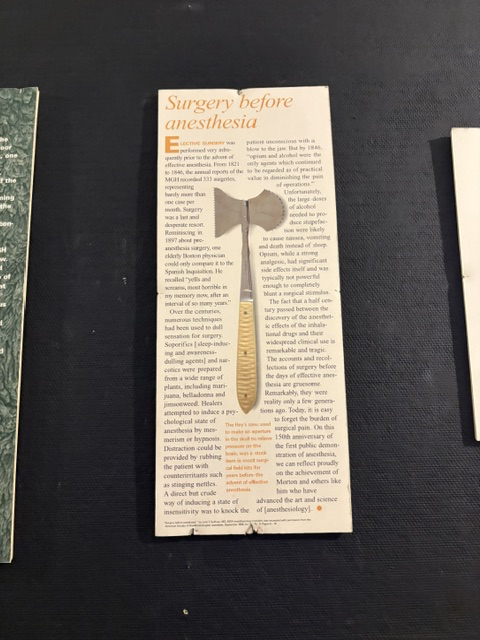
As the display explains, one of the most important qualities of a skilled surgeon was speed. A surgeon who could amputate a limb in a matter of seconds reduced the length of time the patient had to endure the procedure and also limited blood loss. British surgeon Robert Liston became famous for performing amputations extraordinarily quickly; accounts describe major amputations completed in well under a minute.
But the consequences went far beyond pain. Without the ability to keep a patient safely unconscious and still for an extended period, surgeons were severely restricted in what they could attempt. Operations inside the abdomen, chest and skull were generally avoided. Surgery was dominated by procedures that could be completed quickly: amputations, removal of superficial tumors, treatment of wounds and other relatively accessible operations. Historical research indicates that before ether anesthesia was demonstrated in 1846, Massachusetts General Hospital averaged only about one major operation a week.
The emotional consequences must also have been enormous. Patients sometimes delayed operations because they feared the procedure as much as the disease itself. Surgeons, too, had to work while conscious patients screamed, struggled and suffered directly in front of them. Surgery demanded not only technical skill but an ability to continue operating despite the suffering taking place on the table.
That is what makes this little display in the Bulfinch Building so powerful. We know what eventually happened within these same historic walls: the successful public demonstration of ether anesthesia at Massachusetts General Hospital in 1846
Anesthesia did more than take away pain. It changed what surgery could become. Once surgeons had time to operate carefully on an unconscious patient, increasingly complex procedures became possible. One of the foundations of modern surgery had been established.
Read More From Nancy
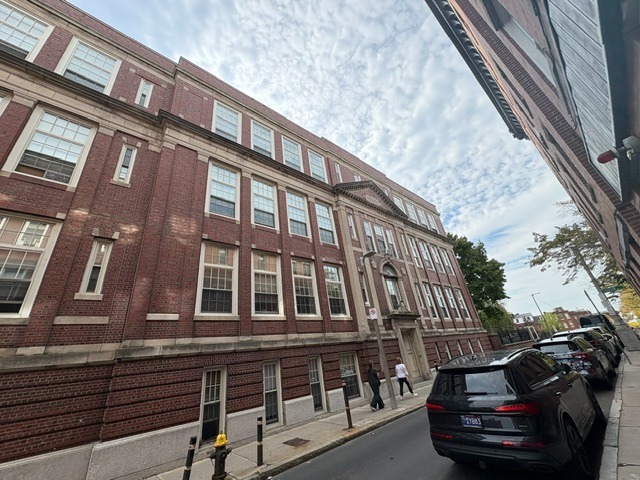
The Eliot School
During our walk through Boston’s North End, we passed the Eliot School on Charter Street. Its substantial brick building represents a history of public education that reaches back more than three centuries, long before this particular schoolhouse was built. The institution traces its beginnings to the North Writing School, which opened in 1713. In 1790, […]
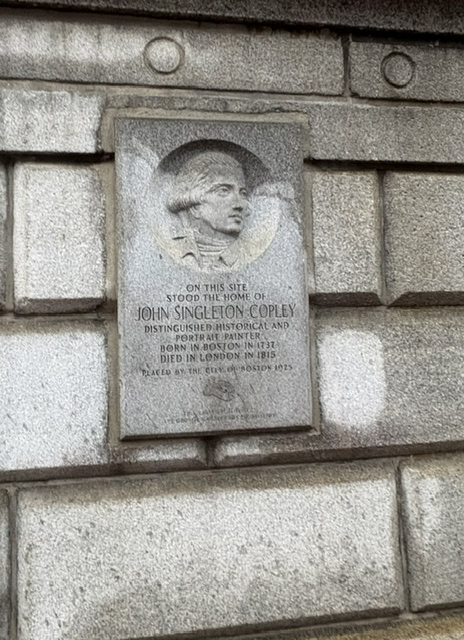
John Singleton Copley
Walking through Boston, I came across this plaque marking the site where the home of John Singleton Copley once stood. The house itself is gone, but the plaque preserves the connection between this location and one of the most important artists of colonial America. Copley was born in Boston in 1738, although the plaque gives […]
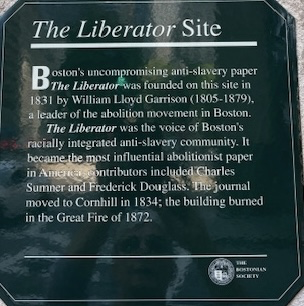
The Liberator Site
I had just stepped away from the busy Freedom Trail, when I came across the bronze plaque on a quiet Boston street. It read: “The Liberator Site – Boston uncompromising anti-slavery paper. The Liberator was founded on this site in 1831 by William Lloyd Garrison…..“ Standing at this spot, I realized that this was the birthplace […]

