Boston African American National Historic Site
Tucked into the narrow streets of Beacon Hill, the African Meeting House stands quietly, but its presence carries the full weight of a community determined to define itself. Built in 1806, it is the oldest surviving Black church building in the United States, constructed largely by free African American artisans who refused to be limited by the constraints of their time. This building was the heart of Boston’s free Black community. It was not just a church, but a school, a gathering place, and a center of activism.
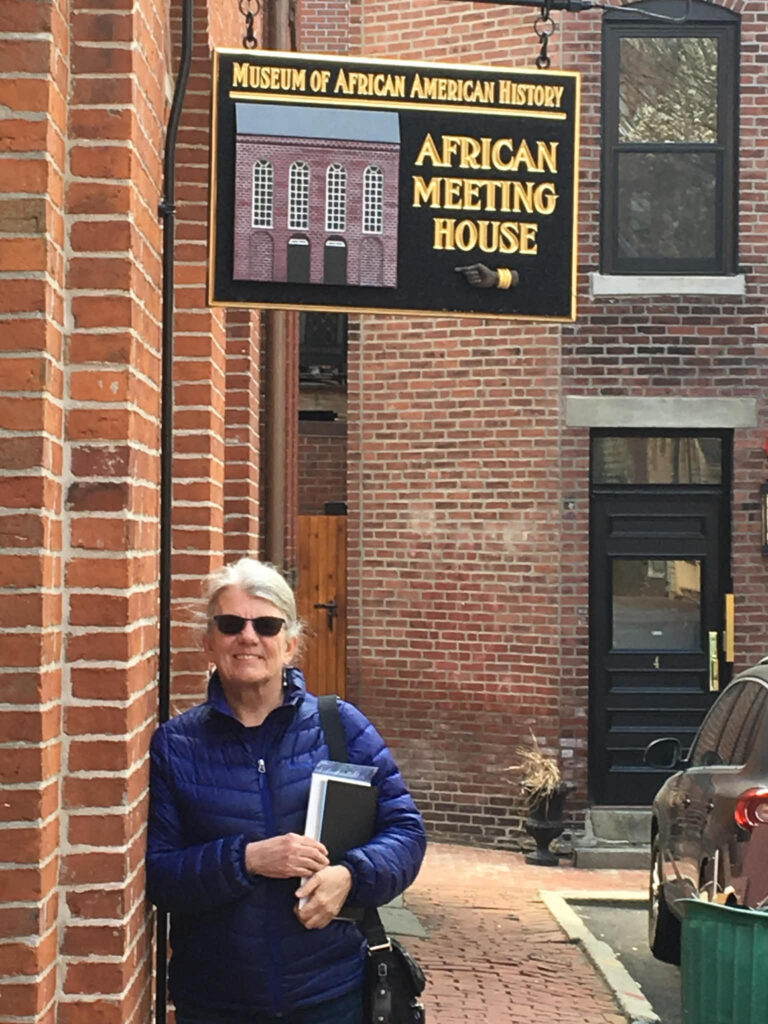
In its rooms, children learned at the African School. and generations of families came together to build a future that extended beyond the limitations imposed on them. But what gives this space its deeper resonance is what happened within its wall. The Meeting House became known as the “Black Faneuil Hall”, a place where voices rose in pursuit of freedom.
It was here that Willian Lloyd Garrison helped found the New England Anti-Slavery Society in 1832, and where leaders like Frederick Douglas spoke and organized. Boston was known for its role in the American Revolution, but here in this building, another revolution unfolded. Here was a community claiming its place in history, education and civic life.
For decades, this building remained the center of religious, political and cultural life for Boston’s Black residents. In the late 19th century, as the Black community moved to other neighborhoods, it became a synagogue for new immigrant families.
The African Meeting House became part of the National Park system in 1974, when it was designated a National Historic Landmark, recognizing its national significance in African American history and the abolitionist movement. Then in 1978, it was formally included as the central site within the Boston African American National Historic Site, by President Jimmy Carter.
Read More From Nancy
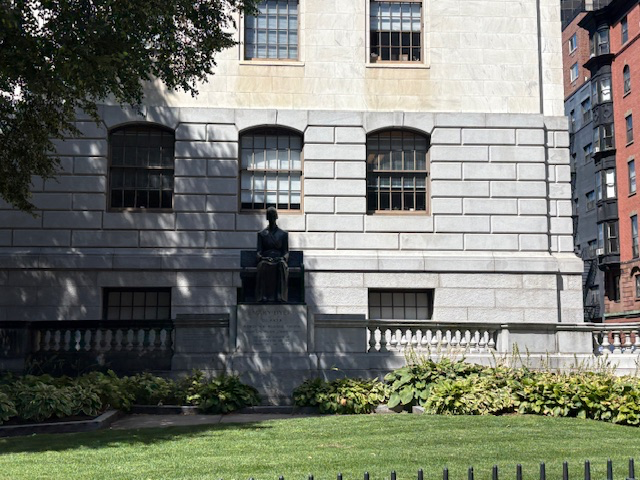
The Courage of Mary Dyer
The ability to sculpt is a remarkable gift. This gift allows an artist to give shape and permanence to something a society deems worth remembering. Our public spaces are filled with statues and memorials, each capturing a story, a value or a life that helped define who we are. The placement of these works also carries meaning for it […]
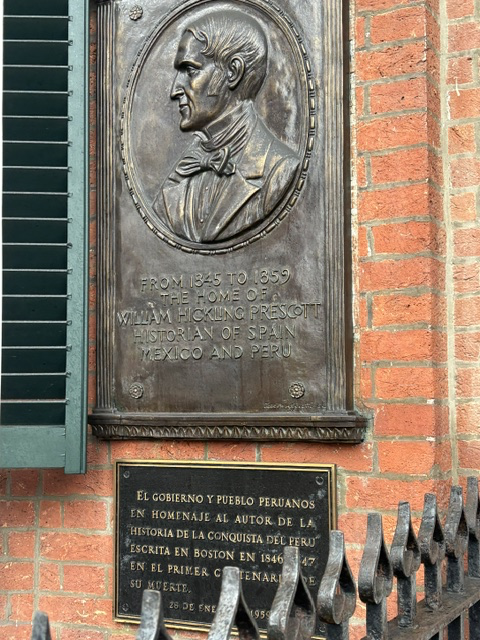
William Hickling Prescott
Walking through Boston’s Beacon Hill, it is easy to admire the elegant brick homes and historic streets without realizing how many remarkable people once lived behind these doors. One of those homes belonged to William Hickling Prescott, one of the nineteenth century’s most celebrated American historians. From 1845 until his death in 1859, Prescott lived […]
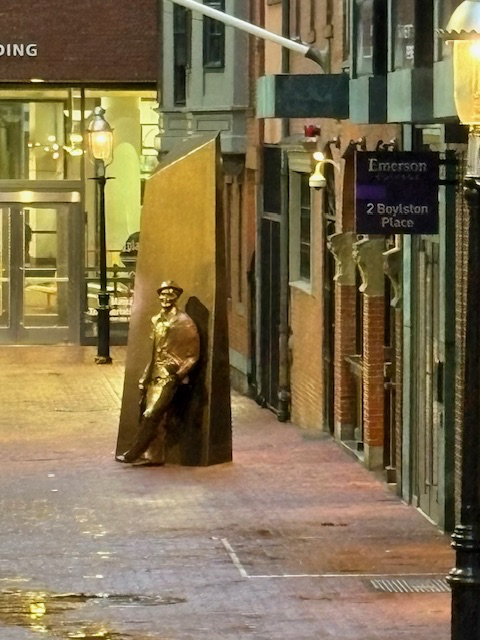
Norman Lear Statue
Heading back to our car, I stopped to grab this photo in the alley near Emerson College. It is one of those narrow Boston passageways that I might have easily walked past without a thought but tucked into this space is something special: a life-size bronze statue of Norman Lear. Lear attended Emerson in the early 1940s, enrolling […]

