White Hall Tavern
The White Hall Tavern gives us another look at everyday life in nineteenth-century Harpers Ferry. While the armory, railroad and political events brought national importance to the town, places like this were where residents gathered, exchanged news, ate and drank, and discussed what was happening around them.
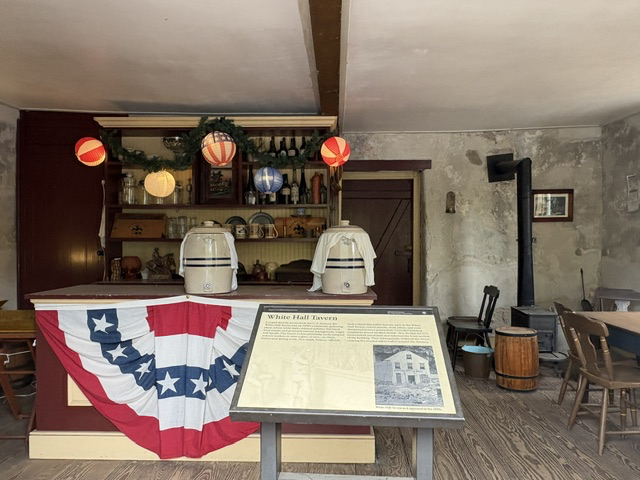
White Hall Tavern was operated by Frederick Roeder, a German immigrant who became a successful Harpers Ferry businessman. Roeder was part of the substantial German immigrant community that settled in the area during the nineteenth century, many drawn by employment opportunities associated with the federal armory and the businesses that grew around it.
The tavern occupied part of a building on Potomac Street and served both local residents and travelers. Taverns of this period were much more than drinking establishments. They were important social centers where people could find food and refreshments, meet friends and coworkers, conduct business, hear the latest news and discuss politics and events affecting the community.
The reconstructed bar helps us imagine what such a gathering place might have looked like. Bottles line the shelves behind the counter, while tables, chairs and a wood stove create the atmosphere of a neighborhood tavern. In a town populated by armory workers, railroad employees, merchants, laborers and travelers, a place like White Hall would have been part of the rhythm of everyday life.
Roeder’s story eventually became entwined with the events of October 1859. When John Brown and his men seized key locations in Harpers Ferry, Roeder reportedly went outside to investigate the disturbance. He was shot and killed by one of Brown’s men, becoming one of the local civilians killed during the raid.
That fact gives this otherwise ordinary tavern a much more personal connection to the history of Harpers Ferry. Before becoming a casualty in an event remembered across the country, Frederick Roeder was an immigrant, businessman and member of this community.
I like this exhibit because it helps restore the ordinary town surrounding the famous history. Harpers Ferry was not simply an armory or the setting for a raid. It was a living community filled with stores, workshops, homes and taverns. White Hall Tavern represents that everyday Harpers Ferry—and one of the people whose life was unexpectedly caught up in the events that made the town famous.
Read More From Nancy
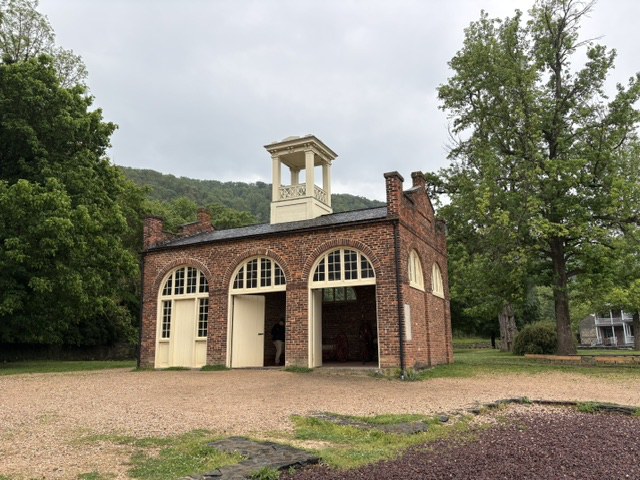
John Brown’s Fort
This small brick building is one of the most historically significant structures in Harpers Ferry. It is known today as John Brown’s Fort, although when the events that made it famous occurred, it was the fire engine and guard house for the United States Armory. On October 16, 1859, abolitionist John Brown led a group of 21 men into […]
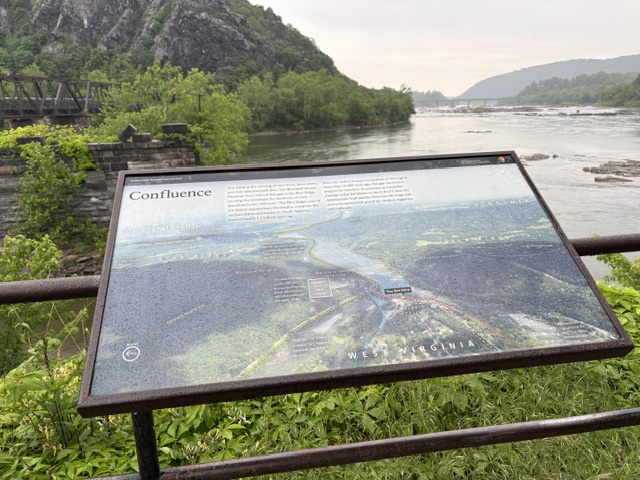
The Confluence of Two Rivers
One of the defining features of Harpers Ferry is its geography. Standing here at The Point, you can see the confluence of two great rivers: the Potomac and the Shenandoah. The Shenandoah approaches from the south and joins the Potomac, which continues east through the Blue Ridge on its journey toward the Chesapeake Bay. This meeting […]
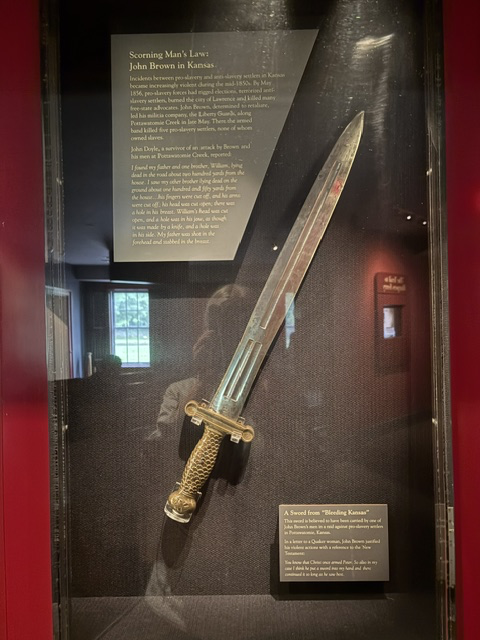
A Sword from “Bleeding Kansas”
This sword connects John Brown’s raid at Harpers Ferry to an earlier and violent chapter in the struggle over slavery. Before Brown came to Virginia in 1859, he had already become a nationally known, and deeply controversial, figure because of his actions in the Kansas Territory. During the 1850s, Americans were fighting over whether Kansas […]

