The United States Arsenal
This open foundation in Harpers Ferry marks the site of one of the buildings that once formed the United States Arsenal. Today there is little left above ground, but during the nineteenth century this was part of a large federal complex devoted to the manufacture and storage of weapons.
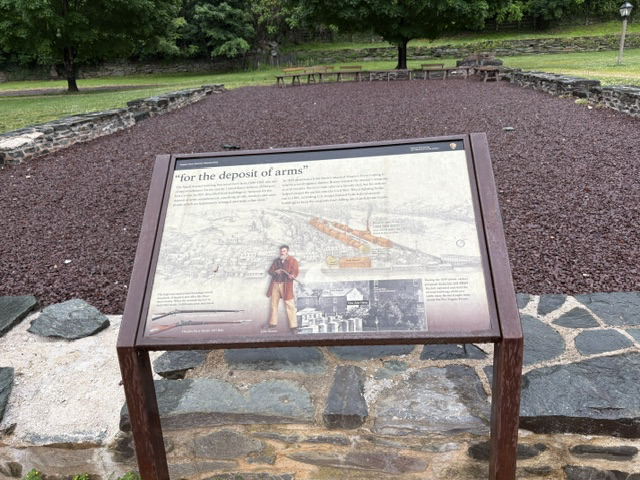
The story began with George Washington. In 1794, Congress authorized the establishment of federal armories, and Washington selected Harpers Ferry as one of the locations. Its position along the Potomac and Shenandoah Rivers offered abundant water power for manufacturing, while its location inland provided some protection compared with a coastal site. Construction of the armory and arsenal began in the 1790s, and weapons production started in 1801.
There was an important distinction between the armory and the arsenal. The armory contained the workshops where firearms and their components were manufactured. The arsenal buildings were primarily used “for the deposit of arms”—the storage of finished weapons and military supplies. Thousands of muskets and rifles could be kept here awaiting shipment to military units elsewhere in the country.
By the middle of the nineteenth century, the Harpers Ferry complex had become much more than a collection of buildings. It was a major federal industrial operation employing hundreds of skilled workers. New machinery and manufacturing techniques were developed and refined here, contributing to the increasing standardization and interchangeable manufacture of firearm parts.
The empty foundations make this history somewhat difficult to visualize today. Where we now see a quiet rectangular space covered with gravel, substantial buildings once stood filled with racks of weapons and military supplies. Nearby workshops were alive with machinery and the work of gunsmiths, machinists and other craftsmen.
I find sites like this particularly interesting because sometimes the most important part of a historic landscape is what is no longer standing. The foundation gives us the footprint, while the interpretive sign helps restore the activity that once surrounded it.
For decades, thousands of weapons belonging to the United States government were manufactured and stored here. The remains of the arsenal help explain why this small town at the meeting of two rivers became so important in the nineteenth century—and why control of Harpers Ferry and its weapons would eventually matter so much.
Read More From Nancy
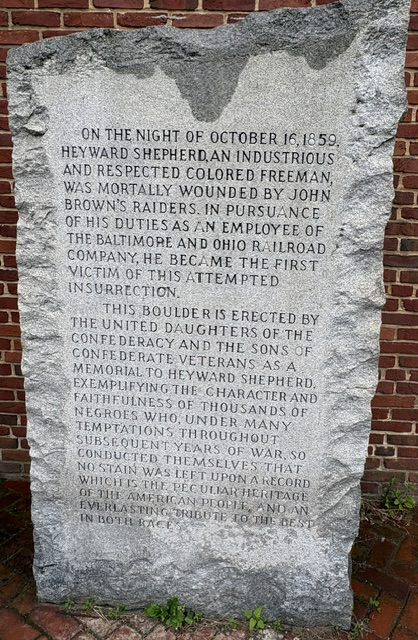
Remembering Heyward Shepherd
This monument in Harpers Ferry tells the story of Heyward Shepherd, a free Black man who became the first person killed during John Brown’s raid on October 16, 1859. Shepherd worked as a baggage master for the Baltimore & Ohio Railroad and was also described as a respected member of the local community. On the night […]
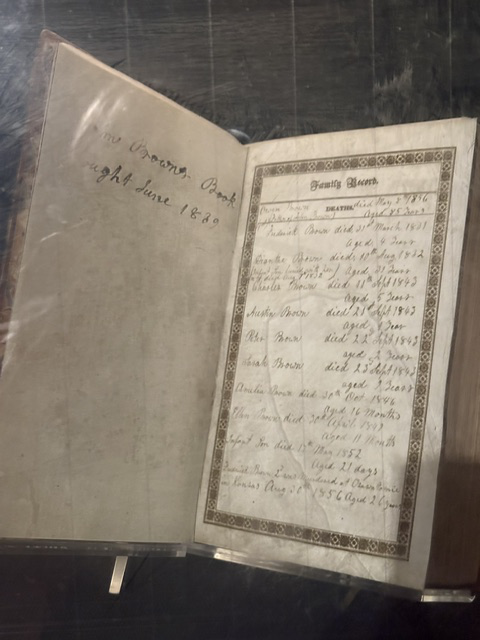
John Brown’s Family Bible
Among the objects preserved at Harpers Ferry, John Brown’s family Bible provides a particularly personal connection to the man whose actions here became part of the national struggle over slavery. Unlike a weapon, military artifact or political document, this was an object connected to Brown’s family life and to the religious beliefs that profoundly influenced […]
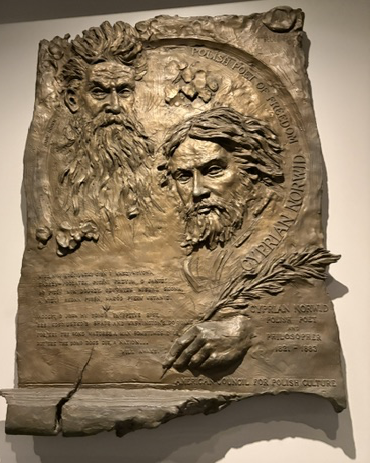
John Brown and Gerrit Smith Relief
This bronze relief brings together two men connected by the abolitionist movement but remembered for very different roles in the struggle against slavery: John Brown and Gerrit Smith. John Brown, shown at the upper left, became the militant abolitionist whose 1859 raid on Harpers Ferry was intended to seize federal weapons and help ignite a […]

