Pilgrim Spring
This monument in Plymouth marks Pilgrim Spring, identified on the stone as being “on the same land set off to Elder William Brewster in the original allotment, December 1620”.
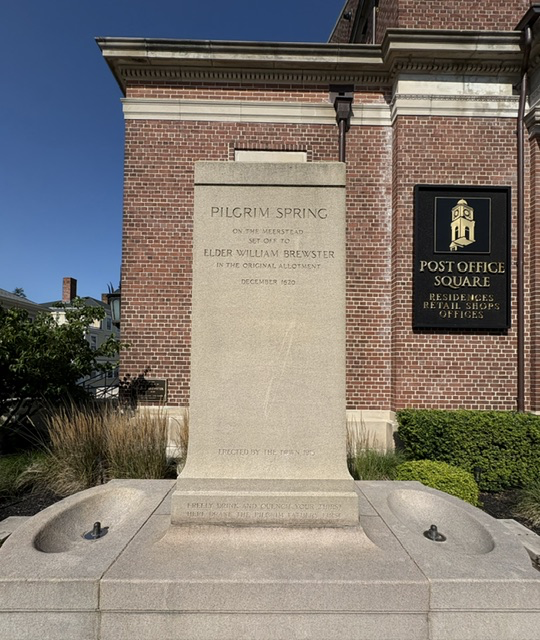
For the newly arrived Mayflower passengers, finding a dependable source of fresh water was essential. After weeks aboard ship and their explorations of Cape Cod, the settlers chose Plymouth partly because the area offered several clear freshwater springs along with land suitable for settlement. Pilgrim Spring was one of those early water sources.
The connection with William Brewster is particularly important. Brewster was one of the senior leaders of the Separatist congregation that had first fled England for the Netherlands and then sailed aboard the Mayflower. Although he was not an ordained minister, as the congregation’s ruling elder he became one of the most important religious figures in the early Plymouth community. His family received land in this area during the original division of house lots in December 1620.
The spring would have been part of the practical geography of the earliest settlement. Before wells, municipal water systems or indoor plumbing, a reliable spring meant drinking water, cooking water and water for the countless tasks of daily life. It is easy to concentrate on Plymouth Rock, the Mayflower and the famous names associated with the colony, but survival also depended upon resources as basic as this.
The monument itself was erected by the Town of Plymouth in 1920, during the 300th anniversary of the Mayflower’s arrival. Its two basins recall the spring that once flowed here and transform an otherwise easily overlooked part of the landscape into a memorial.
Read More
Read More From Nancy
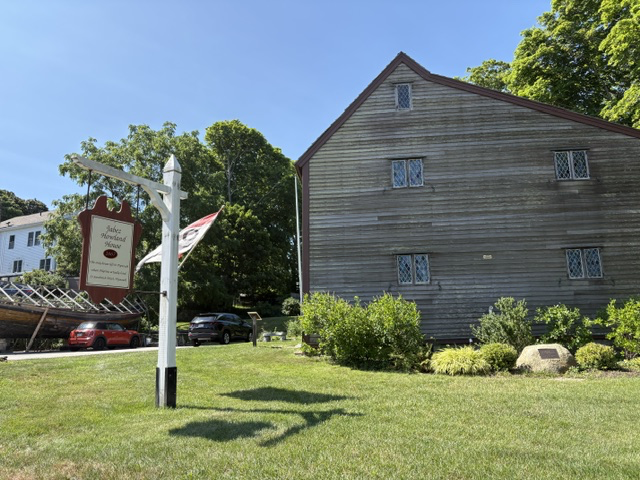
The Jabez Howland House
Among the many historic houses in Plymouth, the Jabez Howland House has a distinction that makes it extraordinary. Built about 1667, it is considered the only surviving building in Plymouth where people who actually arrived aboard the Mayflower are known to have spent time. Those people were John Howland and his wife, Elizabeth Tilley Howland. […]
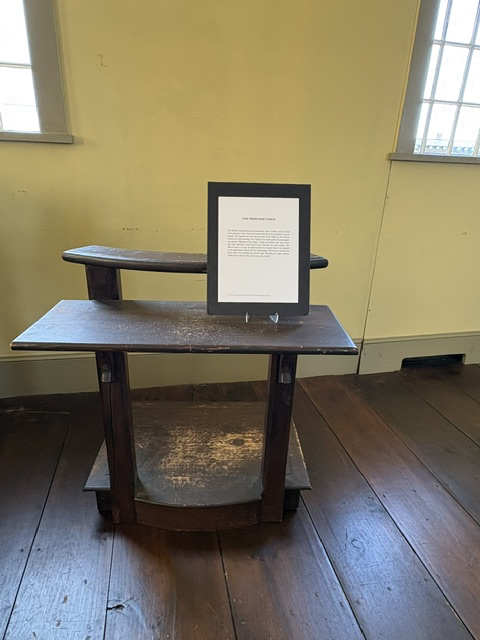
Prisoner Dock
One of the more sobering features inside Plymouth’s 1749 Court House is the prisoner’s dock. This small enclosed platform represents the place where an accused person would stand during court proceedings, physically separated from the judges, attorneys, witnesses, and spectators around them. According to the courthouse exhibit, the sheriff would bring the accused into the […]
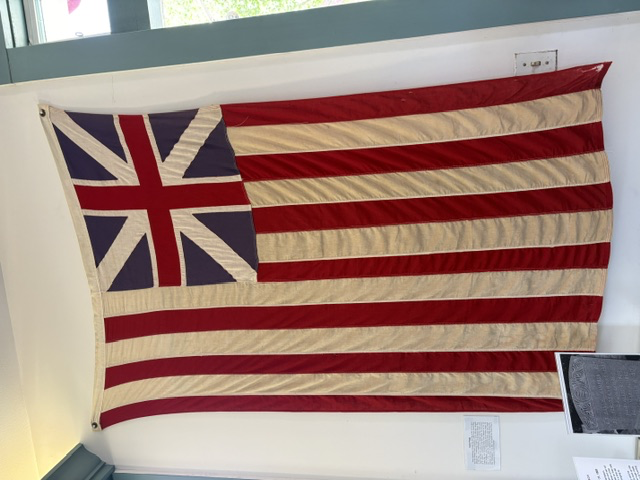
The Grand Union Flag
While exploring Plymouth’s 1749 Courthouse, I came across this flag. At first glance it seems almost contradictory: thirteen red and white stripes like an early American flag, but with the British Union flag occupying the canton. That contradiction is exactly what makes the Grand Union Flag so important. The thirteen stripes represented the thirteen American […]

