A Grease Horn
Among all the objects that survive from Plymouth’s earliest years, some of the most interesting are not the rare or elaborate possessions, but the simple tools people used in their daily lives. This small grease horn dates from approximately 1635–1665 and is identified as coming from Plymouth.
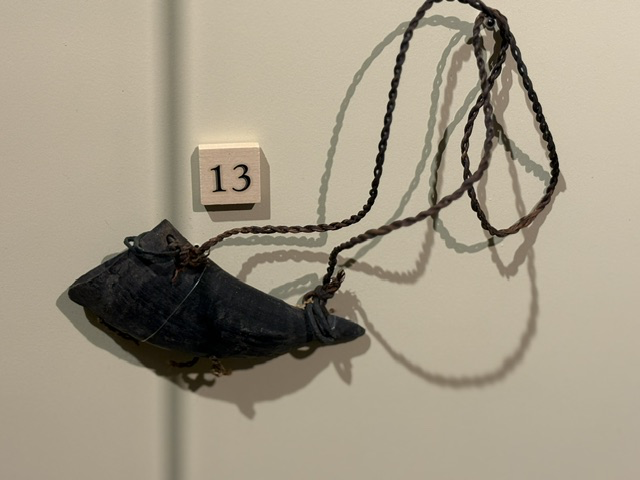
A grease horn was a practical container, usually made from an animal horn, used to carry animal fat or grease. The horn provided a naturally strong, lightweight, and readily available container. A cord allowed it to be hung from a belt, carried over the shoulder, or kept close at hand while someone worked.
The grease itself had many uses. It could be applied to tools and equipment as a lubricant, used on metal surfaces to help protect them from moisture and rust, and worked into leather to keep boots, harnesses, straps, and other leather goods from becoming dry and brittle. We do not know exactly what type of grease was carried in this horn, and people likely used whatever suitable animal fat was readily available.
This grease horn was never intended to tell a story. It was simply a useful object that someone in 17th-century Plymouth needed. Nearly four centuries later, its survival gives us a small glimpse into what an ordinary day in the colony might have looked like.
Read More From Nancy
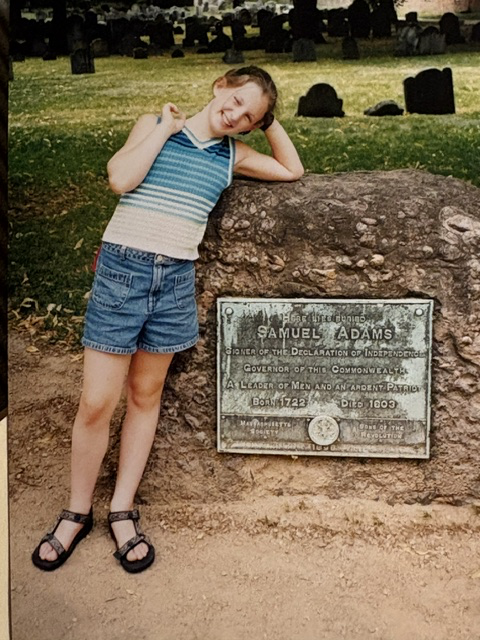
Samuel Adams
Standing beside the grave of Samuel Adams at Boston’s Granary Burying Ground offers an opportunity to remember a man whose influence extended far beyond the familiar name associated with a modern beer company. Samuel Adams was one of the most determined political organizers of the American Revolution and an early advocate for independence from Great […]
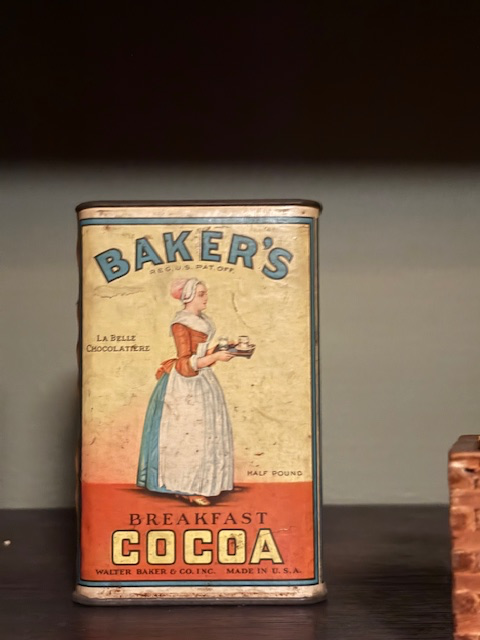
Gibson House Museum – Baker’s Breakfast Cocoa
When visiting the Gibson House Museum in Boston, this colorful tin caught my eye in the kitchen. Baker’s Breakfast Cocoa, the title sparked my curiosity. The tin was produced by Walter Baker & Co, the oldest continuously operating chocolate manufacturer in the United States. Founded in the late 1700s, in Massachusetts, Baker’s became a household […]
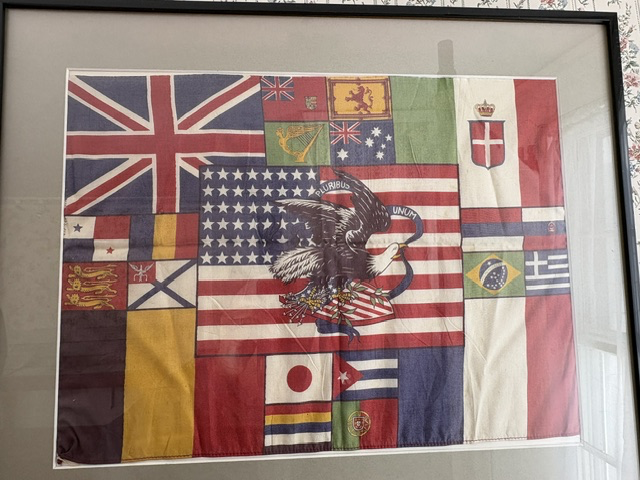
The 1917 Allies Flag
This unusual silk flag, preserved by the Needham History Center & Museum, tells a story not only about World War I, but about how Americans were encouraged to understand the nation’s entry into the conflict. By 1917, Europe had already been at war for nearly three years. The United States had remained officially neutral, but […]

