Natick, MA
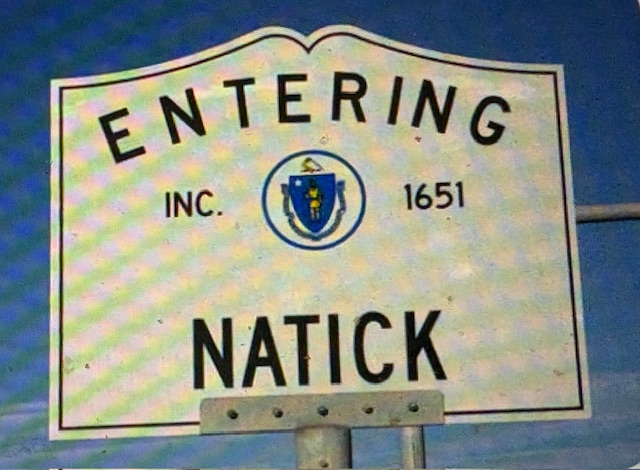
Natick was incorporated as a town in 1781, though it began in 1651 as a Praying Indian settlement founded by missionary John Eliot. Its origins as one of New England’s first organized Native American Christian communities give the town a uniquely layered and complex history. Natick has been home to me since 1987, a place where I’ve watched history and community continue to unfold.
Recent Posts
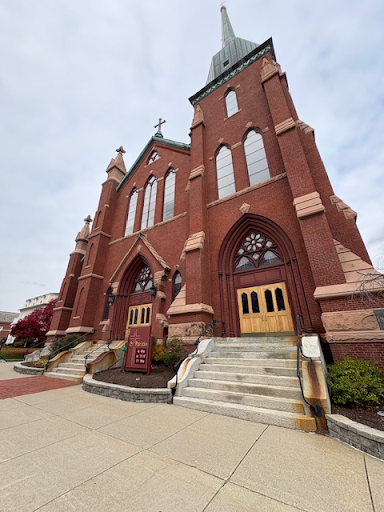
St. Patrick’s Church
The cornerstone of St. Patrick’s Church, laid in 1892, marks more than the construction of a building. It represents the beginning of an enduring Catholic presence in Natick. Before this time, Catholic families gathered in borrowed halls, private homes and makeshift chapels, worshipping quietly in a community still defined by its Protestant roots. By the late […]
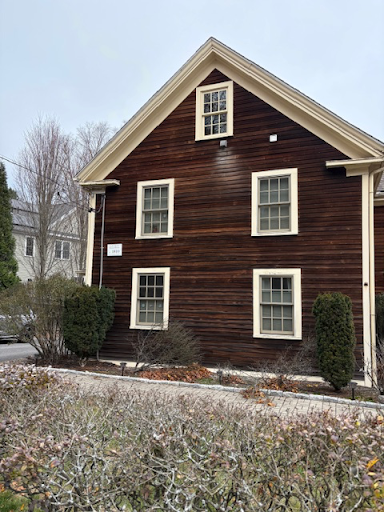
Little Brown Schoolhouse
Tucked along Pleasant Street in Natick is this unassuming building marked with the plaque reading 1810 and the Little Brown Schoolhouse. This is an example of Natick’s district schoolhouses, and a window into the town’s educational past. In 1810, Natick had not yet developed a centralized school system. Education was organized within small neighborhood districts with […]
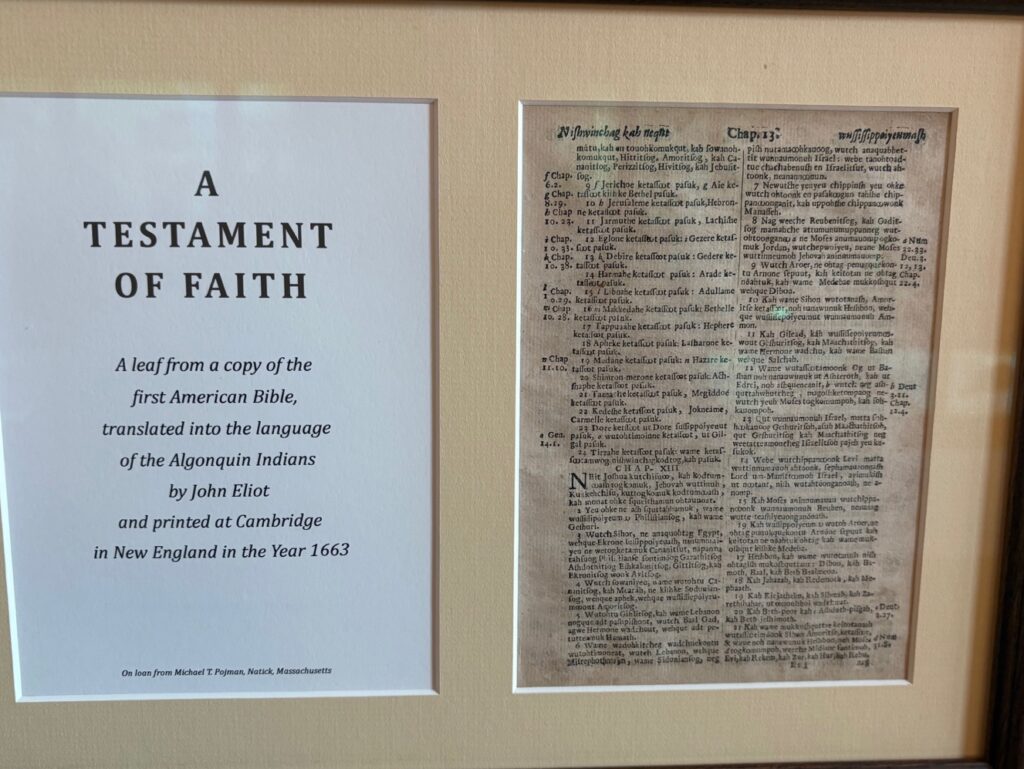
Algonquien Bible
A testament of faith and history, the Natick Historical Society preserves two artifacts tied to the earliest years of printing in North America and to the cultural crossroads that defined this town. The single leaf from the 1663 first edition of the Algonquien Bible was a page from the earliest Bible printed in America and […]
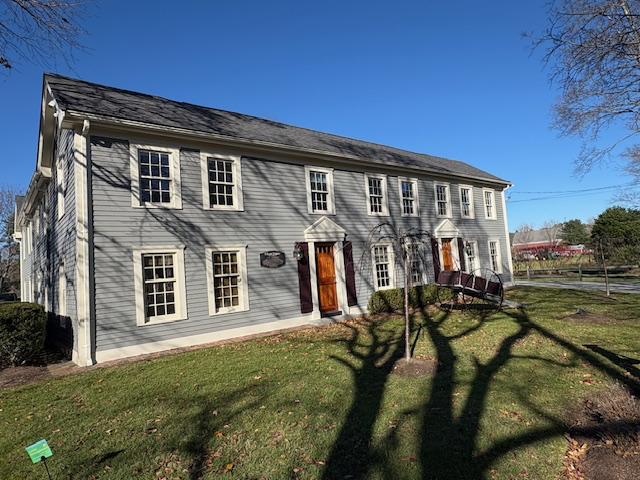
Georgia Colonial 1700’s
I love the connection to Colonial America that is still evident on my daily walks around Natick. Here is another example of a Georgian Colonial that dates back to the 1700s. The land was originally purchased from the Praying Indian community of Natick in 1730. South Natick itself was one of the earliest Praying Towns, […]
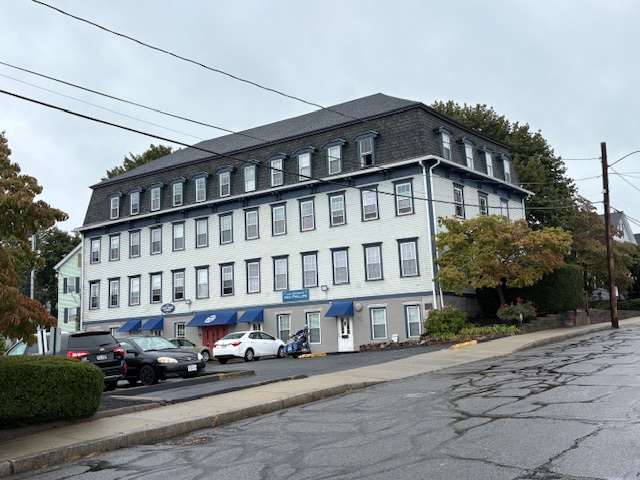
The Harwood Baseball Factory
In 1858, Harrison Harwood, a Natick resident and local businessman, built what would become one of the most historically significant small factories in American sports: The Harwood Baseball Factory. This factory was more than a local industry, but the birthplace of professional baseball. Harwood’s factory was the first in the US devoted entirely to the manufacture of […]
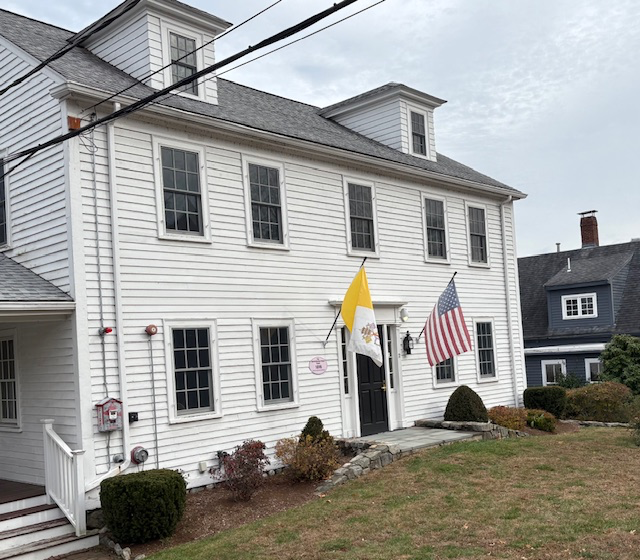
Home of Calvin Ellis Stowe
This 1816 Federal-style home in South Natick was the childhood home of Calvin Ellis Stowe a biblical scholar and later the husband of Harriet Beecher Stowe, author of Uncle Tom’s Cabin. Calvin Stowe became a scholar of Hebrew and biblical literature and met Harriet Beecher at the Lane Seminary in Cincinnati. They married in 1836, […]
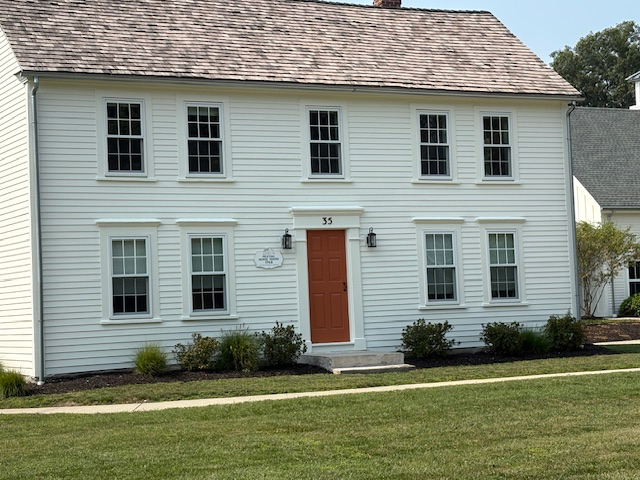
The Peletiah Morse Tavern
Within less than a mile from my home lies the historic heart of South Natick. From the legacy of the Praying Indians to the colonial homes and 19th-century landmarks that still line the streets, this small village holds a deep well of history waiting to be shared Today, I share one of these colonial treasures, the Peletiah […]
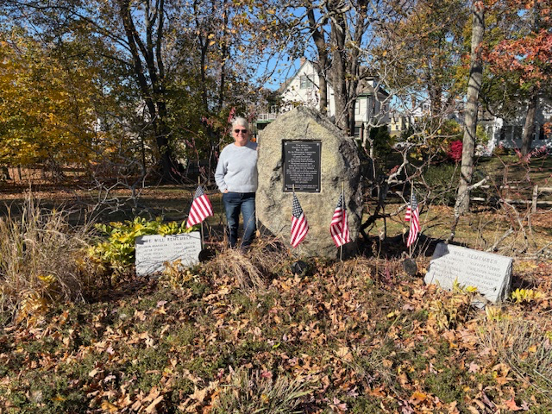
Natick Indian Burial Ground
Each town has something special to share and a story that it holds close. Today, I want to share one of Natick’s most sacred and historic sites: The Natick Praying Indian Burial Ground. Set quietly in the center of town, this grassy enclosure carries a story that predates the town itself. It is one of the […]
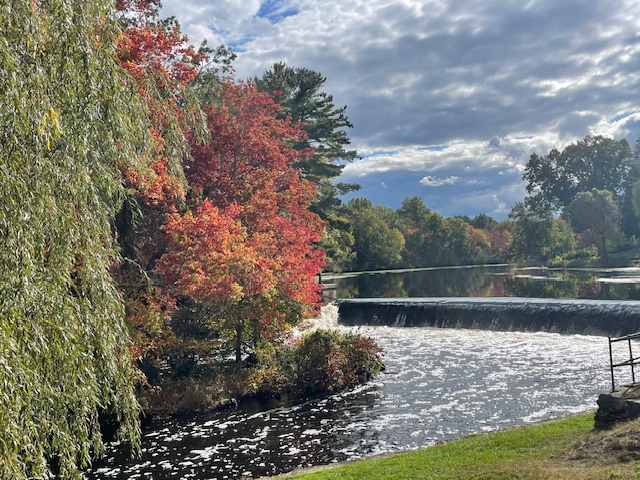
Farewell to the South Natick Dam: Honoring the Place That Shaped My Years
For almost 40 years, I’ve called South Natick home. While it’s never been the place where I’ve felt deeply rooted, it’s where I raised my children, built our businesses, and lived a full chapter of life. Now, as I begin to explore the rich history that surrounds us, there’s no better place to start than […]
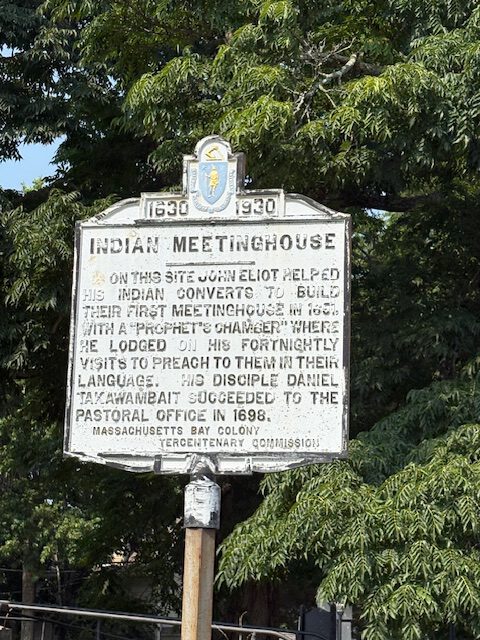
Natick: The First Praying Indian Town
In 1651, missionary Rev. John Eliot established Natick as the first of the “Praying Indian” towns in Massachusetts. He named the town after the Natick American word Natick, translated as a place of hills or a place of searching. He worked closely with local Massachusett and Nipmic people, teaching them Christianity in their native tongue and translating the Bible […]
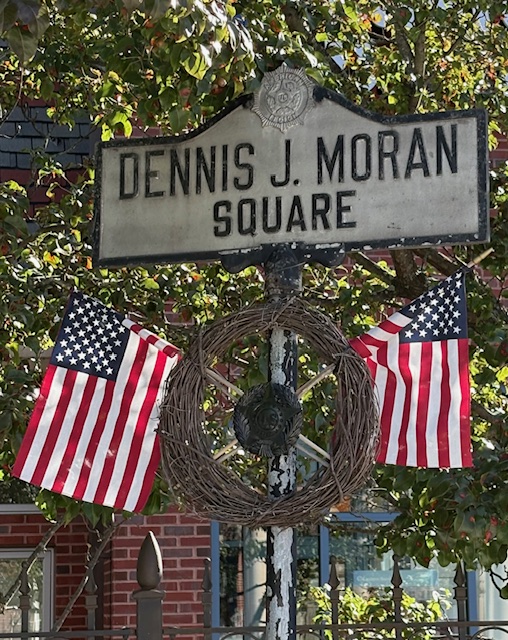
The Squares of Natick: Remembering the Names Behind Our Freedom
On a crisp fall day, walking through Natick is more than just enjoying the foliage — it’s also a journey through history. Scattered across town are memorial squares, quiet markers that carry the names of those who served, sacrificed, and shaped the story of our community. Three in particular stand out: Dennis J. Moran Square, […]

