Little Brown Schoolhouse
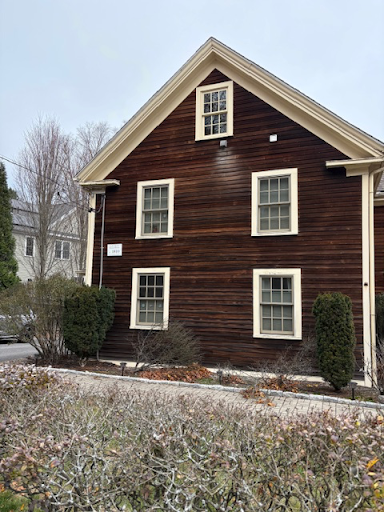
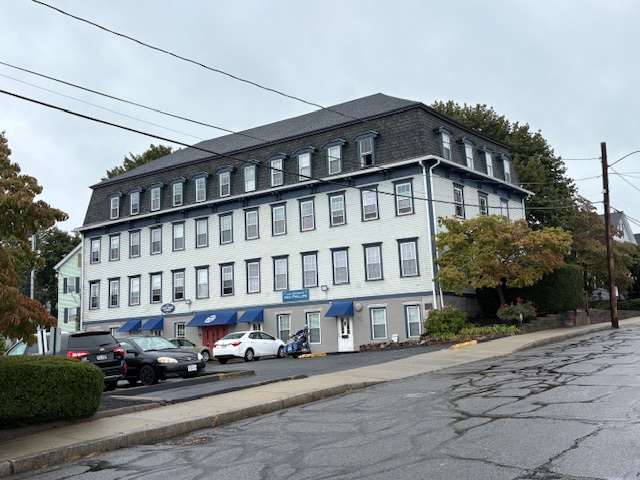
Tucked along Pleasant Street in Natick is this unassuming building marked with the plaque reading 1810 and the Little Brown Schoolhouse. This is an example of Natick’s district schoolhouses, and a window into the town’s educational past.
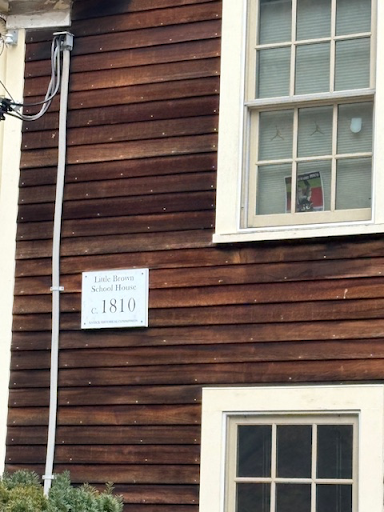
In 1810, Natick had not yet developed a centralized school system. Education was organized within small neighborhood districts with schoolhouses scattered throughout villages and rural roads.
Pleasant Street was one of Natick’s early thoroughfares, connecting farms, mills and homesteads in what is now South and East Natick. A schoolhouse here would have been a central gathering place for the surrounding families.
By the mid-19th century, Natick began to move away from the small neighborhood-based schoolhouse system. For decades, children attended one-room schoolhouses scattered throughout the town, each serving a small district or nearby families. While these schools were community-centered, they varied in quality.
Around 1853, Natick made a decision to shift towards consolidating its schools. Rather than maintaining numerous small district schoolhouses, the town gradually closed many of them and redirected students to larger, centrally located school buildings. Education moved from neighborhood control to town oversight.
This change required both physical and philosophical restructuring. Larger school buildings were constructed to accommodate more students. Children were grouped by age and ability rather than taught together in a single room and instruction became more standardized.
The consolidation of schools brought some benefits: improved facilities, trained teachers and standardized instruction. The small, neighborhood-centered schoolhouses slowly disappeared. The Little Brown Schoolhouse reminds us of a time when each neighborhood took responsibility for educating its children.
Read More From Nancy
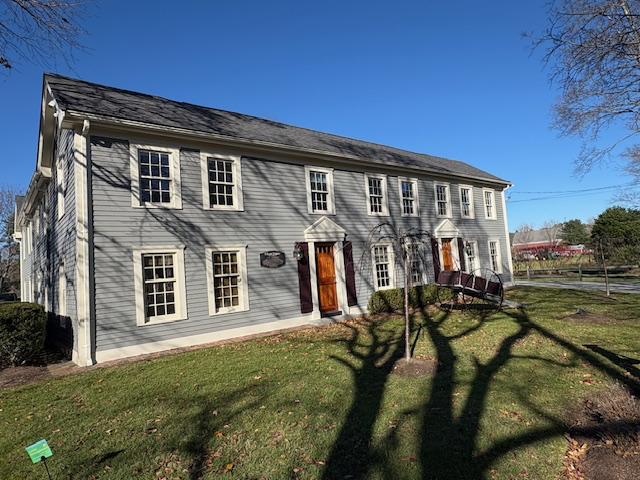
Georgia Colonial 1700’s
I love the connection to Colonial America that is still evident on my daily walks around Natick. Here is another example of a Georgian Colonial that dates back to the 1700s. The land was originally purchased from the Praying Indian community of Natick in 1730. South Natick itself was one of the earliest Praying Towns, founded by […]
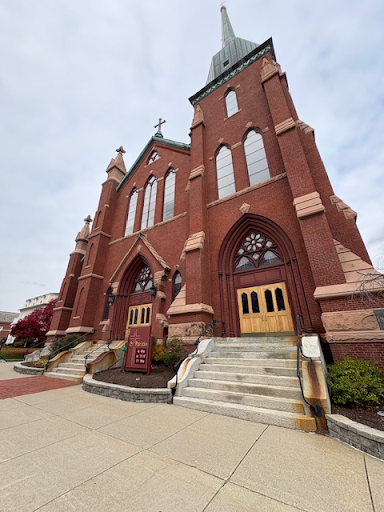
St. Patrick’s Church
The cornerstone of St. Patrick’s Church, laid in 1892, marks more than the construction of a building. It represents the beginning of an enduring Catholic presence in Natick. Before this time, Catholic families gathered in borrowed halls, private homes and makeshift chapels, worshipping quietly in a community still defined by its Protestant roots. By the late […]
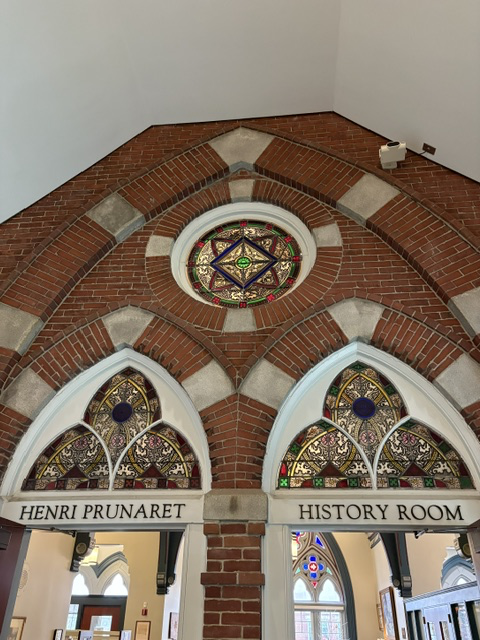
The Henri Prunaret History Room
Living in Natick, I have passed through the Morse Institute Library many times, but there are details inside the building that connect directly to the history of the town. One of them is this beautiful entrance to the Henri Prunaret History Room, framed by old brickwork, Gothic arches, and colorful stained glass. The Morse Institute […]

