Natick Indian Burial Ground
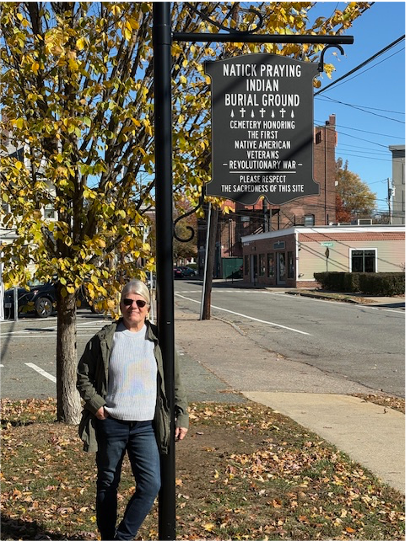
Each town has something special to share and a story that it holds close. Today, I want to share one of Natick’s most sacred and historic sites: The Natick Praying Indian Burial Ground.
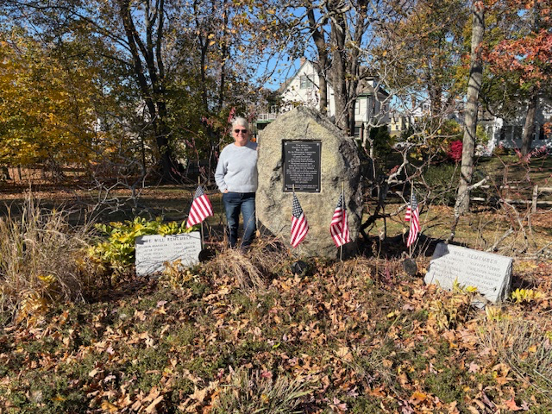
Set quietly in the center of town, this grassy enclosure carries a story that predates the town itself. It is one of the last tangible remnants of Natick’s original Praying Indian community, founded in the 1650s under the guidance of Reverend John Eliot, the Puritan missionary who envisioned self-governing Christian Indian towns across Massachusetts. Natick became the first and most prominent of these Praying Indians Communities.
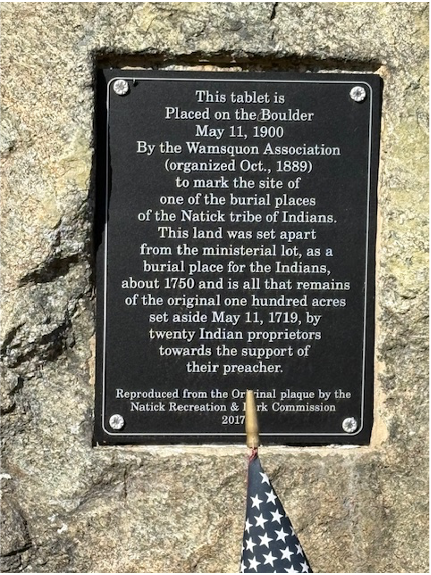
At the center of this burial ground stands a large boulder with the inscription that this plot is all that remains of the one hundred acres that was originally set aside on May 11, 1719 for their tribe.
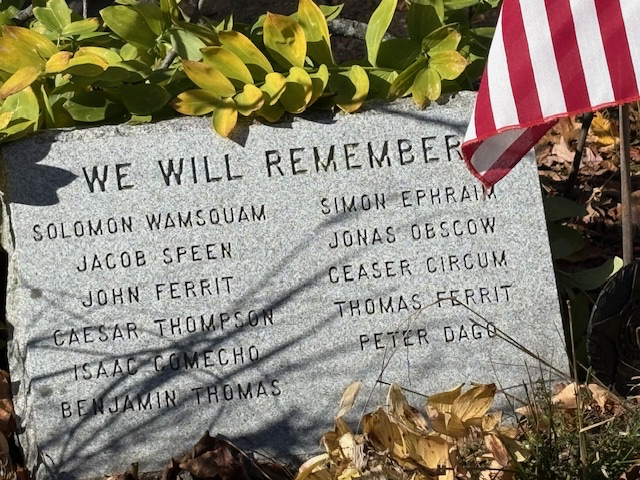
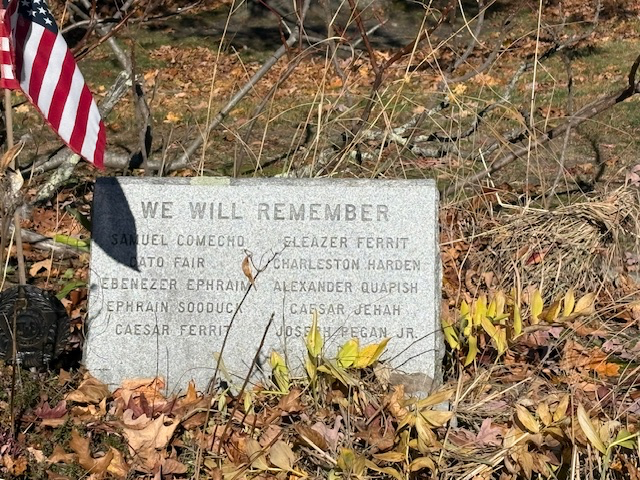
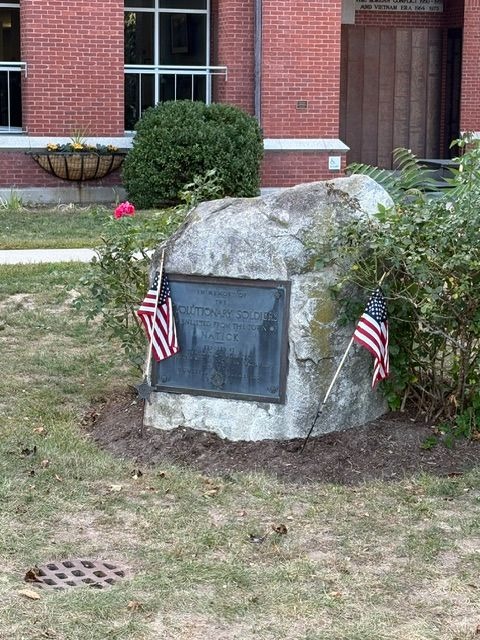
The two granite stones are engraved with the words: We Will Remember” and the names of Native men who served in the American Revolution. These warriors fought not only for a country still finding its identity but for the promise of liberty is worth defending.
Read More From Nancy
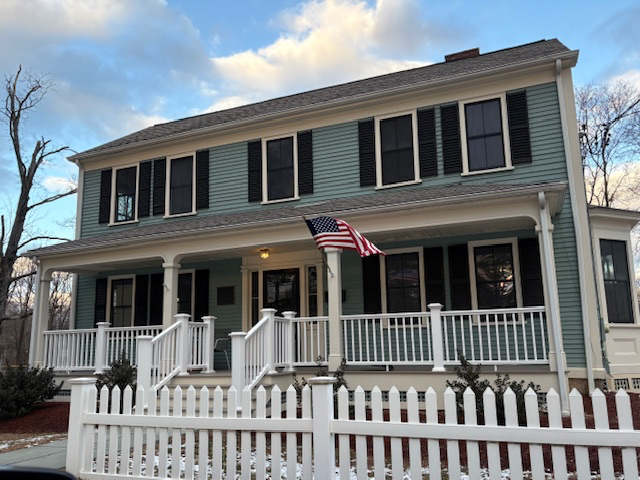
Parsonage House
I have walked by this house hundreds of times during my walks around Natick. Today, I stopped to take a photo of the plaque outside the front door. This modest plaque marks a house known as the Parsonage. It is easy to walk past without realizing how much history is held within its walls. Built around […]
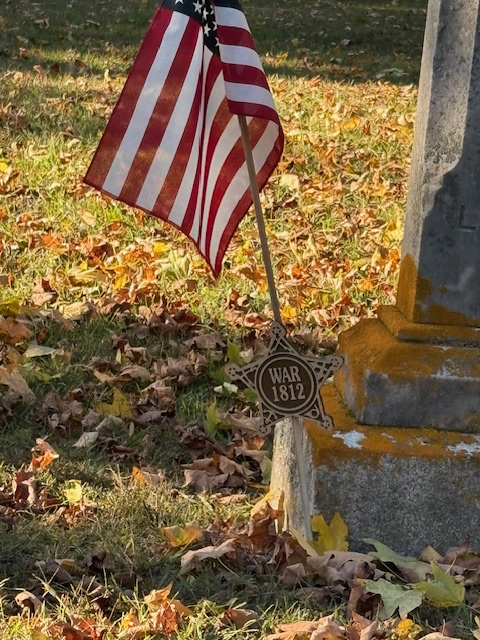
Star of War of 1812
Walking through a local cemetery, I noticed something that made me pause: a five-pointed metal star planted beside a grave holding an American flag. Cast into its surface are the words: War of 1812 I have come to recognize the familiar markers for Revolutionary War patriots and Civil War soldiers. Those appear often in New England cemeteries. But […]
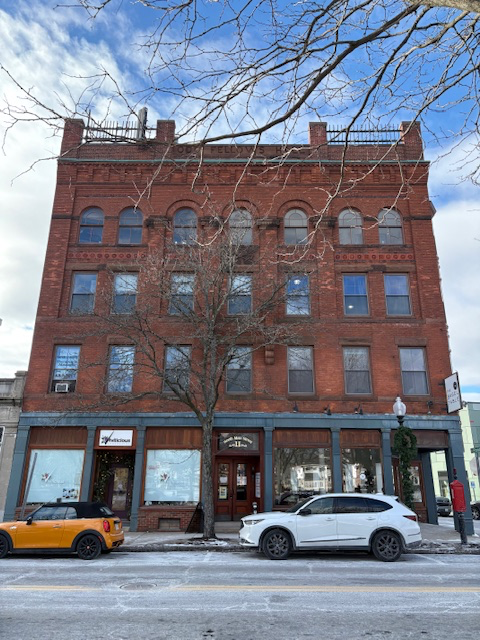
Odd Fellow Building – 1887
In downtown Natick, there is this brick building marked “Odd Fellow Building – 1887”. This building was purposely built as the home of the local lodge of the Independent Order of Odd Fellows, one of the most influential fraternal organizations in 19th century America. Completed in 1887, the building was designed from the outset to serve two […]

