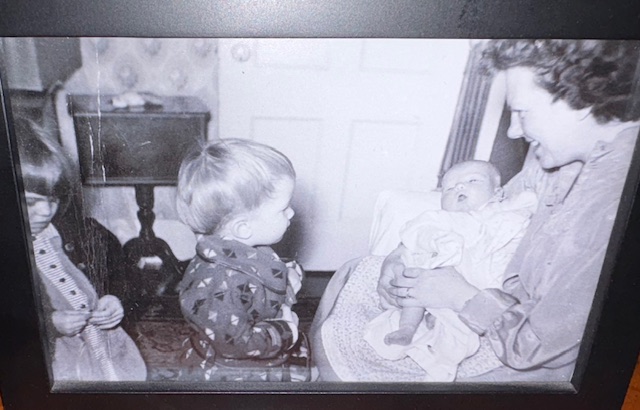
Those Who Shaped Me
Do we ever really get the chance to know our parents as who they were before we knew them, before we existed?
Most of us know our parents in the role they played in our lives. We grow up shaped by them, influenced by their choices, their values, and the way they moved through the world. There is no greater developmental influence than our mother and father, at least that has been true for me. But what we don’t often get is the opportunity to know them as young people… to understand their lives, their decisions, their struggles, and the paths they chose long before we were ever
born.
Now, long after they are gone, I find myself returning to them in a different way. I’m beginning to see them not just as my parents, but as individuals, shaped by their own experiences, making choices that would eventually shape me. In understanding their world, I’m starting to better understand my own.
This space is my way of exploring that world, their young lives, their stories, their influences, long before I was ever part of it. It also honors the teachers, mentors, and loved ones who have shaped how I see the world. Their lessons continue to guide me, reminding me to stay open, to keep learning, and to carry their wisdom forward in everything I do.
-Nancy Watson
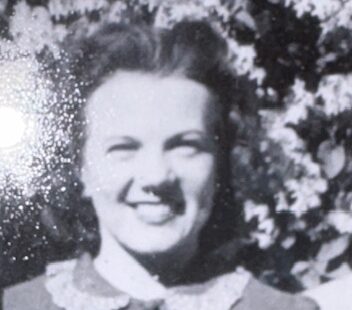
Mother
There is something both grounding about trying to know a person outside of the role they played in your life. For me, my mother was always just that, my mother. The one whose life seemed to begin the moment mine did. But now, through the pieces she left behind, I am beginning to meet her as a young woman, separate from me with her own world, her own choices, her own becoming. She was born, raised, and lived her entire life on the same street in Concord, New Hampshire. There is something deeply rooted in this unwavering sense of place. One street that held her childhood, her courtship, her marriage, and her life as a mother. She did not wander far in miles. What I am discovering is not dramatic or complicated, something quieter. She loved her family. She loved my father. She loved her home and her state. And she loved her faith, not as something spoken loudly, but as something ever present. These were not just parts of her life they were the framework of it. As I look at her young adult years, I can see the decisions she made, the choices to stay, to build, and to commit. I am beginning to understand that the life I experienced did not just happen. It was created by the woman she already was. It is easy to overlook this. To assume that our parents always existed as we view them, rather than recognizing that they became who they were long before we arrived. My mother may never have left this street in Concord, but through her, I was given the courage to explore far beyond it. The greatest influence in my life was not just the mother who raised me, but the young woman who chose the life that made me possible.
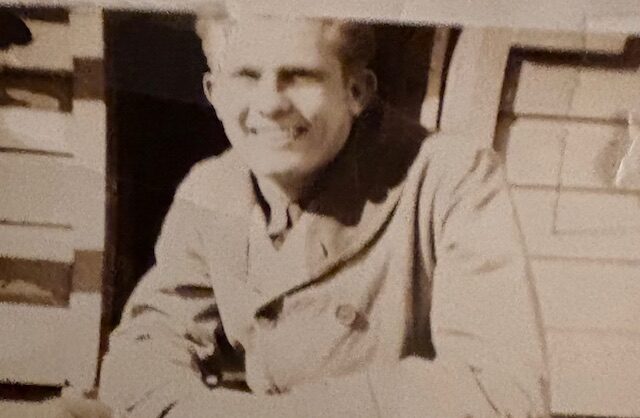
Father
My father was not one to share his thoughts—and certainly not his feelings. Rarely did I receive a direct answer when I asked for his opinion. Conversations with him often felt like standing at the edge of something just out of reach, where clarity never quite arrived. He was his mother’s only child, and her presence in his life was constant, steady, and deeply woven into who he became. What he did not say aloud, she often captured in ink. Left behind is a stack of her correspondence—letters filled with careful words, return addresses, and faded postmarks that now serve as quiet markers of time, place, and connection. It is through these letters that I am beginning to know my father as a young man. Each envelope tells part of the story. The towns they passed through, the dates stamped in hurried ink, the tone of a mother writing to her son during uncertain times. Together, they form a map of a life unfolding—one that he never spoke about, but one that was carefully documented all the same. He came of age during the Great Depression, when opportunity was scarce and expectations were shaped more by necessity than by choice. And just as the world began to shift again, he found himself standing at the threshold of another defining force—war. His search for direction, for identity, for independence, was not entirely his own. It was shaped by circumstance, by a world much larger than him, and by the looming presence of the draft. The future was not something to be freely chosen, but something that arrived, often abruptly, demanding response. And so, through these letters, I am meeting a version of my father I never knew—a young man navigating uncertainty, tethered closely to his mother, and quietly trying to find his place in a world that offered few clear answers. In many ways, I am still waiting for those answers. But in the absence of his voice, these letters have become his story.