Algonquien Bible
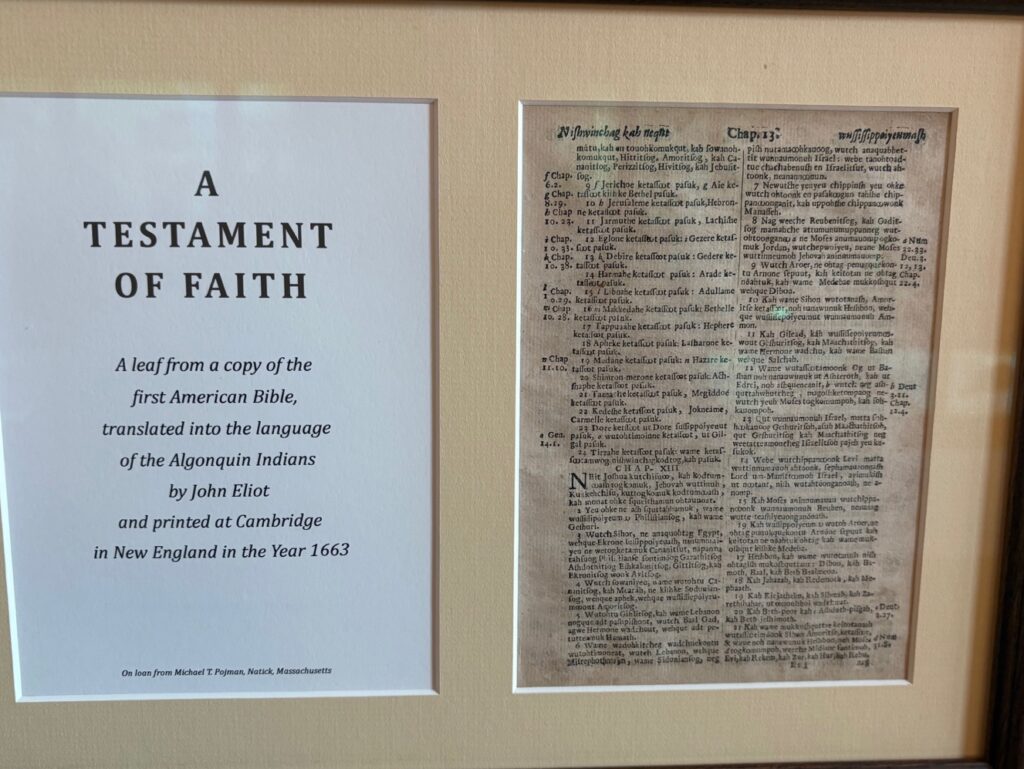
A testament of faith and history, the Natick Historical Society preserves two artifacts tied to the earliest years of printing in North America and to the cultural crossroads that defined this town.
The single leaf from the 1663 first edition of the Algonquien Bible was a page from the earliest Bible printed in America and the first complete Bible translated and printed in an indigenous language. The Bible was created through the work of the missionary John Eliot and printed at the Harvard College Press and is an extraordinary achievement in linguistics and printing. This was the result of the cultural exchange between the English colonists and the Algonquin-speaking peoples of Massachusettts.
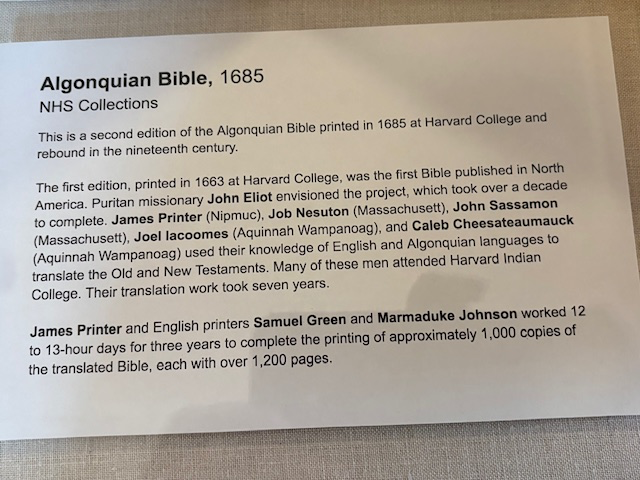
The Society also holds a full second edition of the Algonquin Bible, printed at Harvard College in 1685. This second printing was produced only 22 years after the original. To have a complete second edition copy in Natick gives this community a personal connection to its earliest history.
Natick holds a unique place in American history as one of the first Praying Indian towns founded in 1651 under the leadership of John Eliot. Natick was envisioned as a community where Christianized indigenous families could live and worship and blend their own traditions and the new religious structure introduced by Eliot. It became the model for the network of Praying Indian towns that would spread across Massachusetts.
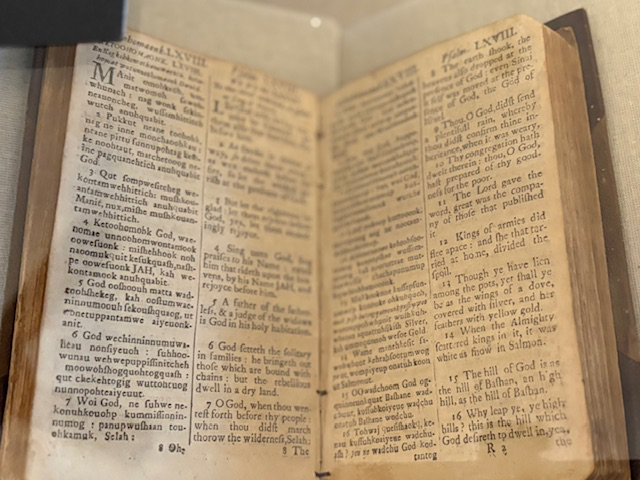
Held in trust by the Natick Historical Society, these artifacts remind us how language and culture intertwined more than 350 years ago. These texts were created in the language spoken by the indigenous families who lived in this land and shaped the identity of Natick. They are part of Natick’s living memory.
Read More From Nancy
Daniel Takawampit
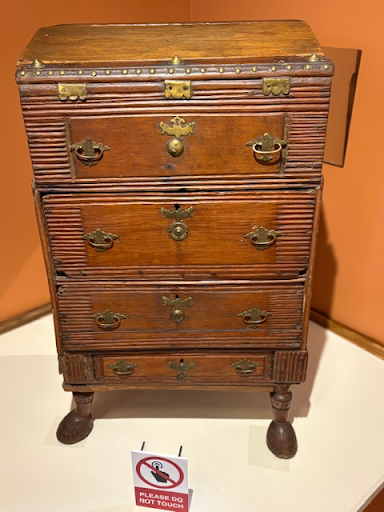
Daniel Takawampbit, an Algonquian leader, stands as one of the most extraordinary and overlooked figures in New England’s Colonial past. He was the first Natick American ordained as a Puritan minister, the student and successor of John Eliot, and a spiritual guide to the Praying Indian community of Natick during some of the most challenging […]
Home of Calvin Ellis Stowe
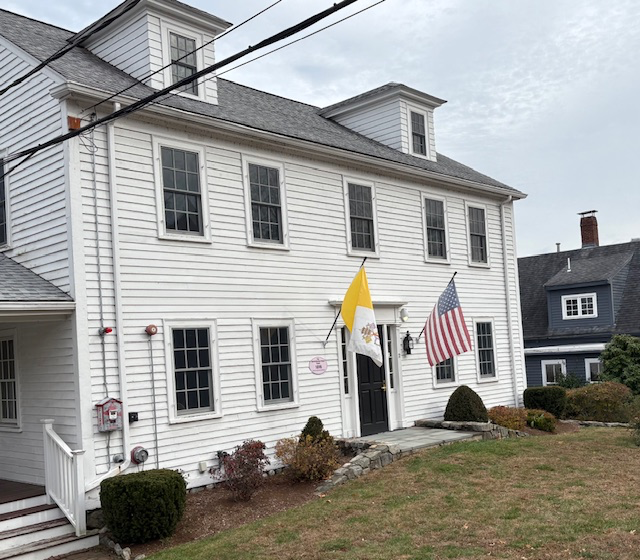
This 1816 Federal-style home in South Natick was the childhood home of Calvin Ellis Stowe a biblical scholar and later the husband of Harriet Beecher Stowe, author of Uncle Tom’s Cabin. Calvin Stowe became a scholar of Hebrew and biblical literature and met Harriet Beecher at the Lane Seminary in Cincinnati. They married in 1836, and […]

Farewell to the South Natick Dam: Honoring the Place That Shaped My Years
For almost 40 years, I’ve called South Natick home. While it’s never been the place where I’ve felt deeply rooted, it’s where I raised my children, built our businesses, and lived a full chapter of life. Now, as I begin to explore the rich history that surrounds us, there’s no better place to start than […]

