Natick, MA
Natick was incorporated as a town in 1781, though it began in 1651 as a Praying Indian settlement founded by missionary John Eliot. Its origins as one of New England’s first organized Native American Christian communities give the town a uniquely layered and complex history. Natick has been home to me since 1987, a place where I’ve watched history and community continue to unfold.
Recent Posts
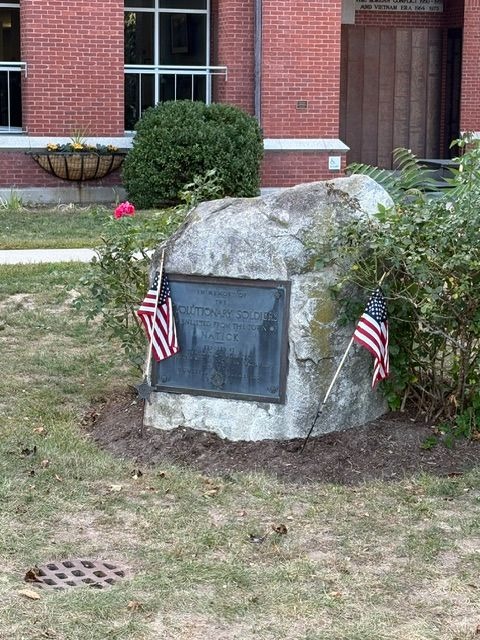
Revolutionary War Memorial
Though I have walked past this monument outside the Morse Institute Library more times than I can remember, I had never stopped to document it. The boulder and its bronze plaque had become part of the familiar surroundings. Taking this photograph gave me a reason to pause and learn how the memorial came to stand […]
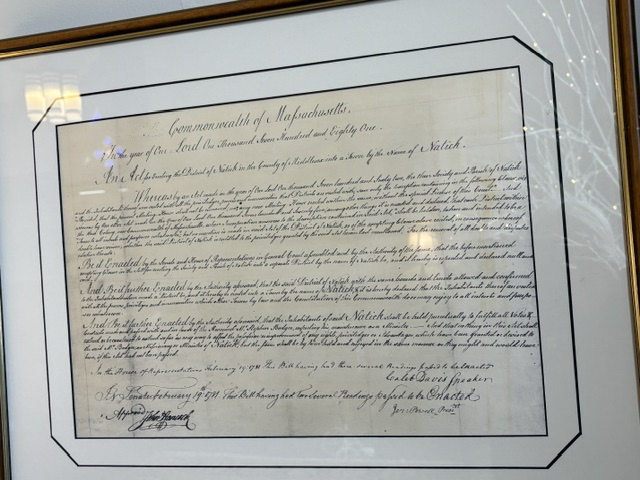
Natick’s Act of Incorporation
Natick’s history began long before it became an incorporated Massachusetts town. In 1651, the missionary John Eliot and a group of Indigenous Christian converts established Natick as one of New England’s first “Praying Towns.” The community developed its own systems of worship, government and agriculture while also enduring increasing colonial control, the loss of land […]

Harwood Baseballs
These Harwood baseballs and their original packaging tell an unexpected story about Natick’s place in the history of America’s national pastime. Beginning in 1858, H. Harwood & Sons manufactured baseballs here at a time when the sport itself was still developing into the organized game we recognize today. What began as a local manufacturing enterprise […]
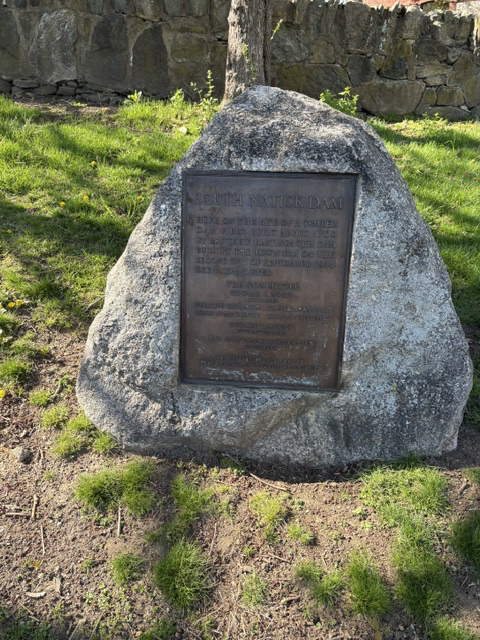
The South Natick Dam
Historic places do not always disappear because they are forgotten. Sometimes they disappear because communities decide how to balance preserving the past with meeting the needs of the future. The South Natick Dam, which has stood on the Charles River for well over a century, is one of those places. Constructed during the nineteenth century, […]
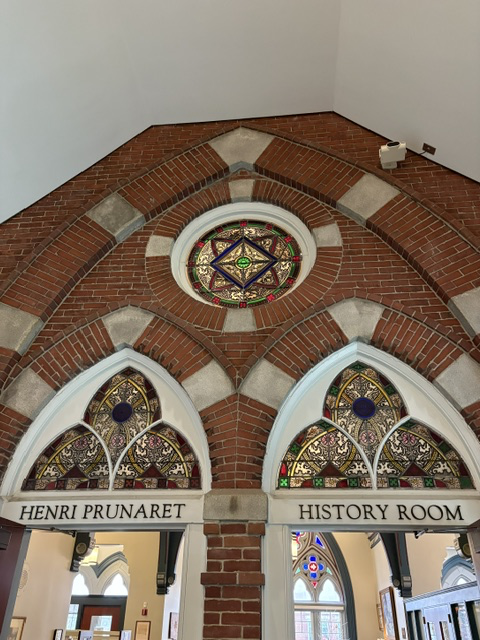
The Henri Prunaret History Room
Living in Natick, I have passed through the Morse Institute Library many times, but there are details inside the building that connect directly to the history of the town. One of them is this beautiful entrance to the Henri Prunaret History Room, framed by old brickwork, Gothic arches, and colorful stained glass. The Morse Institute […]
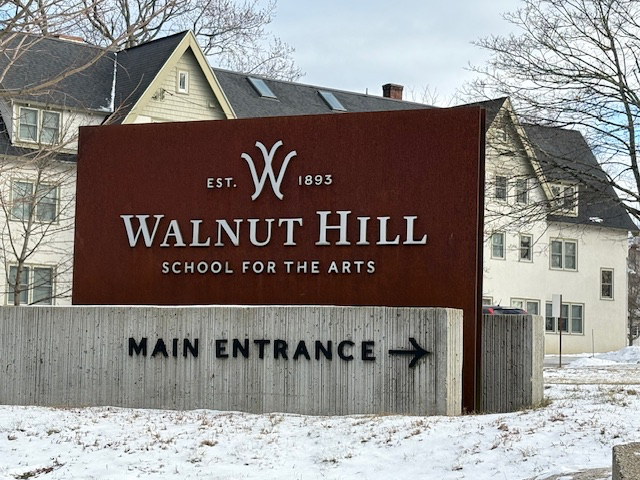
Walnut Hill School for the Arts
For more than 130 years, Walnut Hill School has been one of Natick’s most distinctive institutions. Founded in 1893 by Wellesley College graduates Florence Bigelow and Charlotte Conant, the school began as a college preparatory boarding school for young women. At a time when opportunities for women in higher education were still expanding, Walnut Hill […]
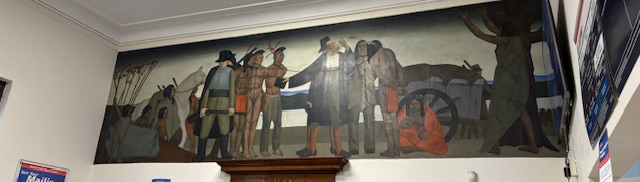
“John Eliot Speaks to the Natick Indians.”
One of the most thought-provoking works of art in my hometown hangs in an unexpected place—the downtown Natick Post Office. Painted in 1937 by Natick artist Hollis Howard Holbrook as part of the New Deal’s federal post office mural program, John Eliot Speaks to the Natick Indians depicts one of the most significant and tragic moments in […]
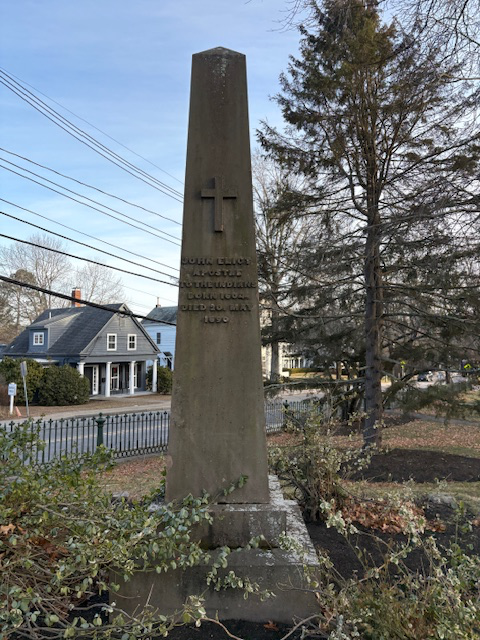
The John Eliot Monument
Standing quietly on a hill overlooking South Natick is this monument honoring John Eliot, the Puritan missionary often known as the “Apostle to the Indians.” Eliot devoted much of his life to working with the Native peoples of Massachusetts and is remembered for his efforts to share Christianity and establish communities known as “Praying Indian” towns. Arriving in […]
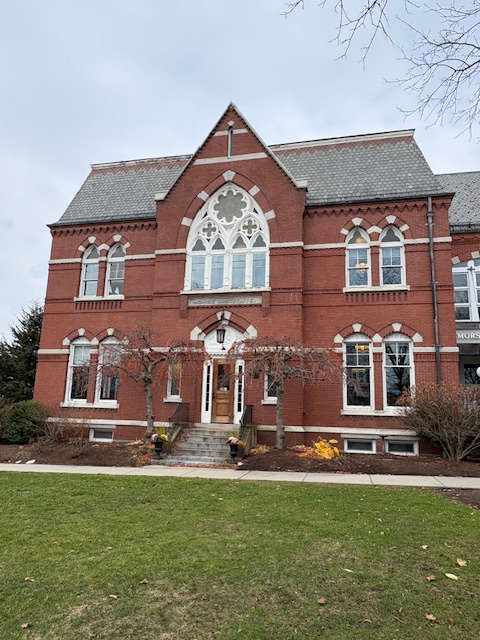
Morse Institute
In the center of Natick stands a building that reflects generosity and vision: The Morse Institute Library, established in 1873. This library was not simply constructed as a civic project. It was created through the will of Mary Ann Morse, who chose to leave a lasting gift to her community. The building itself was erected on the very site […]
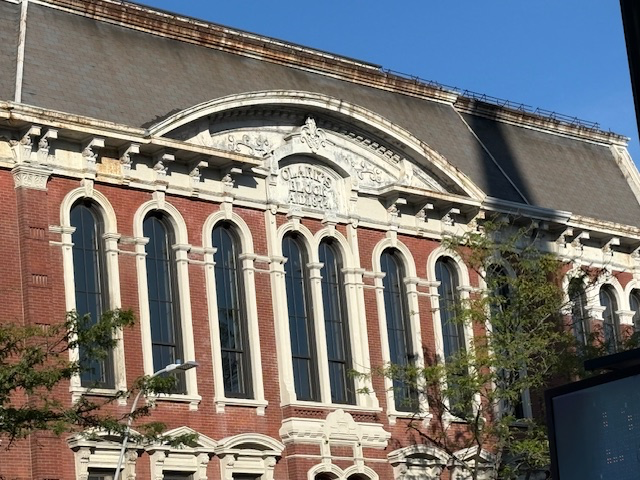
The Clark Block
In the center of Natick is this prominent commercial building labeled the Clark Block, 1874. Like many buildings constructed during that period, it reflects the growth of Natick as a busy manufacturing and commercial town in the later nineteenth century. During this time Natick was becoming well known for its boot and shoe industry, which helped transform what had once […]
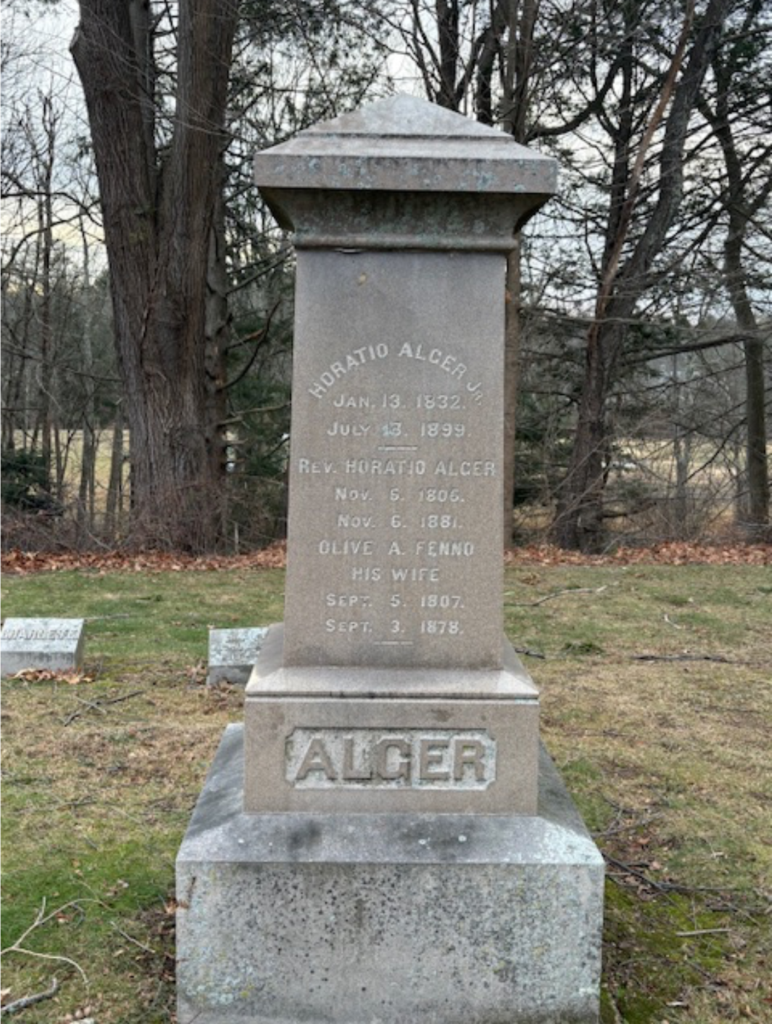
Horatio Alger’s Gravesite
This gravesite marks the Alger family plot in Glenwood Cemetery in Natick, the final resting place of Horatio Alger, Jr, one of the most read American authors of the late 19th century. Alger was born in 1832 and grew up in Natick, where his father, Rev. Horatio Alger Sr. served as pastor of the First Congregational […]
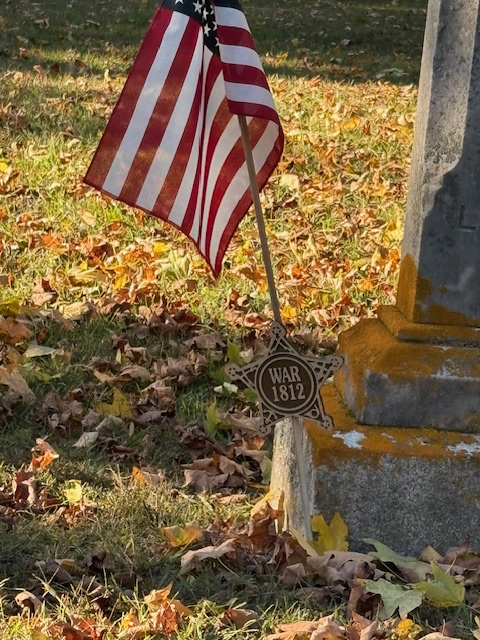
Star of War of 1812
Walking through a local cemetery, I noticed something that made me pause: a five-pointed metal star planted beside a grave holding an American flag. Cast into its surface are the words: War of 1812 I have come to recognize the familiar markers for Revolutionary War patriots and Civil War soldiers. Those appear often in New England cemeteries. But […]

