Harwood Baseballs
These Harwood baseballs and their original packaging tell an unexpected story about Natick’s place in the history of America’s national pastime. Beginning in 1858, H. Harwood & Sons manufactured baseballs here at a time when the sport itself was still developing into the organized game we recognize today. What began as a local manufacturing enterprise would eventually connect this Massachusetts town directly to professional baseball.
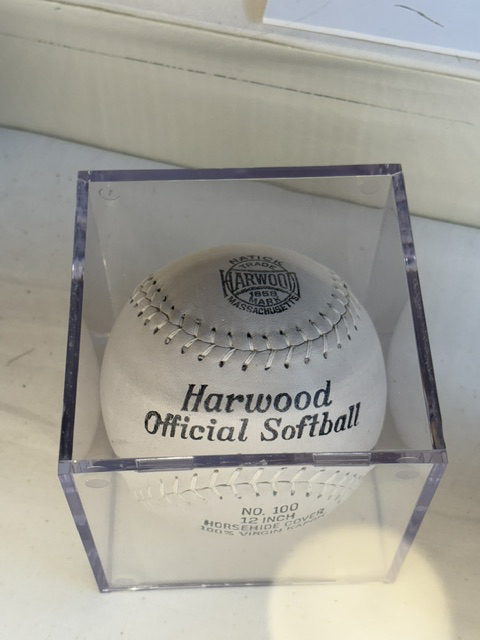
H. Harwood & Sons opened its baseball factory at the foot of Walnut Hill in 1858. The museum identifies it as the first baseball factory in the world. At a time when baseball was only beginning to develop into an organized national sport, workers in Natick were already producing the equipment needed to play it.
Making a baseball required a surprising amount of handwork. The familiar figure-eight pieces of leather forming the cover had to be carefully fitted around the ball and stitched together. The stitches visible on the Harwood softball in my photograph are a reminder that even as production increased, important parts of the process still depended upon the skill of individual workers. The museum notes that this stitching was probably performed by women.
Harwood grew along with baseball. As the game expanded from local clubs into organized professional leagues, the demand for standardized equipment increased. The Natick company became an important supplier, eventually providing baseballs to Major League teams. Balls manufactured in this Massachusetts town traveled far beyond Natick and onto professional baseball fields around the country.
The Harwood box is almost as interesting to me as the ball itself. “Official Harwood Baseball” is boldly printed across it, turning something manufactured in Natick into a recognizable sporting-goods brand. Packaging like this was meant to be discarded once the ball was removed, making its survival an especially useful part of the story today.
The Harwood factory continued supplying Major League teams with baseballs until the plant closed in 1988, an extraordinary span of approximately 130 years from the opening of the factory in 1858. Major League baseballs are still hand-stitched today.
Looking at the ball itself, it is easy to overlook the labor and history contained in such a familiar object. Someone had to cut and shape the leather, position the two pieces around the ball and carefully sew the rows of stitches that joined them together. Multiply that process by the thousands of baseballs needed as the sport grew, and the importance of the Natick operation becomes much clearer.
These surviving Harwood baseballs, softballs and boxes preserve a small but fascinating chapter of Natick’s industrial history. For more than a century, workers in this Massachusetts town were making an object recognized almost everywhere in America—and sending a little piece of Natick onto baseball fields across the country.
Read More From Nancy
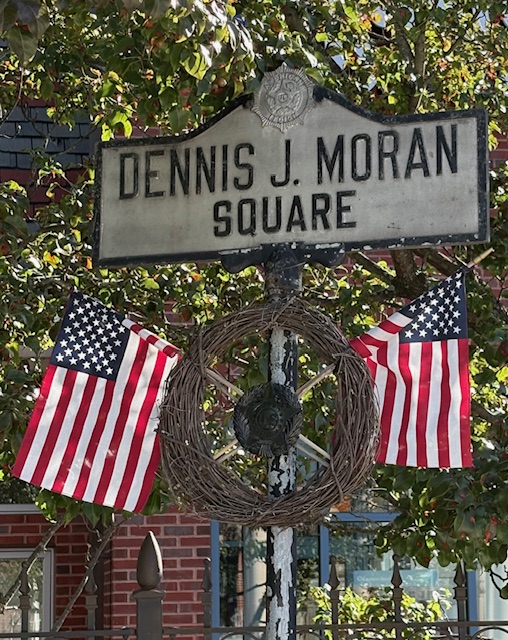
The Squares of Natick: Remembering the Names Behind Our Freedom
On a crisp fall day, walking through Natick is more than just enjoying the foliage — it’s also a journey through history. Scattered across town are memorial squares, quiet markers that carry the names of those who served, sacrificed, and shaped the story of our community. Three in particular stand out: Dennis J. Moran Square, […]
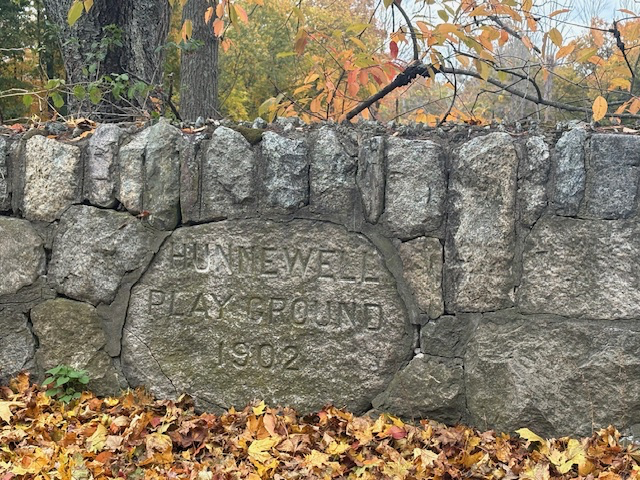
Hunnewell Playground
On my walks along Pleasant Street in South Natick, there is a large granite stone carved with these simple, bold words: “Hunnewell Playground – 1902” This stone holds a story of public generosity in Natick. The name Hunnewell carries deep roots in this region. The Hunnewell family, whose estate spread across Wellesley and into parts […]
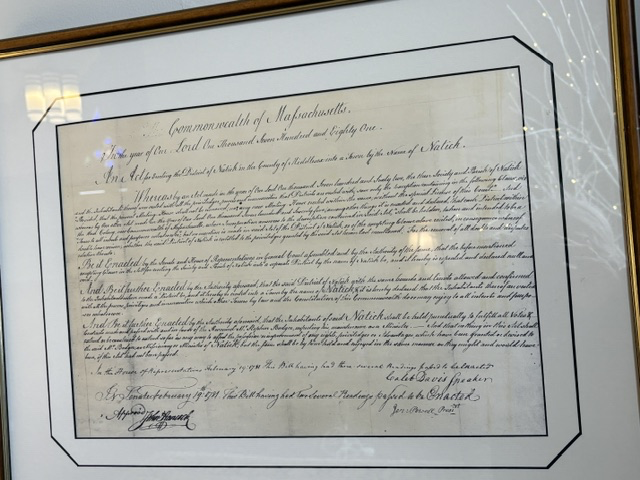
Natick’s Act of Incorporation
Natick’s history began long before it became an incorporated Massachusetts town. In 1651, the missionary John Eliot and a group of Indigenous Christian converts established Natick as one of New England’s first “Praying Towns.” The community developed its own systems of worship, government and agriculture while also enduring increasing colonial control, the loss of land […]

