The John Eliot Monument
Standing quietly on a hill overlooking South Natick is this monument honoring John Eliot, the Puritan missionary often known as the “Apostle to the Indians.” Eliot devoted much of his life to working with the Native peoples of Massachusetts and is remembered for his efforts to share Christianity and establish communities known as “Praying Indian” towns.
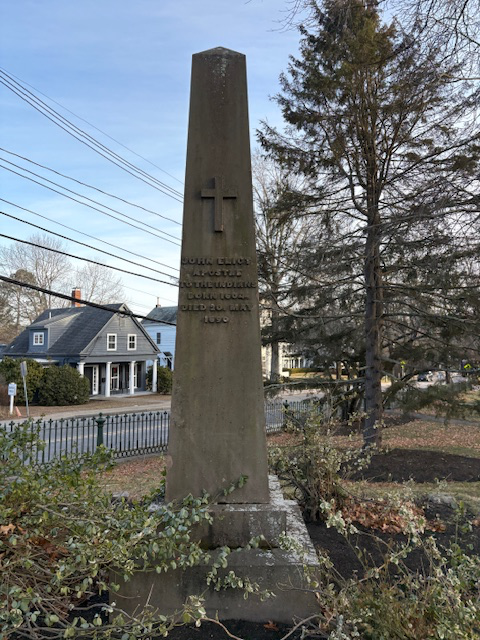
Arriving in New England in 1631, Eliot became pastor of the church in Roxbury, a position he held for nearly sixty years. Believing that the Gospel should be available to all people in their own language, he learned the Algonquian language spoken by many Native Americans and, in 1663, completed the first Bible printed in North America, translating it into the Massachusetts language. His work remains a remarkable linguistic and scholarly achievement.
Eliot is recognized as the founder of Natick in 1651 as a community for Christianized Native Americans. The town became the first and largest of the Praying Indian settlements and served as a center for education and worship. Although these communities faced tremendous hardships during King Philip’s War, Eliot continued to advocate for the Native people under his care.
The inscription on this monument records that John Eliot, Apostle to the Indians, died May 20, 1690. Erected centuries later, the memorial stands near the site of his missionary work and serves as a reminder of the complex and often difficult encounters between European settlers and Native Americans in colonial New England.
The monument stands on the grounds of the Bacon Free Library in South Natick. It has served as one of the community’s principal memorials to the man whose vision helped shape the area. Today, the surrounding neighborhood is known as the John Eliot Historic District, a testament to the enduring influence of his life and work.
The history of Natick extends back long before the town’s incorporation and this one man’s vision helped shape the community that would emerge. More than three centuries after his death, John Eliot’s influence remains woven into the identity of Natick itself.
Read More


Read More From Nancy
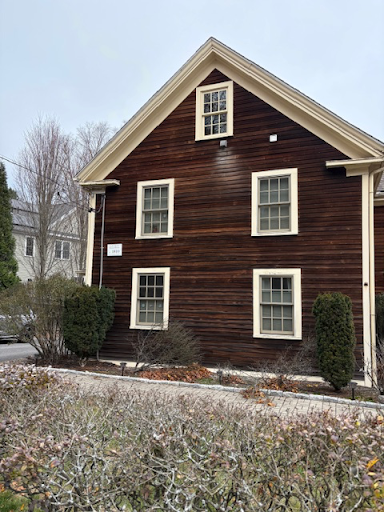
Little Brown Schoolhouse
Tucked along Pleasant Street in Natick is this unassuming building marked with the plaque reading 1810 and the Little Brown Schoolhouse. This is an example of Natick’s district schoolhouses, and a window into the town’s educational past. In 1810, Natick had not yet developed a centralized school system. Education was organized within small neighborhood districts with […]

Farewell to the South Natick Dam: Honoring the Place That Shaped My Years
For almost 40 years, I’ve called South Natick home. While it’s never been the place where I’ve felt deeply rooted, it’s where I raised my children, built our businesses, and lived a full chapter of life. Now, as I begin to explore the rich history that surrounds us, there’s no better place to start than […]
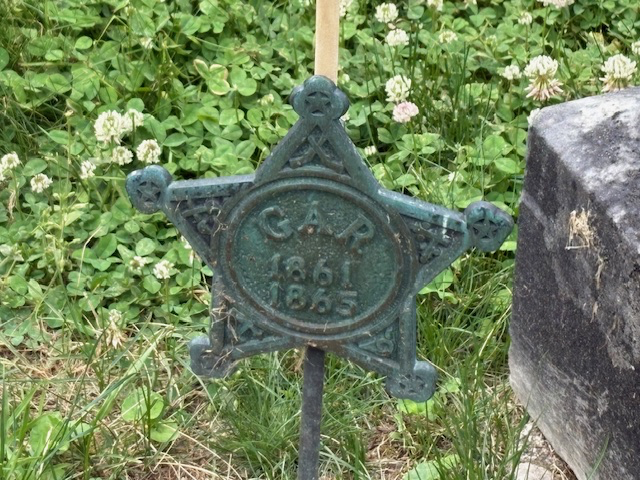
Glenwood Cemetery
Walking through the Glenwood Cemetery in Natick, there are many of these medallions and flags on the graves of veterans. All of these medallions are a bit different, but I had to look up what GAR stood for. It turns out GAR means the Grand Army of the Republic. This was a national fraternal organization […]

