Messages From the Past
A Window Into Everyday Life on the American Home Front,
These correspondences preserved from World War II, offer a rare, unfiltered look into what it meant to live through World War II as an American civilian. These letters, written by my parents and grandmother, caught in an extraordinary moment in time, capture the realities of a nation mobilized for war: rationing, restricted travel, overcrowded railways, financial strain, and the emotional weight carried by families waiting for news from their loved ones.
In these pages we see how mothers worried about their sons, wives longed to be with their husbands, and how soldiers coped with situations that pushed them to their limits. We also glimpse the infrastructure of wartime America, hospital trains transporting the wounded, shifting railroad schedules as troop movement took priority, and the everyday acceptance of sacrifice as a civic duty.
Beyond the headlines, these letters tell the story of how war shaped daily existence: the uncertainty of when loved ones would return, the struggle to balance hope with hardship, and the quiet resilience found in kitchens, train stations, and small towns across the country. Together, they illuminate a world in which ordinary Americans live with constant shortages, ever-changing rules, and the unspoken expectation to endure.
Recent Letters

Killed in Action
This is one of those pieces of history that doesn’t come from a monument or museum, but from something saved and carried forward without explanation. I found this newspaper clipping among my parent’s papers. It’s narrow and worn, but once I stopped to read it, it holds my attention; At the top are the words: “Killed in […]
Navigator and Base Passes
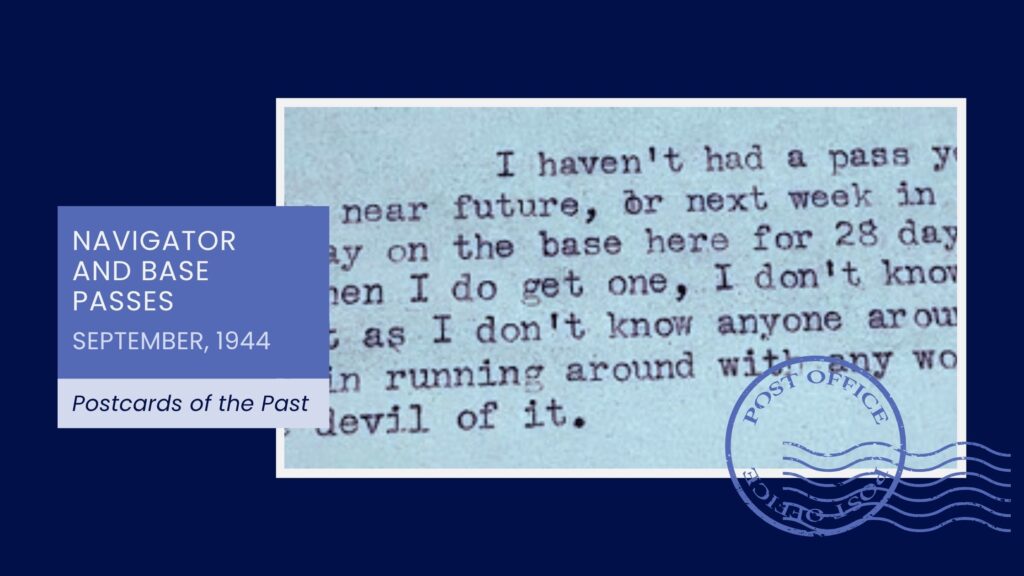
In a letter dated September 3, 1944, Charlie wrote to my father from Santa Ana, California. His letterhead says Aviation Cadet, and he relates that he has been classified as a Navigator in the United States Army Air Forces. That classification was not casual. It meant he had passed the Army aptitude testing with strong marks […]
Winged Victory
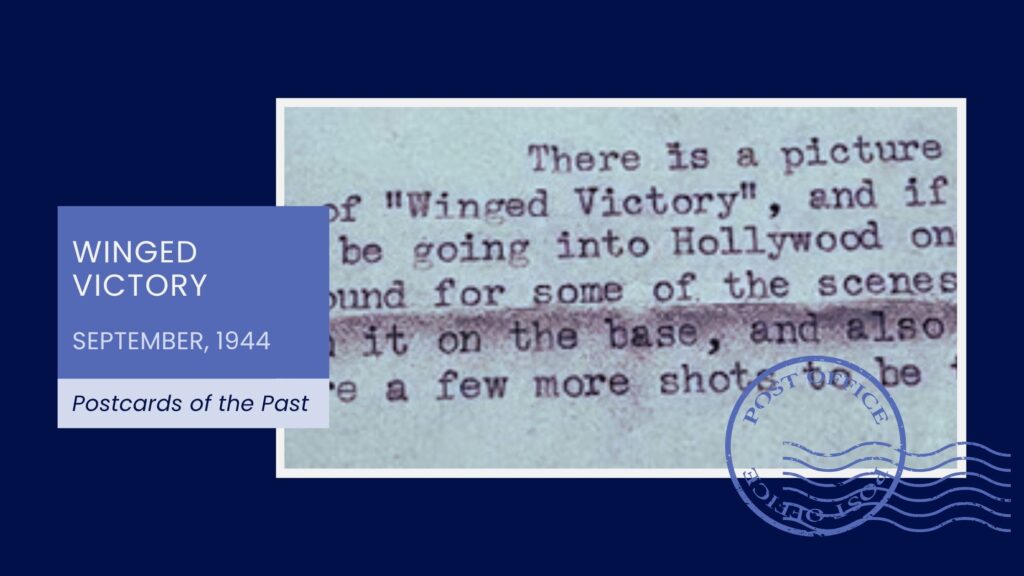
In a letter dated September 3, 1944, a friend of my father wrote from wartime California. The letter location was written, Santa Ana, California. Santa Ana Army Base was one of the largest Army Air Forces training and processing centers during World War II. Thousands of young men passed through its barracks for classification and […]
Wiring Splicing Champs
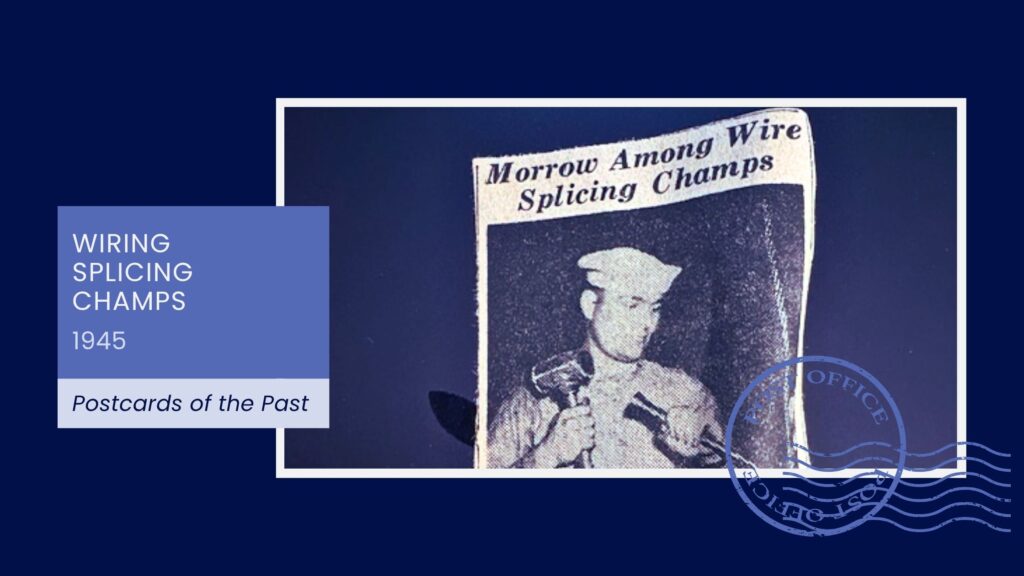
Sometimes the small clippings among my parents’ papers raise more questions than they answer. This is one of them. This small newspaper photograph of a sailor, James A. Morrow, has my mother’s handwritten date: March 23, 1943. The article itself is short and simple. It reports that a wire-splicing champion at an amphibious base in […]
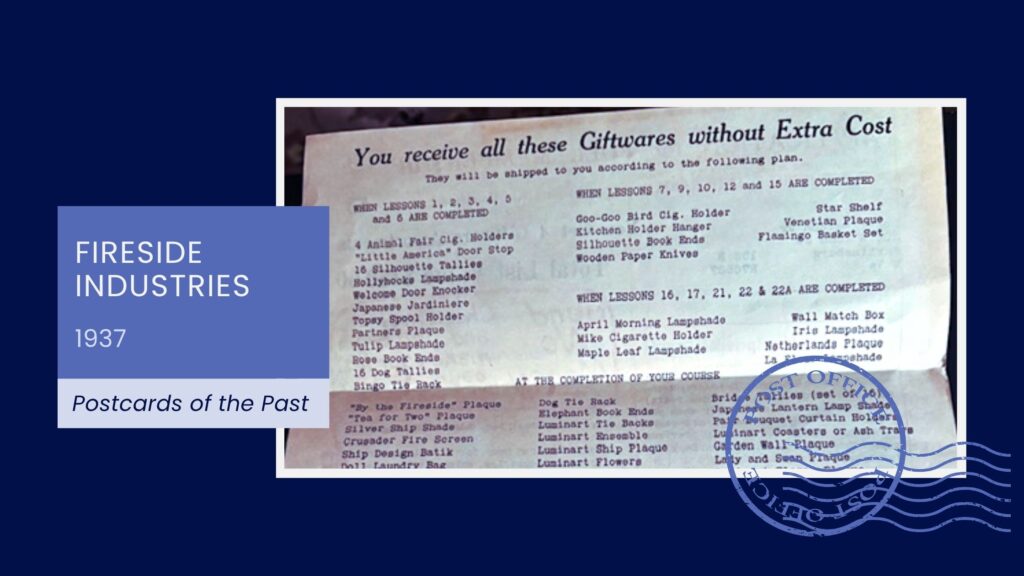
Fireside Industries
Another company that reached out to my father was Fireside Industries of Adrian, Michigan. They offered him a free rug hooking course, an invitation to learn a craft that could be done at home and perhaps turn into a source of income. But the offer did not stand alone. With membership, he would also receive […]
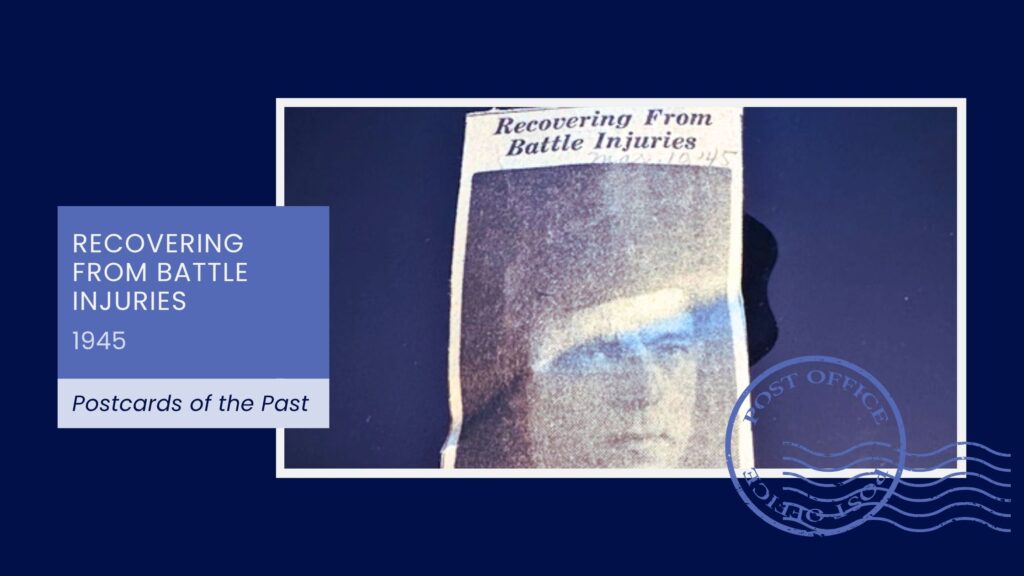
Recovering from Battle Injuries
Sometimes these small newspaper clippings tell a powerful story in just a few lines. One such clipping carries the heading: “Recovering from Battle Injuries“. The article explains that the wife of 1st Sgt Garnett Shipley had recently received word that her husband was making normal progress in recovery following amputations required after injuries he sustained […]
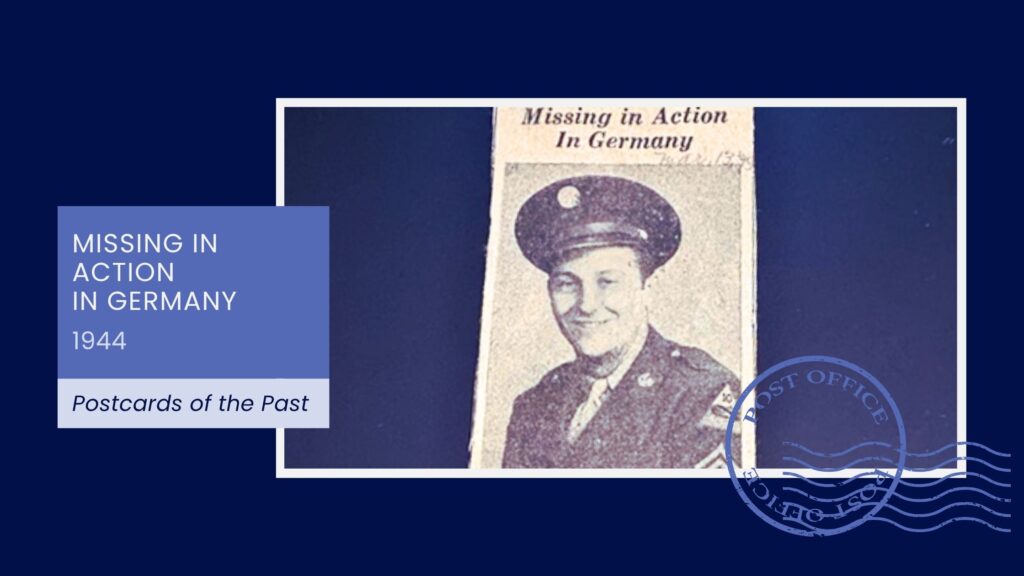
Missing in Action in Germany Clipping
Sometimes it is not immediately clear why certain papers were saved. As I sort through the letters and clippings my parents kept, I occasionally come across items whose meaning is not obvious at first. One such folder contains a collection of small newspaper clippings about servicemen. The articles seem to come from many different places and […]
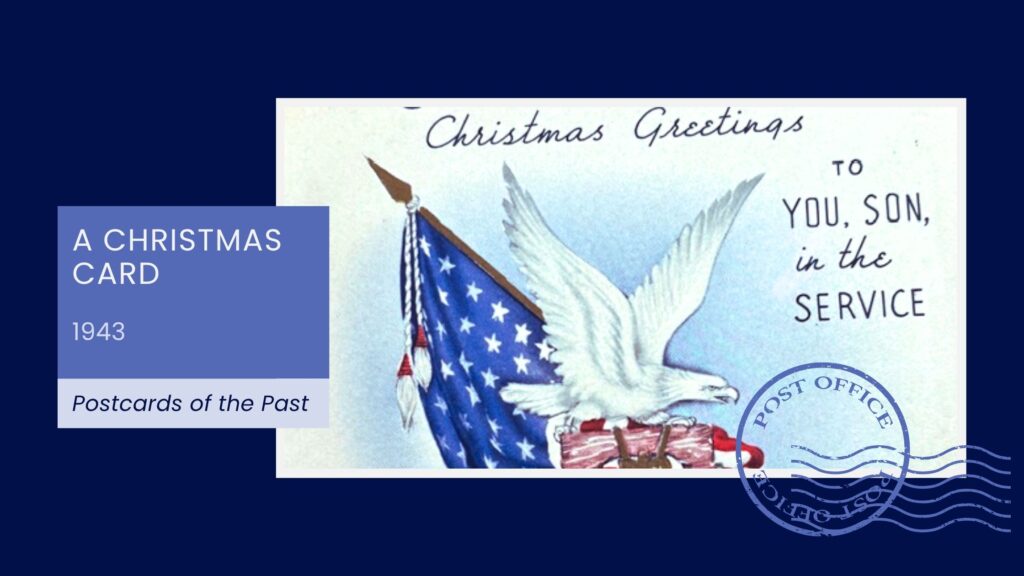
A Christmas Card
In a box of saved letters and photographs, I found a Christmas card my grandmother sent to my father in 1943. The front is not decorated with wreaths or candles. There is no snow, no manger scene, no holly. Instead, it bears an American flag, The Liberty Bell and a white eagle: symbols of a nation […]
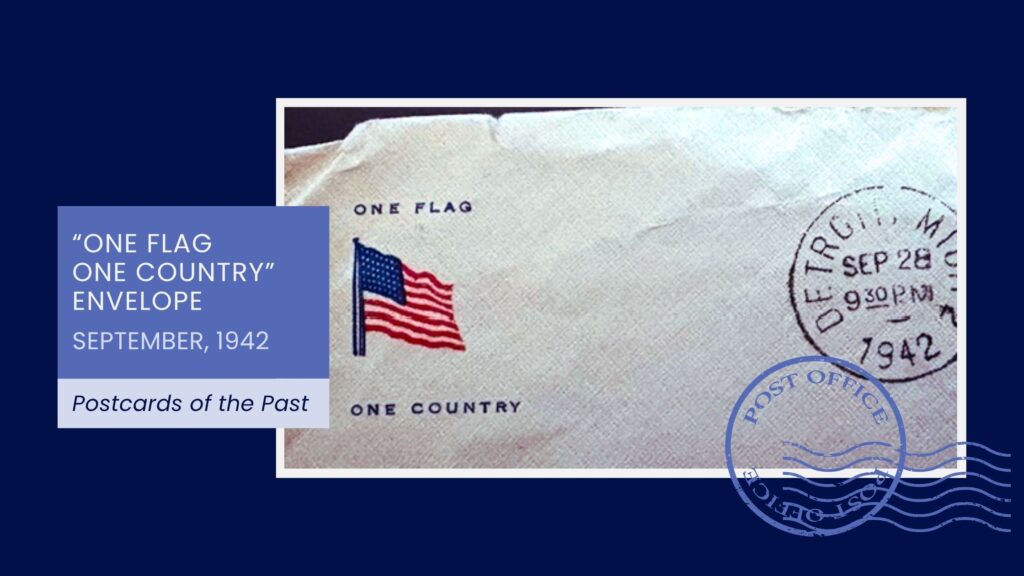
“One Flag One Country” 1942 Envelope
As I continue to explore the letters that were written to my father while he was stationed in the Army during World War II, it is often the small details that catch my attention. One envelope stood out. The letter had been mailed from Michigan, and the postmark reads: September 18, 1942. But what caught my eye […]
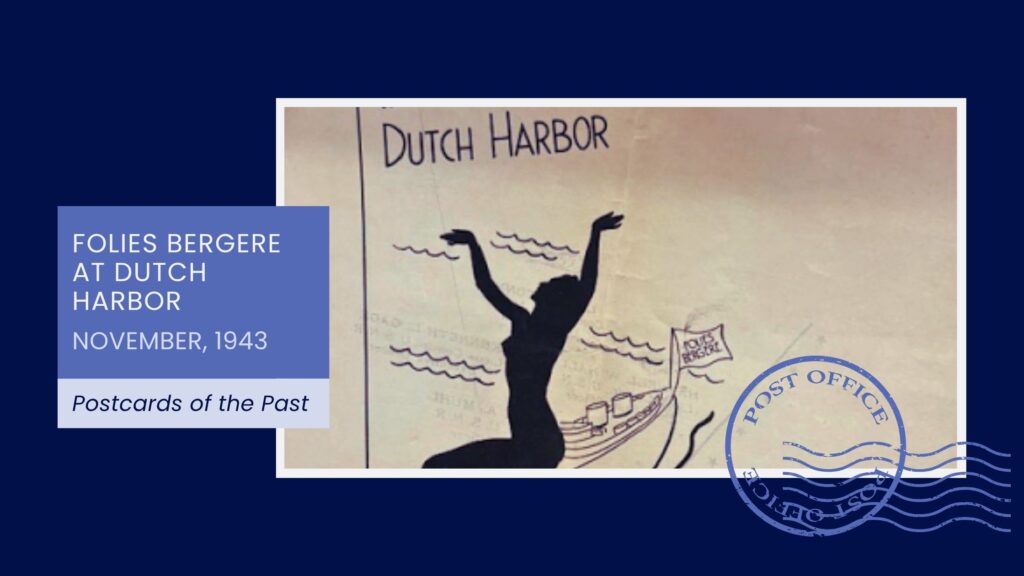
Folies Bergere at Dutch Harbor
In November 1943, my father was stationed in the Aleutian Islands, at Dutch Harbor, one of the most remote and strategically important American outposts of World War II. From there, he mailed home small pieces of memorabilia so my mother could glimpse the life he was living at the far edge of the continent. Among those […]
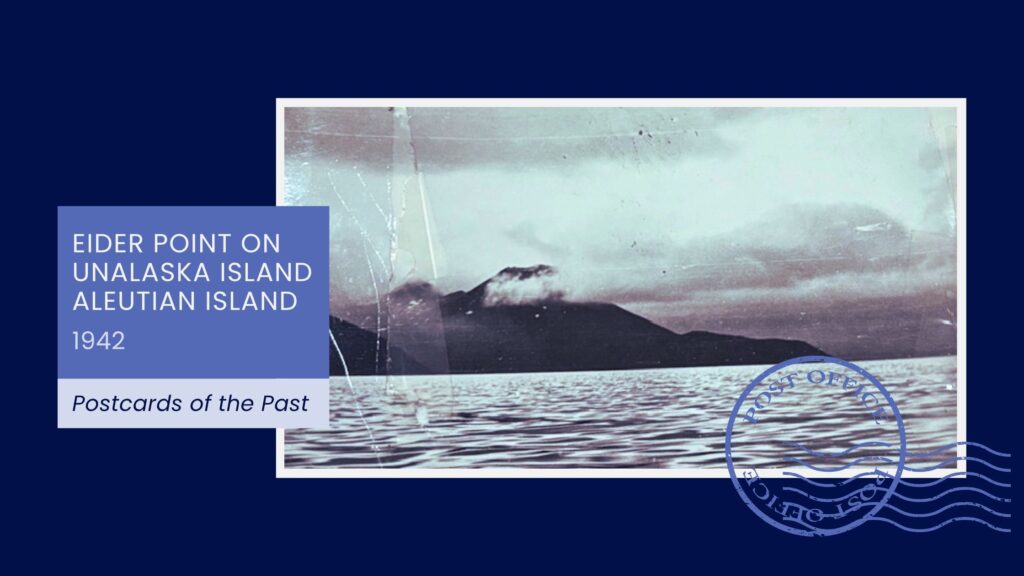
Eider Point on Unalaska Island – Aleutian Island
This photograph my father sent home is of water, land and sky and without the words on the back, I would not know where this was located. My father wrote on the back: “LOOKING FROM ISLAND AMAKNAK, DUTCH HARBOR ACROSS TO EIDER POINT ON UNALASKA ISLAND, EIDER POINT KNOWN AS FORT LEANARD OF “B” BTRY 264 CA” […]
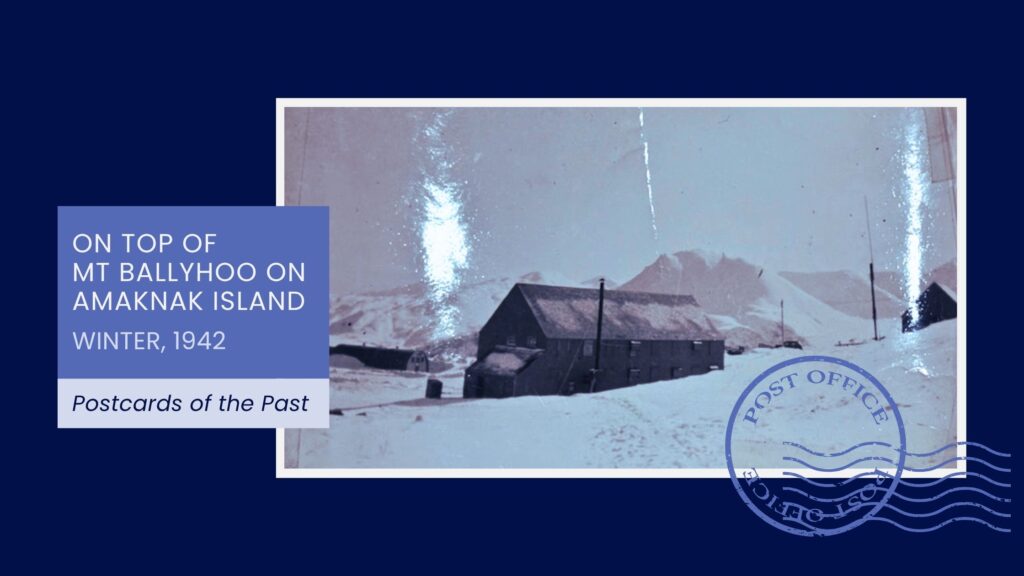
On top of Mt Ballyhoo on Amaknak Island
This photo tells more of my father’s story in the Aleutians. On the back of the photo, my father wrote: “ON TOP OF MT. BALLYHOO (BARRACKS HOUSING HQ BTRY 264TH CA) ON AMAKNAK ISLAND OVERLOOKING DUTCH HARBOR IN ALEUTIAN ISLANDS WINTER OF ’43” This placed my father on Mount Ballyhoo, the steep volcanic rise that […]

