Dr. Woods – Ophthalmologist
July 1944Dearest Reader,
“I would like to get you under Dr Woods who, I understand, is the head of the Wilmer Institute”
Dr Alan Woods was one of the most respected ophthalmologists of the mid-20th century and a leading figure in American eye medicine. A graduate of Johns Hopkins, Woods trained under the pioneering ophthalmologist William Wilmer and went on to become his successor. In 1934, Woods was appointed Director of the Wilmer Ophthalmological Institute, the nation’s first university-based eye hospital devoted entirely to research and training in ophthalmology. By 1937, he was placed at the forefront of clinical and academic innovation in eye disease. Under his leadership, Wilmer became the premier center for diagnosing and treating complex ocular disorders.
Dr Woods specialized in the most challenging eye conditions. His research contributed to advancements in corneal disease, optic nerve disorders and visual impairment. He was the physician to see when an eye condition needed authoritative assessment. In 1944, my grandmother wanted my father to be assessed by Dr Wood, so that his condition could be seen, heard and diagnosed by one of the foremost ophthalmologists of the era.
Dr. Nancy Watson
Washington
Read More From Nancy
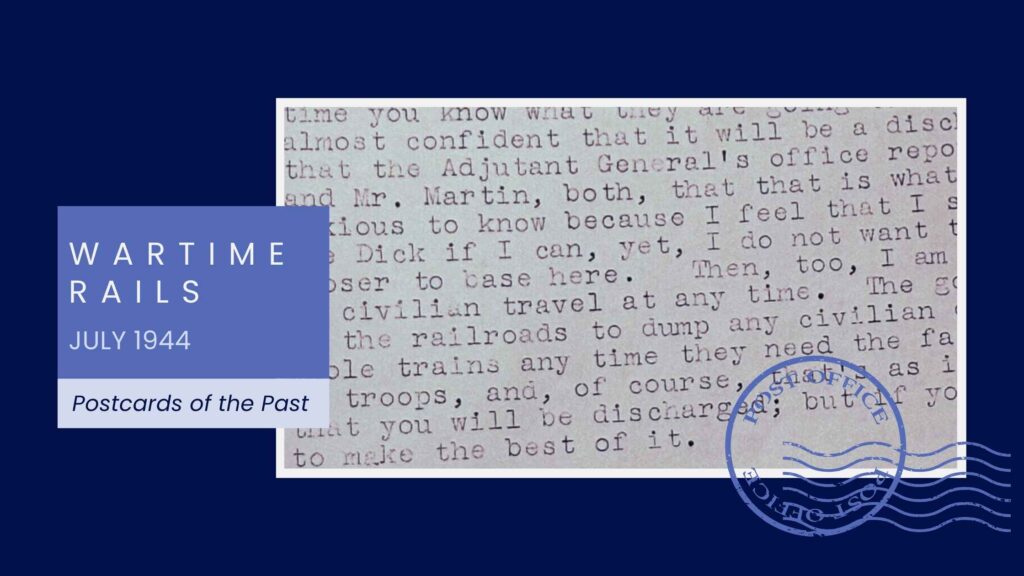
Wartime Rails
On Thursday, July 6, 1944, my grandmother sat at her typewriter once again to write to my father. It seems she wrote every day with letters mixed of small local happenings, the weather and some words of advice for her only son. In this letter her daily life intersects with the larger rhythm of a […]
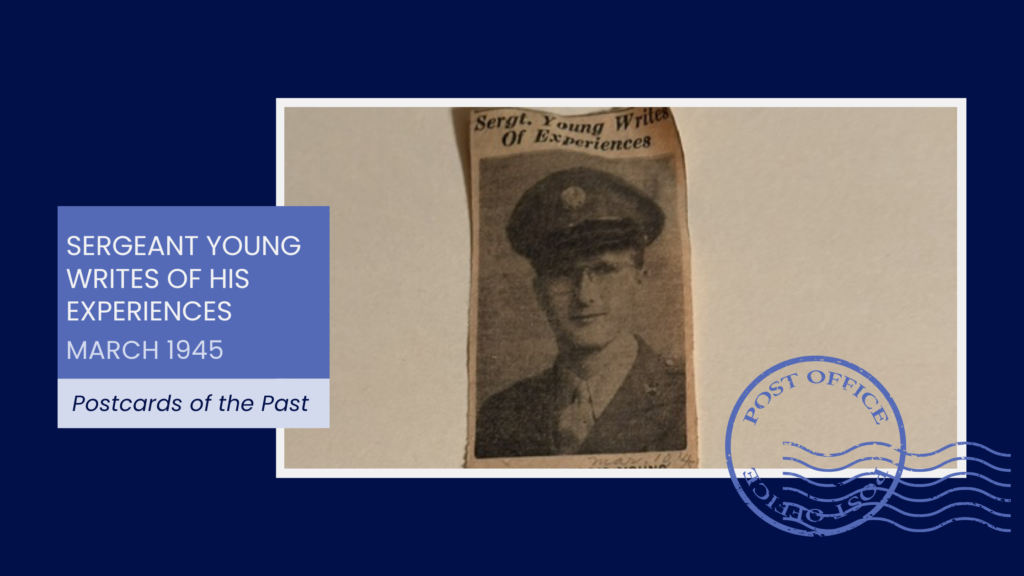
Sergeant Young Writes of His Experiences
Among my mother’s papers, I found this small newspaper clipping about Sergeant Morris Young. In her handwriting, she noted the date, “March 10, 1945” I don’t know why she chose to save it, but it was clearly important enough that she kept it for many years. During World War II, local newspapers regularly published letters […]
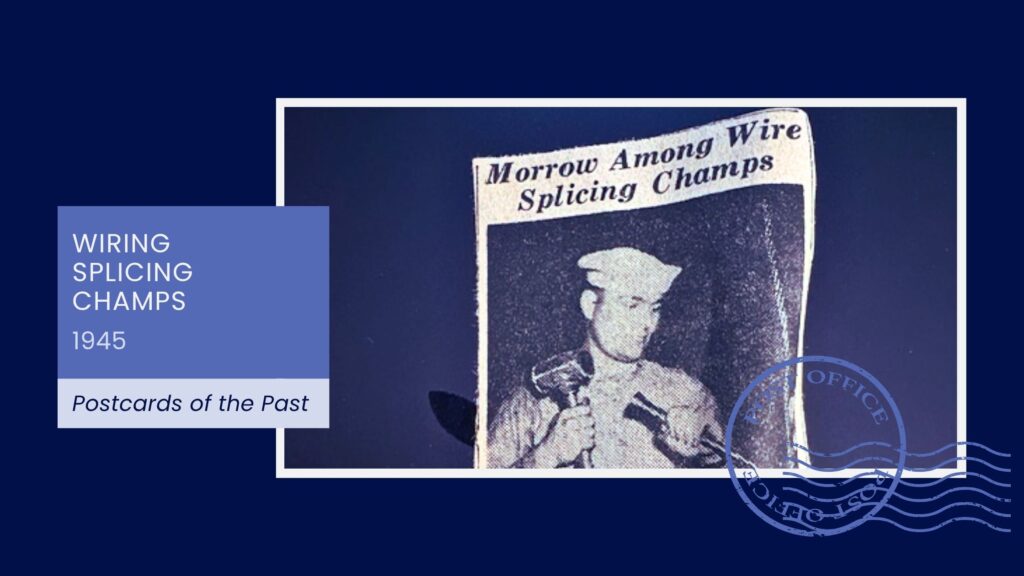
Wiring Splicing Champs
Sometimes the small clippings among my parents’ papers raise more questions than they answer. This is one of them. This small newspaper photograph of a sailor, James A. Morrow, has my mother’s handwritten date: March 23, 1943. The article itself is short and simple. It reports that a wire-splicing champion at an amphibious base in […]

