Gas Rationing
July 1944Dearest Reader,
In 1944, gasoline rationing had become an accepted part of American life. Every driver carried a small ration book, and a lettered windshield sticker determined how much fuel they were permitted each week.
For most families, like my mother’s, the driver had an A-ration card, the most common classification in the country. It allowed only three gallons of gasoline per week, just enough for commuting to work, church and necessary errands.
Cars of the early 1940s were not fuel-efficient, often getting 10 to 15 miles per gallon so a few gallons a week disappeared quickly. In one of her letters, my mother captured the reality of that time:
“If we go too far, I guess it will have to stay here til after the war when there is plenty of gas.”
This sentence reflects the common reality that was felt by millions of Americans. Many families walked or relied on infrequent buses and leisure travel was not common. Rationing gave families a shared sense of sacrifice. My mother’s comment captures this time when Americans lived within wartime limits and waited for a future “when there is plenty of gas”.
Dr. Nancy Watson
Washington
Read More From Nancy
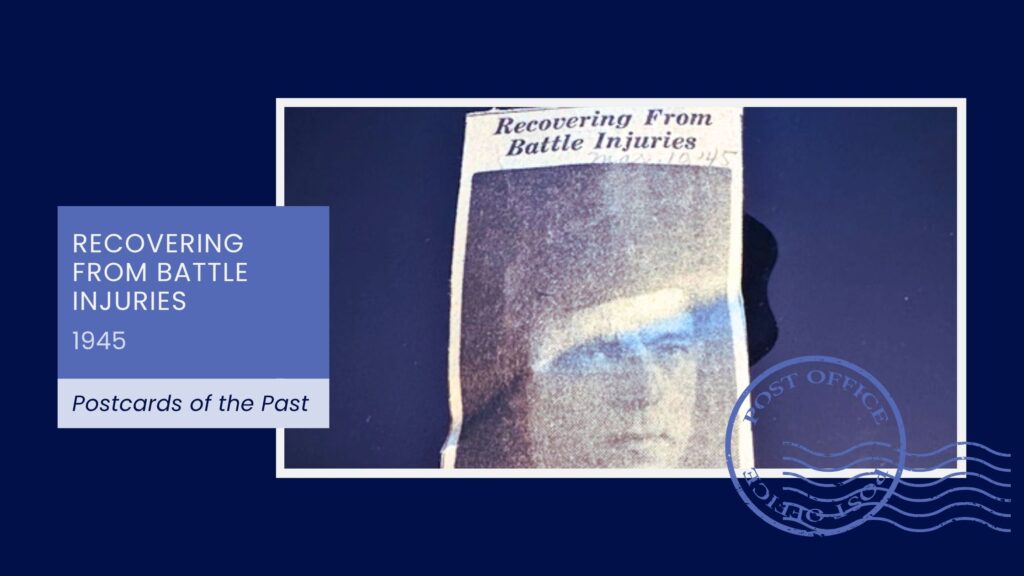
Recovering from Battle Injuries
Sometimes these small newspaper clippings tell a powerful story in just a few lines. One such clipping carries the heading: “Recovering from Battle Injuries“. The article explains that the wife of 1st Sgt Garnett Shipley had recently received word that her husband was making normal progress in recovery following amputations required after injuries he sustained […]

Transportation Request for my Father
Among the military papers preserved by my family is a wartime transportation request issued to my father, Roger E. Watson, in June 1944. At first glance, it appears to be a little more than a train ticket, but documents such as this played an essential role in the movement of millions of servicemen across the United States […]
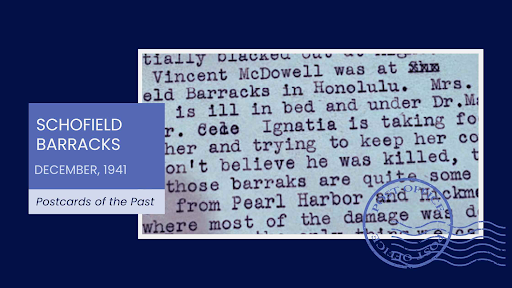
Schofield Barracks
Schofield Barracks sits in the center of Oahu, inland from the coast. Established in 1908 and named for Lt. Gen John M Schofield, the post was deliberately placed away from the shoreline to function as a permanent U.S. Army installation. It was designed for training, housing and command and not for naval operations. By 1941, Schofield […]

