Barcelona
Recent Articles
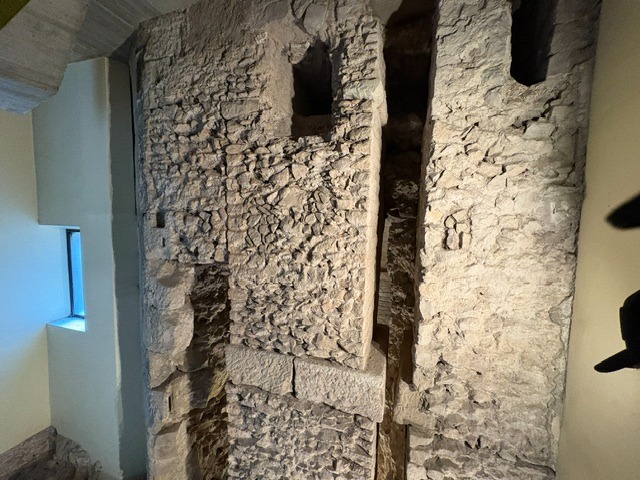
The Roman Aqueduct
Inside Casa de l’Ardiaca, near Barcelona’s cathedral, surviving water channels reveal part of the engineering that supported the ancient Roman city of Barcino. Built into a site later occupied by a medieval residence, these remains preserve evidence of an essential urban service: bringing fresh water from beyond the city walls. The Romans established Barcino near […]
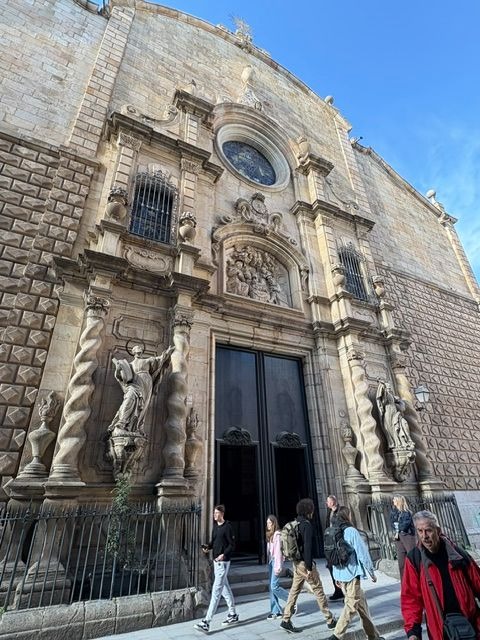
Church of Mare de Déu de Betlem
At the corner of La Rambla and Carrer del Carme, the Church of Mare de Déu de Betlem preserves an elaborate Baroque entrance amid one of Barcelona’s busiest areas. Twisting stone columns, sculpted saints, and a relief of the Nativity identify a church whose history includes two destructive fires and the expulsion of the religious […]
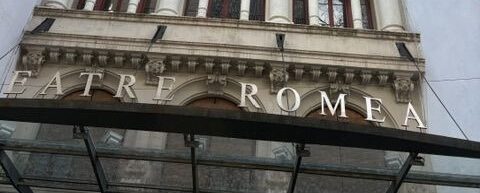
Teatre Romea
On Carrer de l’Hospital in Barcelona’s Raval district, the Teatre Romea preserves a history closely connected with the development of Catalan theater. Behind its columned façade, generations of actors and playwrights helped establish Catalan as a language of popular entertainment and serious dramatic expression. The theater opened on November 18, 1863, in premises previously occupied […]
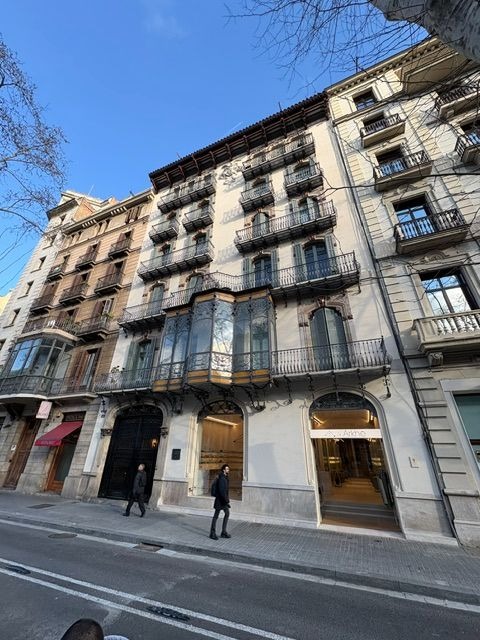
Casa Dolors Calm
At 54 Rambla de Catalunya, Casa Dolors Calm reveals how an existing building could be transformed through architecture and decorative craftsmanship. Its projecting wooden bay windows give the façade a distinctive character, bringing together glass, patterned woodwork, and ornamental details. The original house was constructed in 1879 by master builder Josep Déu i Busquets. Between […]
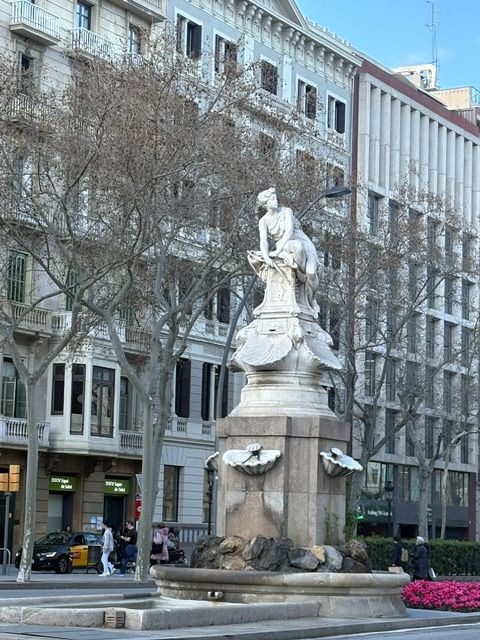
Diana Fountain
At the intersection of Gran Via de les Corts Catalanes and Carrer de Roger de Llúria, the Diana Fountain brings a figure from Roman mythology into Barcelona’s everyday streetscape. Seated above the fountain, the goddess holds the bow that identifies her as Diana, traditionally associated with hunting and the natural world. The sculpture is the […]
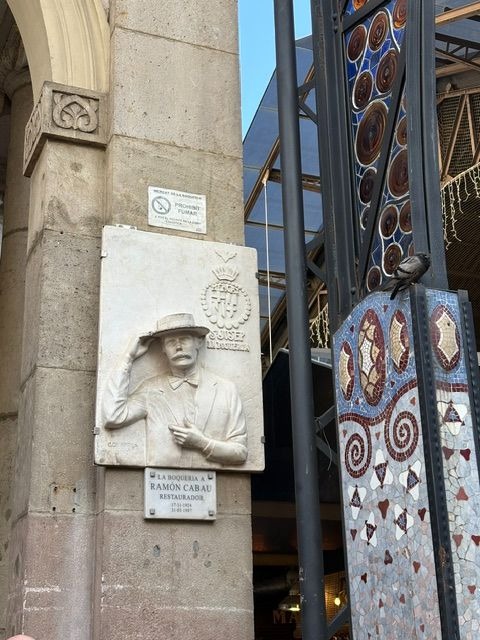
Ramon Cabau
At an entrance to Barcelona’s La Boqueria market, a sculpted relief depicts a man lifting his straw hat in greeting. The inscription identifies Ramon Cabau, a restaurateur whose close relationship with the market made him one of its memorable personalities. Born in 1924, Cabau became known through Agut d’Avinyó, a restaurant in Barcelona’s old city. […]
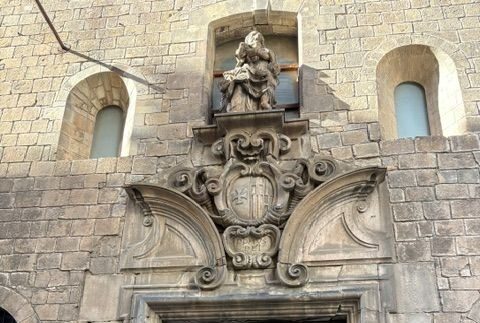
La Capella
Above the entrance to La Capella, a sculpted figure represents Charity. Created by Pere Costa in 1730, it recalls the building’s original role as the chapel of Barcelona’s Hospital de la Santa Creu. Today, the doorway opens into a space devoted to contemporary art. The chapel was completed in 1444, incorporating an earlier structure associated […]
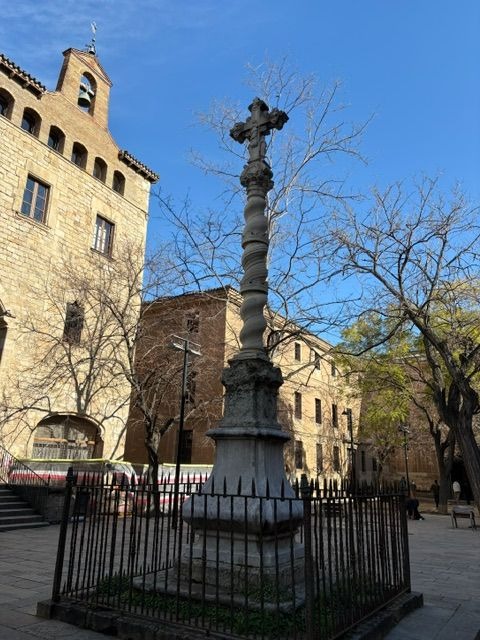
Hospital de la Santa Creu
Within Barcelona’s Raval district, the courtyard of the old Hospital de la Santa Creu preserves the setting of an institution that cared for the city for more than five centuries. Stone buildings surround a garden where a carved cross recalls the religious and charitable foundations of the hospital’s work. The hospital was founded in 1401 […]
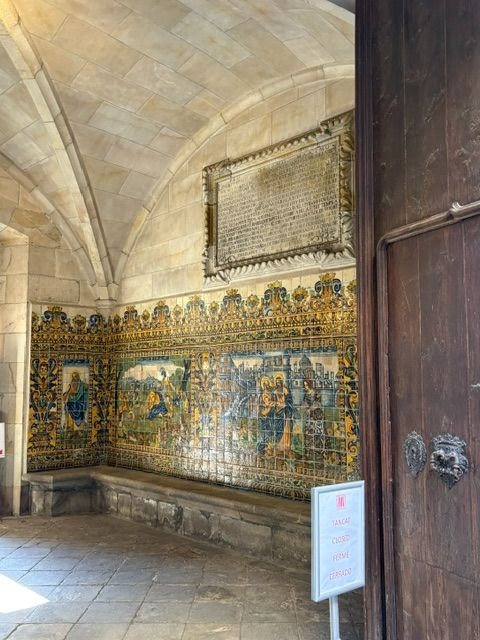
Casa de Convalescència
At the old Casa de Convalescència on Carrer del Carme, colorful ceramic panels line a stone-vaulted entrance. Their scenes and ornamental borders belong to a building created for a particular stage of medical care: the period when patients no longer needed hospital treatment but were not yet strong enough to return to everyday life. The […]
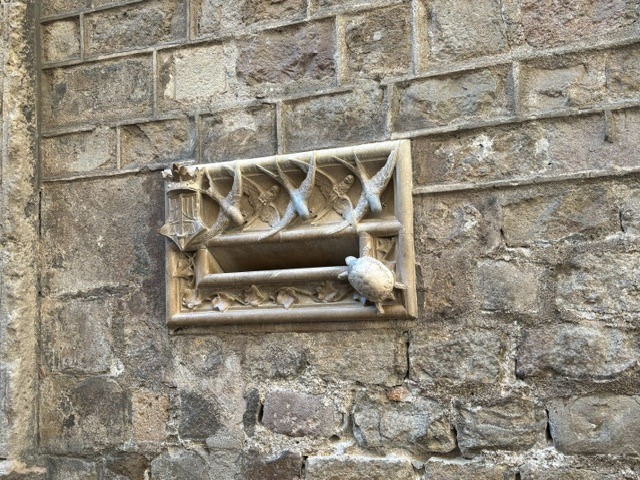
The Mailbox at Casa de l’Ardiaca
Beside the entrance to Casa de l’Ardiaca, a marble mailbox brings an unexpected detail to the streets of Barcelona’s Gothic Quarter. Birds spread their wings above curling ivy, while a tortoise rests below. Created for a lawyers’ association, its decoration has long been interpreted as a commentary on the workings of justice. The Barcelona Bar […]
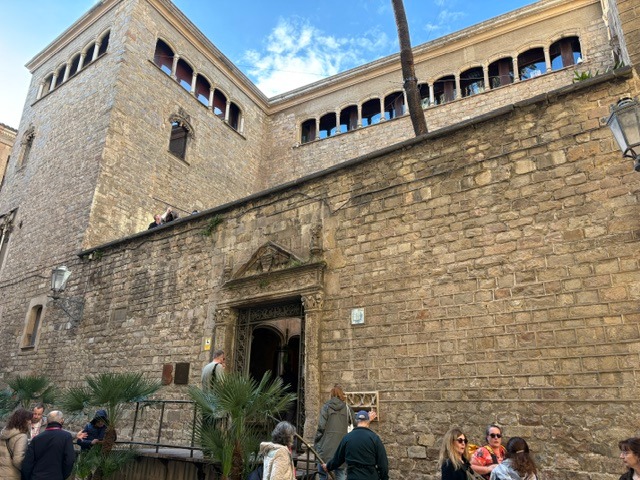
Casa de l’Ardiaca
Beside Barcelona’s cathedral, Casa de l’Ardiaca preserves centuries of changes within a single building. Its name means “Archdeacon’s House,” recalling its long association with a senior member of the cathedral’s clergy. Roman masonry, Gothic architecture, and Renaissance details reflect the successive generations that adapted the property. The residence has origins in the twelfth century and […]
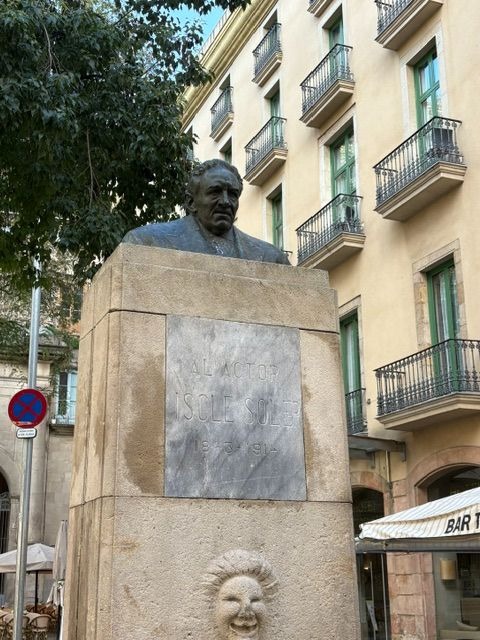
Iscle Soler
In Plaça de Sant Agustí, a bronze bust honors Iscle Soler i Samsot, an actor closely associated with the growth of Catalan theater. Raised above a stone pedestal, his portrait preserves the memory of a performer whose working life unfolded largely at the nearby Teatre Romea. Born in Barcelona in 1843, Soler trained as a […]

