La Capella
Above the entrance to La Capella, a sculpted figure represents Charity. Created by Pere Costa in 1730, it recalls the building’s original role as the chapel of Barcelona’s Hospital de la Santa Creu. Today, the doorway opens into a space devoted to contemporary art.
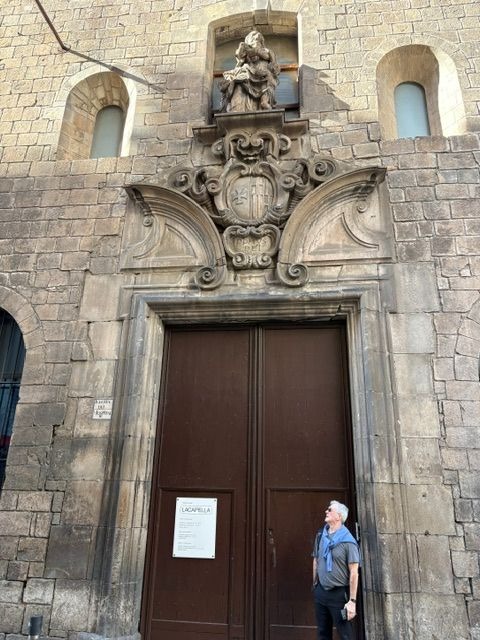
The chapel was completed in 1444, incorporating an earlier structure associated with the Colom hospital. Its place within the hospital complex reflected the close connection between religious practice and care for the sick.
The entrance belongs to an eighteenth-century remodeling that introduced Baroque features into the older building. Curving stonework surrounds the hospital’s emblem beneath the figure of Charity, giving the institution’s charitable purpose a visible presence above the door.
Restoration between the 1930s and 1960s recovered earlier architectural elements, including a thirteenth-century barrel vault and later medieval arches. These surviving features reveal how successive generations altered the chapel.
After hospital services moved elsewhere, the building acquired a cultural role. A major Joan Miró retrospective took place here in 1968, and since 1994 La Capella has focused on work by emerging artists.
The former chapel now brings historic architecture into contact with new artistic ideas. Its entrance preserves the language of charity that shaped its beginnings, while the exhibitions inside continue the building’s long history of serving Barcelona.
Read More From Nancy
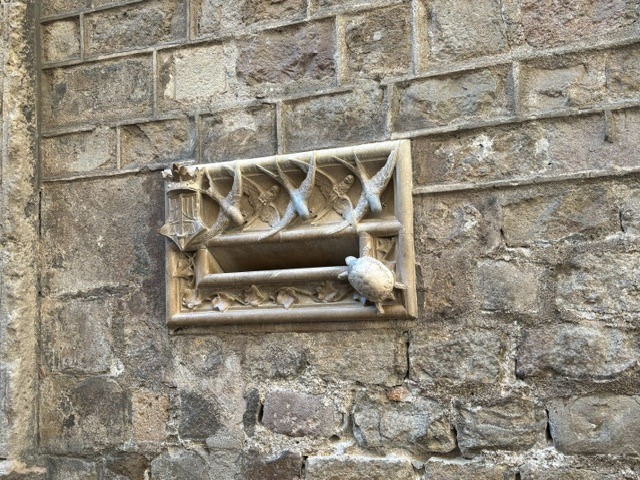
The Mailbox at Casa de l’Ardiaca
Beside the entrance to Casa de l’Ardiaca, a marble mailbox brings an unexpected detail to the streets of Barcelona’s Gothic Quarter. Birds spread their wings above curling ivy, while a tortoise rests below. Created for a lawyers’ association, its decoration has long been interpreted as a commentary on the workings of justice. The Barcelona Bar […]
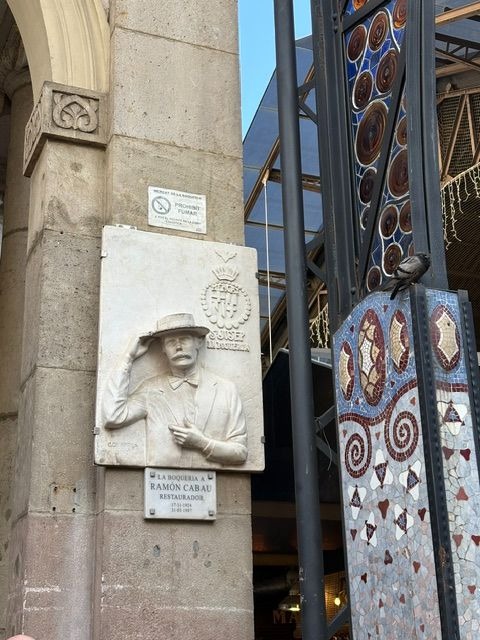
Ramon Cabau
At an entrance to Barcelona’s La Boqueria market, a sculpted relief depicts a man lifting his straw hat in greeting. The inscription identifies Ramon Cabau, a restaurateur whose close relationship with the market made him one of its memorable personalities. Born in 1924, Cabau became known through Agut d’Avinyó, a restaurant in Barcelona’s old city. […]
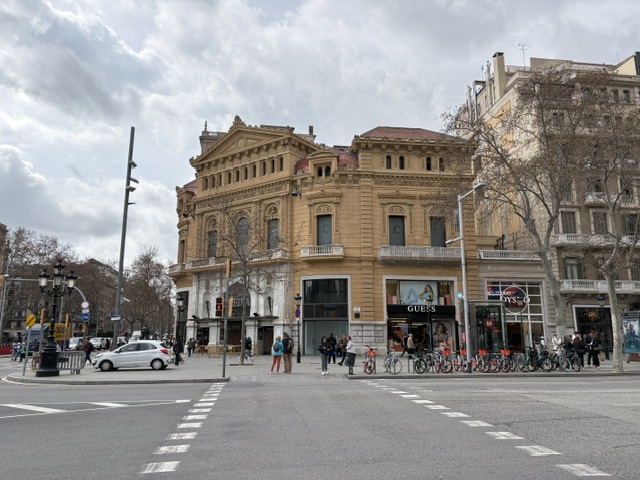
Palau Marcet: From Private Palace to Cinema
While walking through Barcelona, we came across a building whose ornate façade stood out against the activity of the surrounding streets. Tall arched windows, carved decoration, and a triangular pediment gave it the appearance of a grand residence. The Comèdia name above the entrance suggested another purpose. This was Palau Marcet, a private palace that […]

