Casa de Convalescència
At the old Casa de Convalescència on Carrer del Carme, colorful ceramic panels line a stone-vaulted entrance. Their scenes and ornamental borders belong to a building created for a particular stage of medical care: the period when patients no longer needed hospital treatment but were not yet strong enough to return to everyday life.
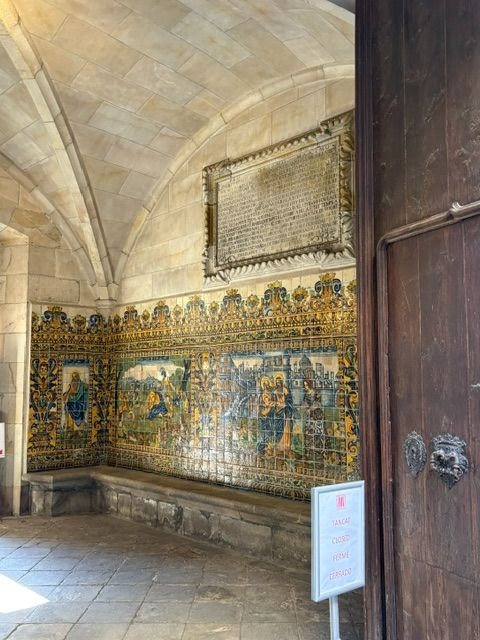
The house formed part of the Hospital de la Santa Creu complex in Barcelona’s Raval district. Its foundation stone was laid in 1629, and it opened in January 1680. Bequests from several benefactors supported its construction, with the merchant Pau Ferran’s legacy providing a decisive contribution.
A separate place for convalescence addressed a practical problem. Patients recovering from illness needed rest and nourishment away from crowded hospital wards, where infection or relapse could threaten their progress. The house gave that period of recovery its own space within the hospital’s charitable work.
The entrance’s ceramic decoration is among its most distinctive surviving features. Created by Llorenç and Pau Passoles in the late seventeenth century, the panels depict episodes from the life and martyrdom of Saint Paul. Painted figures, architectural settings, and elaborate borders turn the walls into an extended religious narrative.
These decorations reflect the close relationship between charity, faith, and medical care in the institution’s founding era. They also preserve the work of ceramic craftsmen whose contribution shaped the character of the building.
Today, the former recovery house serves as the headquarters of the Institut d’Estudis Catalans, an institution devoted to scholarship and Catalan language and culture. Its tiled entrance remains a connection to the patients, benefactors, and craftspeople who shaped its earlier purpose.
Read More
Read More From Nancy
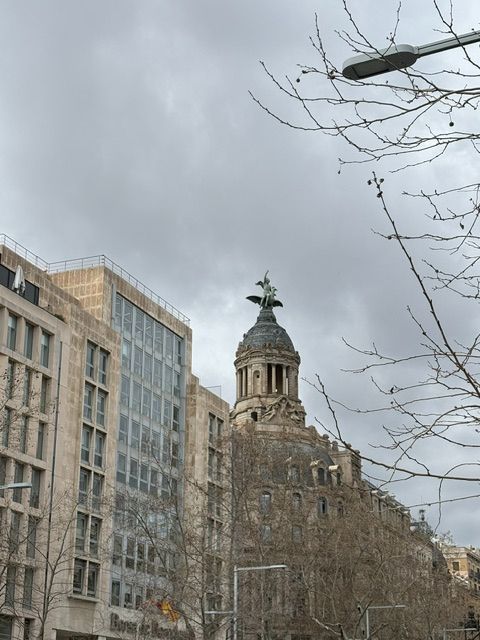
A Symbol Above the City
Walking along Passeig de Gràcia, I noticed a domed tower rising above the trees. At its summit, a winged figure stood against the sky. It was a detail that invited a closer look, and learning its purpose revealed a connection between architecture, mythology, and the business that commissioned the building. This was the Barcelona headquarters […]
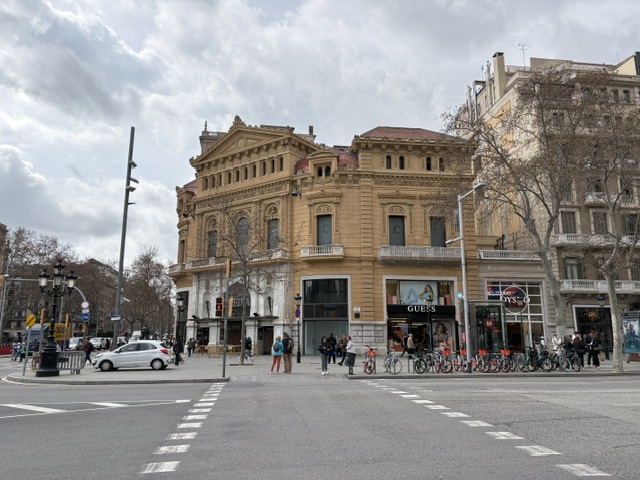
Palau Marcet: From Private Palace to Cinema
While walking through Barcelona, we came across a building whose ornate façade stood out against the activity of the surrounding streets. Tall arched windows, carved decoration, and a triangular pediment gave it the appearance of a grand residence. The Comèdia name above the entrance suggested another purpose. This was Palau Marcet, a private palace that […]
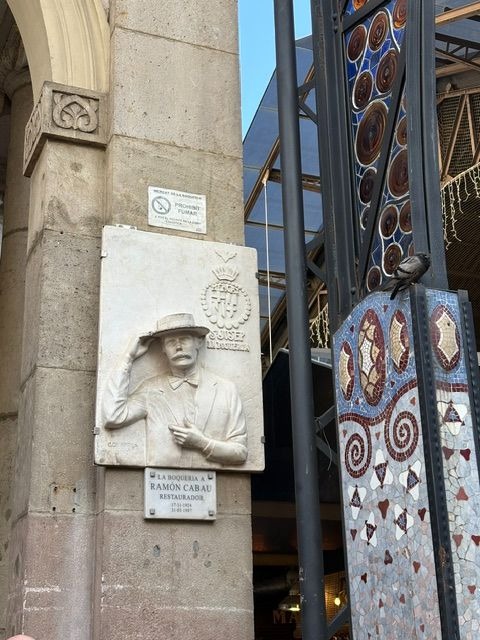
Ramon Cabau
At an entrance to Barcelona’s La Boqueria market, a sculpted relief depicts a man lifting his straw hat in greeting. The inscription identifies Ramon Cabau, a restaurateur whose close relationship with the market made him one of its memorable personalities. Born in 1924, Cabau became known through Agut d’Avinyó, a restaurant in Barcelona’s old city. […]

