Teatre Romea
On Carrer de l’Hospital in Barcelona’s Raval district, the Teatre Romea preserves a history closely connected with the development of Catalan theater. Behind its columned façade, generations of actors and playwrights helped establish Catalan as a language of popular entertainment and serious dramatic expression.
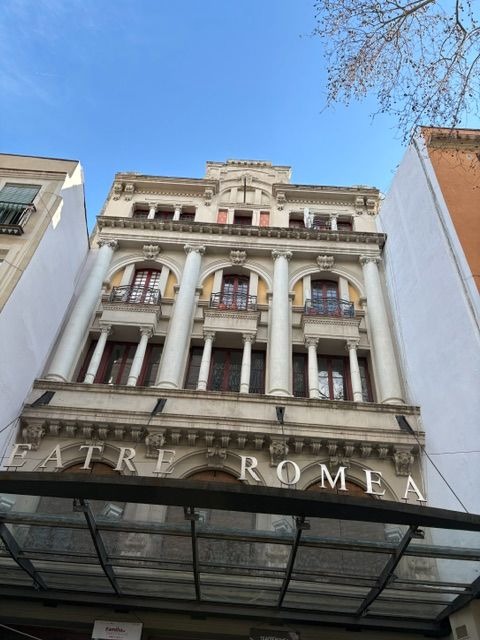
The theater opened on November 18, 1863, in premises previously occupied by the Casino d’Artesans and the Tertúlia Progressista society. Intended for the city’s middle and working classes, it offered a gathering place for audiences beyond Barcelona’s wealthiest circles. Its name honors Julián Romea, a celebrated nineteenth-century actor.
A defining chapter began in 1867 with the production of La rosa blanca by Frederic Soler, better known by his pen name, Serafí Pitarra. Soler became closely involved in the theater’s artistic direction, and the Romea developed into an important home for Catalan-language drama.
Its stage provided opportunities for writers including Àngel Guimerà, Josep Feliu i Codina, and Josep Maria Arnau. Their work helped broaden the possibilities of theater in Catalan, bringing local speech, social relationships, humor, and dramatic conflict before a public audience.
The Romea’s influence continued into the twentieth century. In 1981, it became the home of the Centre Dramàtic de la Generalitat, serving an important public role before the establishment of the Teatre Nacional de Catalunya.
Today, the Romea remains a working theater. Its significance extends beyond the survival of an old performance hall: it represents the sustained work of writers, performers, and audiences who helped give Catalan drama an enduring place in Barcelona’s cultural life.
Read More From Nancy
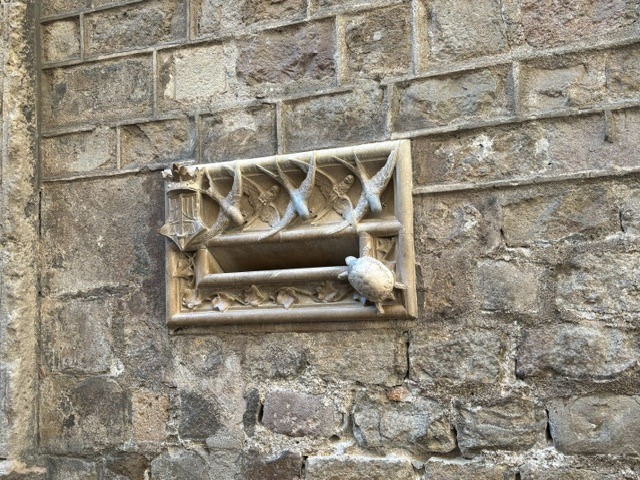
The Mailbox at Casa de l’Ardiaca
Beside the entrance to Casa de l’Ardiaca, a marble mailbox brings an unexpected detail to the streets of Barcelona’s Gothic Quarter. Birds spread their wings above curling ivy, while a tortoise rests below. Created for a lawyers’ association, its decoration has long been interpreted as a commentary on the workings of justice. The Barcelona Bar […]
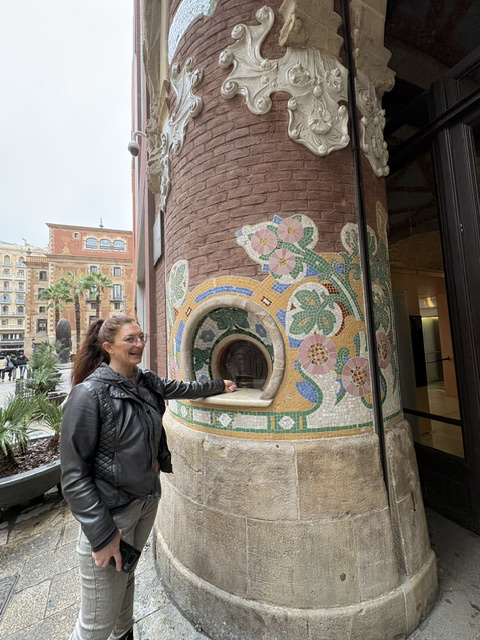
The Original Ticket Windows
Built between 1905 and 1908, the Palau de la Música Catalana was designed by architect Lluís Domènech i Montaner as the home of the Orfeó Català choral society. Its original entrance was formed by two large arches opening directly from the narrow street into the vestibule. Between them stood a substantial brick column containing two […]
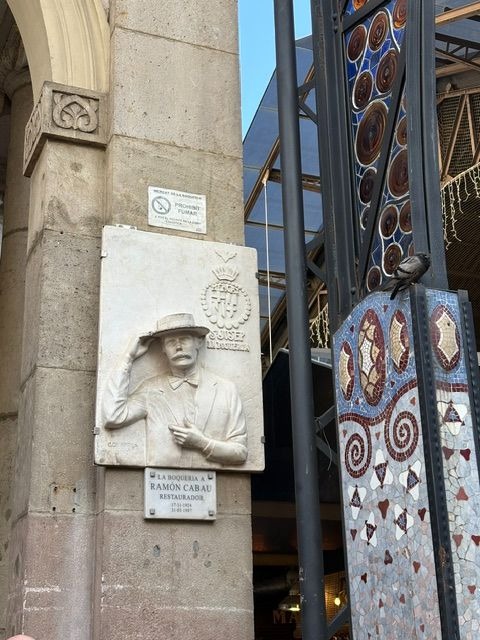
Ramon Cabau
At an entrance to Barcelona’s La Boqueria market, a sculpted relief depicts a man lifting his straw hat in greeting. The inscription identifies Ramon Cabau, a restaurateur whose close relationship with the market made him one of its memorable personalities. Born in 1924, Cabau became known through Agut d’Avinyó, a restaurant in Barcelona’s old city. […]

