Copp’s Hill Burying Ground
Following the Freedom Trail through Boston’s North End brought us to Copp’s Hill Burying Ground. Beyond the surrounding streets and brick residences, its trees and gravestones preserve a different view of the neighborhood, one shaped by the people who lived and worked here long before the city took its present form.
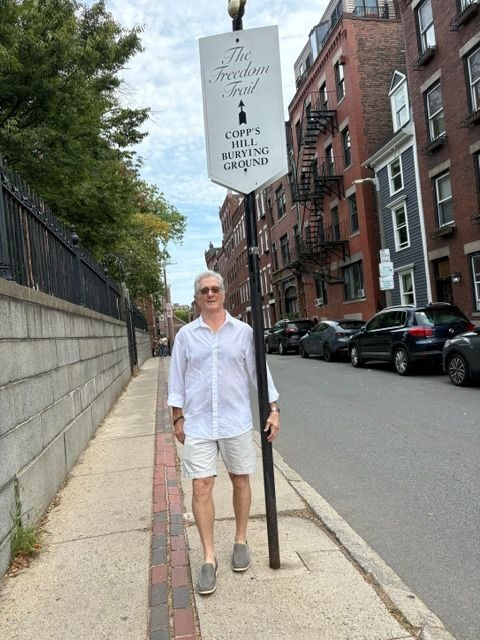
Established in 1659, Copp’s Hill is Boston’s second-oldest burying ground. It was originally known as the North Burying Ground or North Ground, distinguishing it from other burial places on the Boston peninsula. Its later name came from William Copp, an early settler and shoemaker who lived nearby. The grounds expanded through successive land purchases to encompass approximately two acres.
The hill once stood above a shoreline quite different from today’s. Its elevated position overlooked the Charles River and the approaches to the harbor, placing it within the landscape of a working seaport. The burying ground served generations of North End residents, including artisans, craftspeople, tradespeople, and their families. Used regularly through the 1850s, it holds the remains of more than 10,000 people, far more than the surviving markers alone would suggest.
Its history also includes Boston’s early Black community. Free and enslaved people of African descent were buried here, and many of their resting places are unmarked. Their presence is an essential part of understanding the neighborhood and the city: the people remembered at Copp’s Hill represented different occupations, circumstances, and degrees of freedom. The site preserves a connection to lives that are not always as visible in accounts of colonial Boston.
During the American Revolution, the hill’s position gave it military importance. British forces established artillery here, using the elevation to fire across the water toward the colonial fortifications on Breed’s Hill during the Battle of Bunker Hill on June 17, 1775. A place that had served as a burial ground for more than a century became part of the battlefield landscape. Its history connects the North End with the fighting in Charlestown and the larger struggle surrounding occupied Boston.
The grounds have changed since those early years. During the nineteenth century, Boston introduced paths, improved entrances, and planted shade trees. Gravestones were also rearranged into orderly rows, meaning their present positions do not necessarily identify the exact locations of the burials beneath them. What appears today as a settled historic landscape reflects both its original use and later decisions about how it should be maintained.
Walking here offers an opportunity to consider Boston through the lives of its residents. The larger events of history remain part of the setting, but so do work, family, community, and loss. On our passage through the North End, Copp’s Hill gave us another reason to pause along the Freedom Trail and consider the many generations whose lives became part of the city’s story.
Read More From Nancy
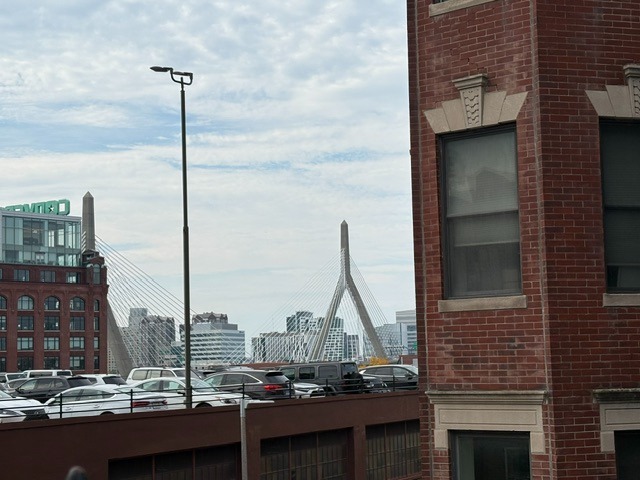
The Leonard P. Zakim Bunker Hill Memorial Bridge
During our walk through Boston’s North End, the towers and cables of the Zakim Bridge appeared between the surrounding buildings. Its shape is immediately recognizable, but the design and name carry connections to Boston’s history that are easy to miss when simply driving across it. The bridge opened to traffic in 2003 as part of […]
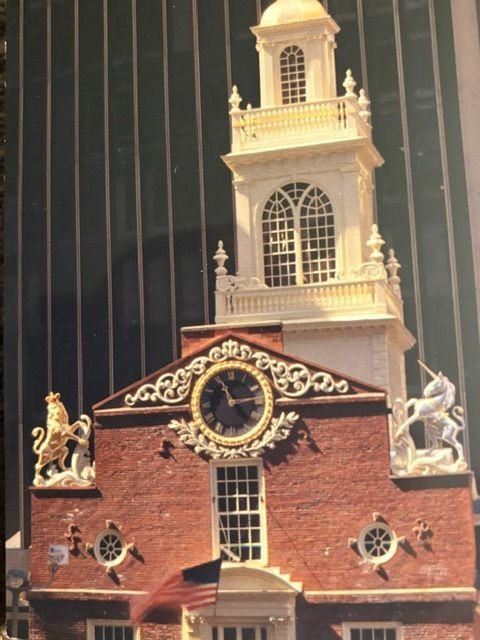
The Lion and Unicorn
The lion and unicorn above Boston’s Old State House recall the building’s origins as a seat of British colonial government. Positioned on either side of its eastern façade, the figures represented royal authority in a town that would become a center of resistance to it. The crowned lion represents England, while the unicorn represents Scotland. […]
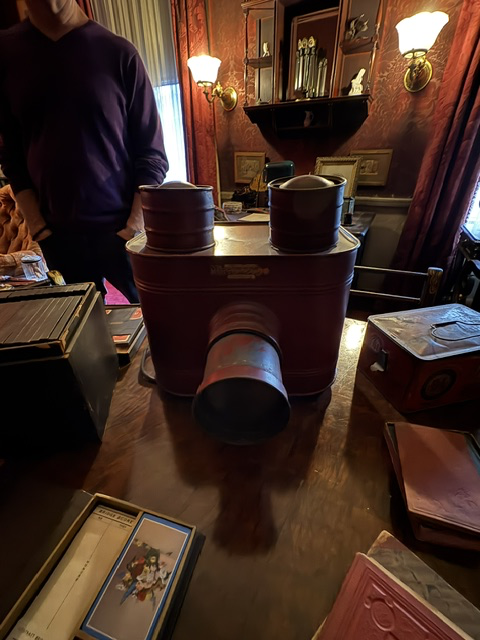
The Mirroscope
Among the objects that caught my attention while visiting the Gibson House Museum in Boston was this unusual piece of photographic equipment. At first glance, with its large projecting lens and boxlike body, I assumed it was an early camera. Looking more closely, however, I discovered that it worked in exactly the opposite direction. It […]

