The Sistine Chapel
Our family vacation to Italy had to include the Sistine Chapel. Entering this chapel in silence, surrounded by some of the most recognized works of art in the world, was one of those experiences where it was difficult to know where to look first. The room itself is relatively simple in shape, but almost every surface tells a story.
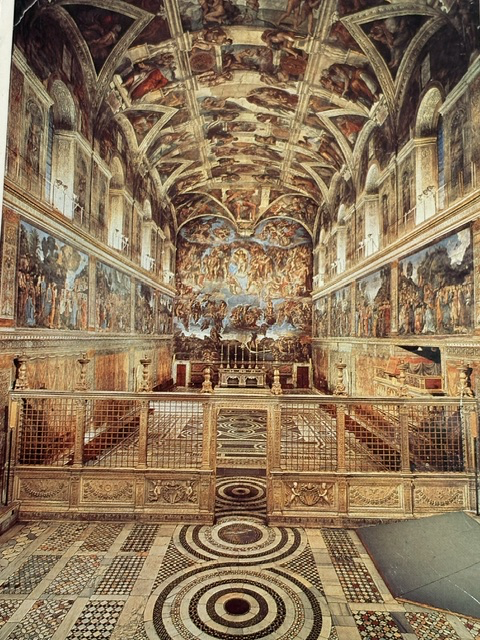
The chapel takes its name from Pope Sixtus IV, who had it built between 1473 and 1481. Long before Michelangelo painted its famous ceiling, Sixtus brought together some of the finest artists of the Italian Renaissance to decorate the walls. Botticelli, Perugino, Ghirlandaio, Cosimo Rosselli and their workshops created great fresco cycles depicting scenes from the lives of Moses and Christ. The result was already an extraordinary Renaissance chapel before Michelangelo ever entered it.
Then, in 1508, Pope Julius II commissioned Michelangelo to paint the ceiling. Michelangelo considered himself primarily a sculptor and initially resisted the project, but over the next four years he created one of the defining achievements of Western art.
At the center are nine scenes from the Book of Genesis, beginning with the Creation and continuing through the story of Noah. Among them is The Creation of Adam, with the almost-touching hands of God and Adam. This is an image that has become recognizable throughout the world. Surrounding these scenes are prophets, sibyls and hundreds of figures woven into an enormous visual interpretation of humanity’s relationship with God.
Michelangelo worked standing on scaffolding erected high above the chapel floor, repeatedly bending his head and body backward to work on the wet plaster overhead. He completed the ceiling in 1512.
More than twenty years later, Michelangelo returned. Between 1536 and 1541 he painted The Last Judgment across the enormous wall behind the altar. Christ appears at its center as the dead rise, the saved ascend and the condemned descend. Michelangelo was now an older man, and the mood is noticeably different from the ceiling he had painted in his thirties. The Last Judgment is darker, more turbulent and filled with the drama of judgment and salvation.
The Sistine Chapel is not simply a museum containing Renaissance masterpieces. It remains a functioning chapel and has an extraordinary continuing role in the Roman Catholic Church. When a pope dies or resigns, the College of Cardinals gathers here in conclave to elect his successor. The same room we entered as visitors becomes closed to the outside world while one of Christianity’s oldest rituals takes place.
That was part of what made entering the chapel so powerful. We were not simply standing beneath Michelangelo’s paintings. We were inside a room where Renaissance artists had worked more than five centuries earlier, where generations had worshipped, and where popes continue to be chosen.
Read More From Nancy
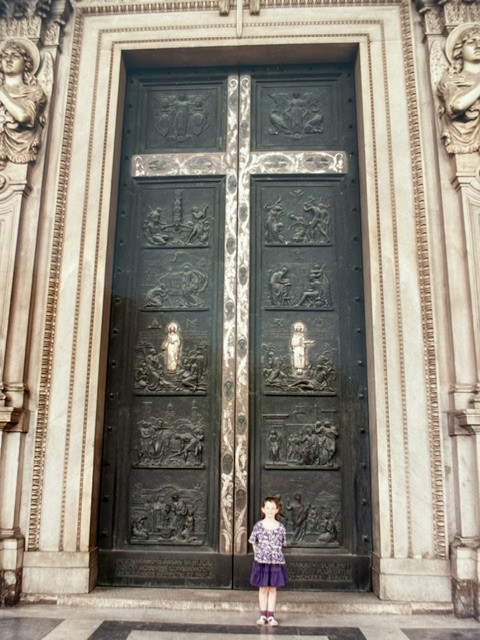
The Holy Door of St. Peter’s Basilica
On one of our family trips to Rome, we visited St. Peter’s Basilica, where this photograph of Erin was taken standing in front of the enormous bronze Holy Door. Known as the Porta Santa, it is one of the most significant entrances to St. Peter’s Basilica and has been associated with the Catholic Church’s Jubilee […]
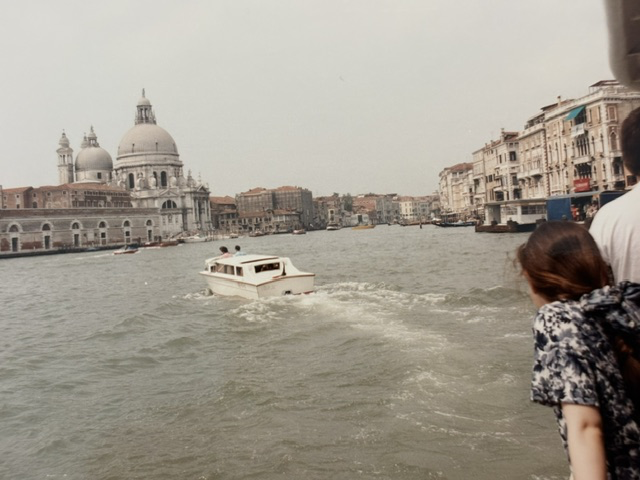
Emily on the Grand Canal
Venice reveals itself differently from the water. There is no gradual approach along a road and no ordinary arrival at a curb. The city rises directly from the lagoon, its churches, palaces and homes appearing to float at the water’s edge. Traveling by boat is not simply a way to move through Venice; it is […]
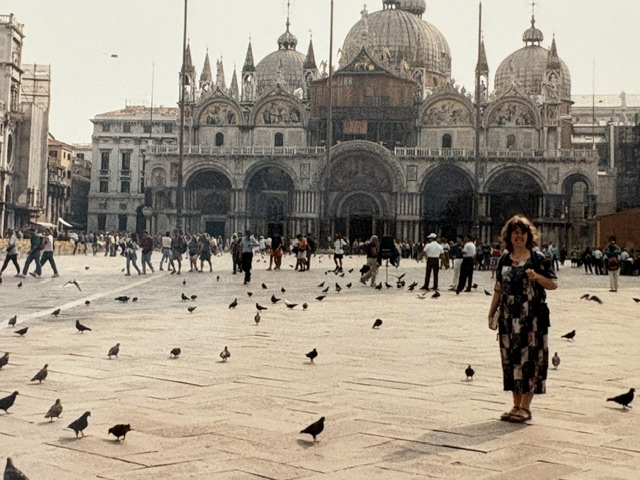
St. Mark’s Basilica
St. Mark’s Basilica rises at the end of Piazza San Marco with an appearance unlike almost any other church in Europe. Its domes, arches, mosaics and intricate stonework create a building that seems both grand and delicate. There is so much to see that the eye is continually drawn from one detail to another. The […]

