Emily on the Grand Canal
Venice reveals itself differently from the water. There is no gradual approach along a road and no ordinary arrival at a curb. The city rises directly from the lagoon, its churches, palaces and homes appearing to float at the water’s edge. Traveling by boat is not simply a way to move through Venice; it is the way the city was intended to be experienced.
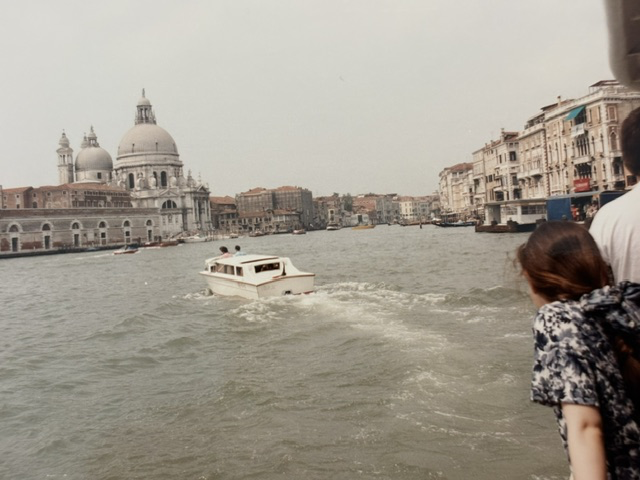
As our boat traveled along the Grand Canal, Emily leaned toward the water, watching the activity around us. Small motorboats crossed the canal, larger vessels carried passengers between stops, and the wakes of passing boats rolled against buildings that had stood beside the water for centuries. There were no streets separating us from the architecture. The façades rose directly from the canal, reminding us that in Venice, the water has always been the principal roadway.
The Grand Canal curves through the center of the city for nearly two and a half miles. For centuries, it served as Venice’s ceremonial entrance and most important transportation route. Wealthy merchant families constructed elaborate palaces along its banks, deliberately orienting their finest façades toward the water. Visitors arriving by boat would see marble balconies, arched windows and colorful plaster walls announcing the wealth and influence of the families who lived within them.
Dominating the view was the great white dome of the Basilica di Santa Maria della Salute, standing near the entrance to the Grand Canal at the tip of the Dorsoduro district. The church appears almost to rise from the water, its broad steps descending toward the canal and its immense dome shaping the Venetian skyline.
Santa Maria della Salute was born from one of the darkest periods in the city’s history. In 1630, Venice was struck by a devastating outbreak of plague. Tens of thousands of people died, representing approximately one-quarter of the city’s population. As the epidemic continued, the Venetian Republic made a solemn vow to build a church dedicated to the Virgin Mary if the city were delivered from the disease.
Construction began in 1631 under the direction of the young architect Baldassare Longhena. He designed the church as an enormous octagonal structure crowned by a dome that could be recognized from across the lagoon. The building required decades of work and was not completed until 1687, five years after Longhena’s death.
The name Santa Maria della Salute carries a meaning deeper than physical health alone. In Italian, salute can suggest health, deliverance and salvation. The basilica became both an expression of gratitude for the end of the plague and a lasting memorial to those who had died. Its size and prominent position ensured that Venice would never completely separate its survival from the memory of its suffering.
Each year on November 21, Venetians continue to observe the Festa della Madonna della Salute. A temporary votive bridge is constructed across the Grand Canal, allowing residents to walk in pilgrimage to the basilica. The tradition connects present-day Venice with the promise made by the city during the epidemic nearly four centuries ago.
From the water, the church’s purpose seems especially clear. Longhena did not design it to be hidden within a crowded neighborhood. It was meant to be seen from boats entering the Grand Canal and from the waters of the San Marco Basin. Its dome served as both an architectural landmark and a statement of faith, endurance and civic identity.
Venice is often described as a city of extraordinary beauty, but its beauty is inseparable from its vulnerability. It was constructed on islands within a lagoon, supported by wooden pilings driven into unstable ground and continually challenged by tides, storms, disease and time. Yet it endured. Santa Maria della Salute embodies that endurance, transforming the memory of an epidemic into one of the city’s most recognizable landmarks.
Read More From Nancy
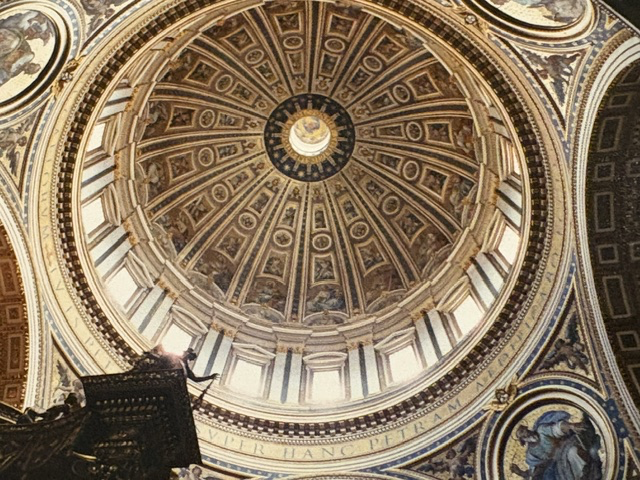
Dome of St. Peter’s Basilica
Looking upward inside St. Peter’s Basilica reveals one of the great architectural achievements of the Renaissance. The vast dome rises above the crossing of the church, directly over the papal altar and the traditional location of the tomb of Saint Peter. Michelangelo became the chief architect of St. Peter’s Basilica in 1546, when he was […]
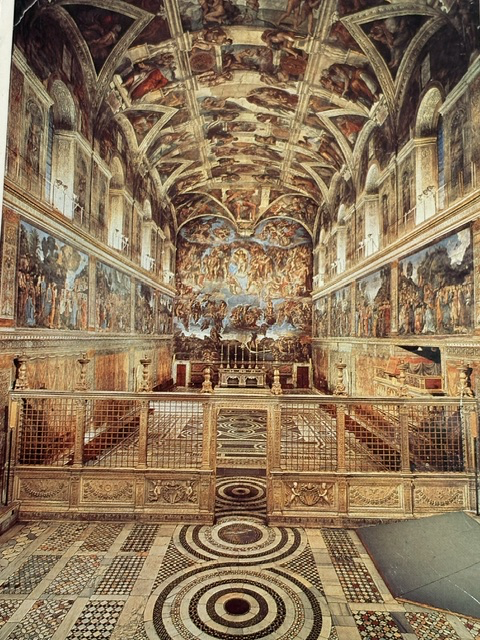
The Sistine Chapel
Our family vacation to Italy had to include the Sistine Chapel. Entering this chapel in silence, surrounded by some of the most recognized works of art in the world, was one of those experiences where it was difficult to know where to look first. The room itself is relatively simple in shape, but almost every […]
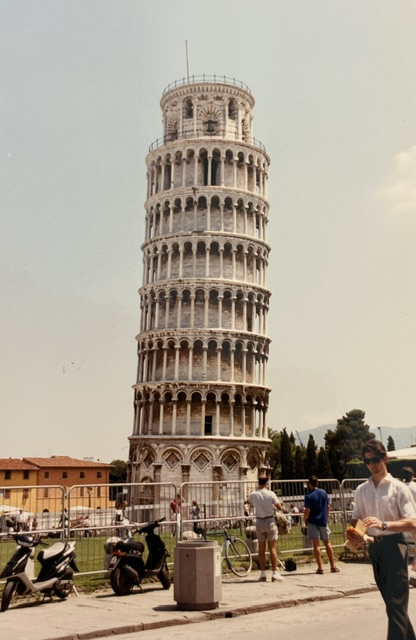
Leaning Tower
During our family vacation in Italy, we weren’t sure whether we wanted to take the time to visit Pisa. There were so many places we wanted to see, and we wondered whether making a special trip just to see the famous Leaning Tower would be worth it. In the end, we decided that we were […]

