Trevi Fountain
During our first trip through Italy as a family, we visited and recorded many of the country’s most celebrated landmarks. Although we enjoy discovering fewer familiar places and the quieter stories found away from the usual tourist routes, there is also something meaningful about standing before a place recognized throughout the world. Being a tourist sometimes means joining the crowds and experiencing the landmarks that have drawn travelers for generations. The Trevi Fountain was certainly one of those places.
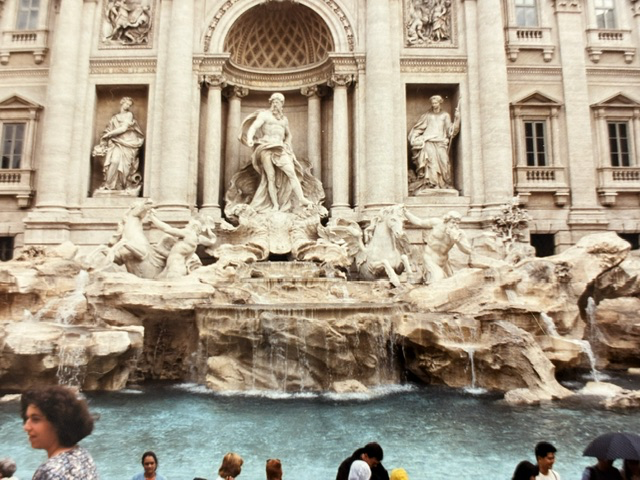
The fountain is one of Rome’s most famous monuments, combining architecture, sculpture, and flowing water into an immense theatrical composition. Although the present fountain was created primarily during the eighteenth century, its history reaches back to ancient Rome.
The fountain marks the end of the Aqua Virgo, an aqueduct constructed in 19 B.C. under the direction of Marcus Agrippa. According to legend, a young woman showed Roman soldiers the location of a spring that could provide clean water for the city. This story gave the aqueduct its name, Aqua Virgo, or “Virgin Water”, and is represented in one of the reliefs above the fountain. Another relief depicts Agrippa ordering the aqueduct’s construction. The restored aqueduct, now known as the Acqua Vergine, continues to carry water into Rome.
In 1732, Pope Clement XII sponsored a competition to create a monumental new fountain at the aqueduct’s terminus. The winning design was submitted by architect Nicola Salvi. Construction continued for three decades, even after Salvi’s death in 1751, and the fountain was completed by Giuseppe Pannini in 1762.
The fountain was constructed against the rear façade of Palazzo Poli, making the palace and fountain appear to be a single dramatic work. Its central figure is Oceanus, the mythological personification of the world’s waters. He stands upon a shell-shaped chariot pulled by two sea horses and guided by Tritons. One horse is calm and obedient, while the other is restless and difficult to control, representing the contrasting moods of the sea.
On either side of Oceanus are allegorical figures representing Abundance and Health. Water pours around the figures and across artificial rocks before entering the large basin below. The movement of the water softens the boundary between sculpture and nature, while the fountain’s placement within a relatively small piazza makes its size and elaborate design seem even more impressive.
The name “Trevi” is traditionally associated with the tre vie, or three streets, that once met near the fountain. For centuries, this area served as the final destination of water carried into Rome through the ancient aqueduct.
The best-known tradition associated with the Trevi Fountain is the tossing of a coin. A visitor stands with their back to the fountain and throws a coin over one shoulder into the water. According to custom, this act ensures a future return to Rome. The fountain also became part of popular culture through Federico Fellini’s 1960 film La Dolce Vita.
Our travels often lead us toward the smaller details and less familiar places that reveal the deeper character of a community. Yet the famous landmarks have stories of their own. Visiting the Trevi Fountain during our first family journey through Italy allowed us to experience one of those places that has become inseparable from the image of Rome itself.
The Trevi Fountain represents Rome’s remarkable ability to build one historical period upon another. An ancient Roman aqueduct, an eighteenth-century Baroque masterpiece, and a modern international tradition all meet in the same place. More than an ornamental fountain, it remains a monument to the importance of water in the growth, health, and identity of the Eternal City.
Read More From Nancy
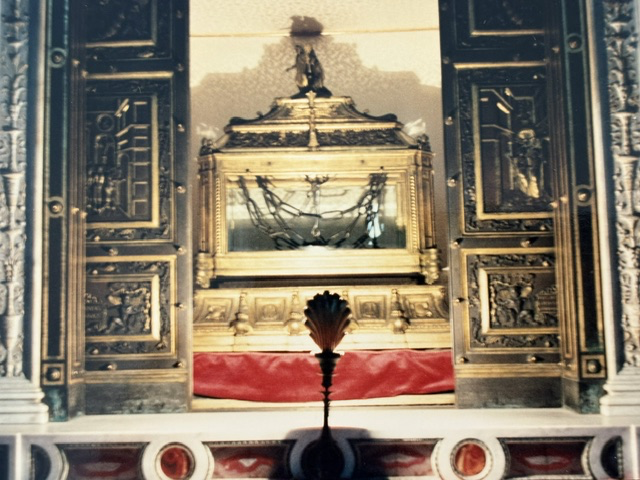
The Chains of Saint Peter
On our visits to Rome, we entered the Basilica of San Pietro in Vincoli, whose name literally means “Saint Peter in Chains”. The church is best known today by many visitors for Michelangelo’s magnificent statue of Moses, but beneath the main altar is something much older and even more connected to the earliest history of […]
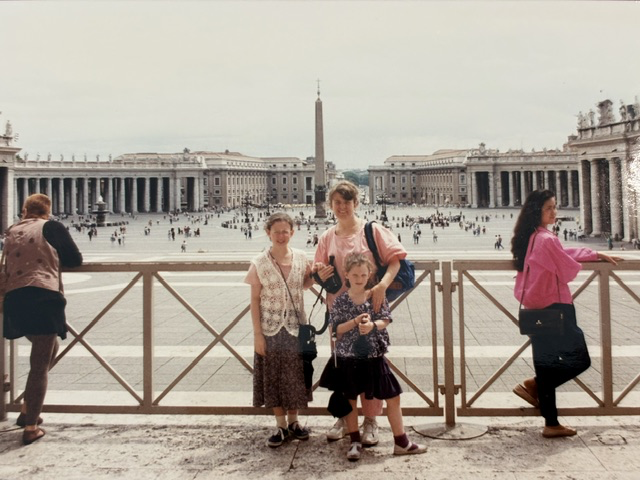
St. Peter’s Square
Photographs of St. Peter’s Square do not convey its size. It was only when we were actually standing there and walking across the enormous open space that I began to appreciate its massiveness. The people crossing the square seemed small against the architecture surrounding them, and the distance from one side to the other was […]
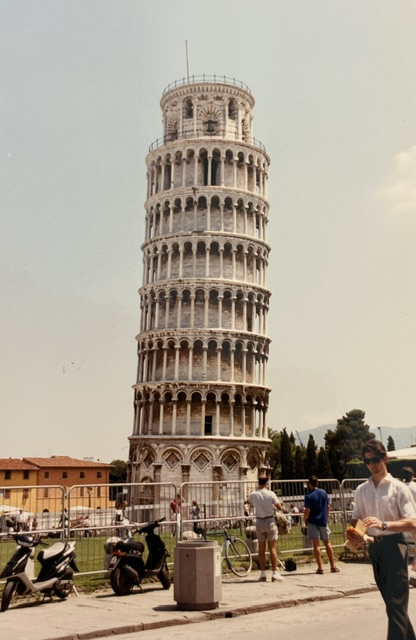
Leaning Tower
During our family vacation in Italy, we weren’t sure whether we wanted to take the time to visit Pisa. There were so many places we wanted to see, and we wondered whether making a special trip just to see the famous Leaning Tower would be worth it. In the end, we decided that we were […]

