Dome of St. Peter’s Basilica
Looking upward inside St. Peter’s Basilica reveals one of the great architectural achievements of the Renaissance. The vast dome rises above the crossing of the church, directly over the papal altar and the traditional location of the tomb of Saint Peter.
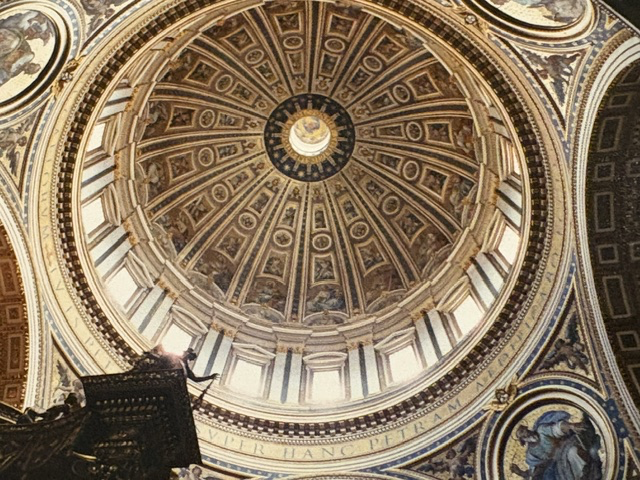
Michelangelo became the chief architect of St. Peter’s Basilica in 1546, when he was in his seventies. He simplified earlier plans for the church and redesigned the dome, drawing inspiration from the Pantheon and from the dome of Florence Cathedral. Michelangelo completed the supporting drum before his death in 1564, but he did not live to see the dome finished.
Giacomo della Porta and Domenico Fontana completed the structure between 1588 and 1590, following Michelangelo’s design while making the dome slightly steeper. The interior was later covered with elaborate mosaics, architectural patterns and images of saints and angels. Although they appear to be paintings when viewed from below, much of the decoration was created from thousands of small pieces of colored glass and stone.
Encircling the base of the dome is a Latin inscription taken from the Gospel of Matthew: Tu es Petrus, et super hanc petram aedificabo ecclesiam meam, et tibi dabo claves regni caelorum. It translates as: “You are Peter, and upon this rock I will build my church, and I will give you the keys of the kingdom of heaven.”
The inscription refers to Christ’s words to the Apostle Peter and explains the dome’s placement above the site traditionally associated with Peter’s burial. Its enormous letters appear appropriately sized from the floor but are each several feet high, demonstrating the extraordinary scale of the basilica.
During our visit, the dome drew our attention upward through layer after layer of windows, mosaics, gilded ornament and architectural detail. Its height and scale were difficult to comprehend from below, yet its carefully arranged decoration gave the entire structure a sense of balance and unity.
The dome of St. Peter’s remains both an engineering achievement and a visual expression of the basilica’s religious meaning. Michelangelo’s design continues to dominate the skyline of Vatican City while shaping the experience of everyone who enters the church beneath it.
Read More
Read More From Nancy
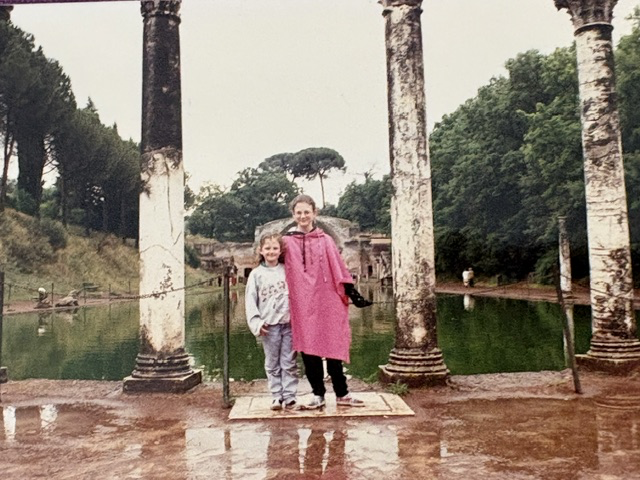
Hadrian’s Villa
Hadrian’s Villa, known in Italian as Villa Adriana, was constructed during the second century for the Roman emperor Hadrian. Located near Tivoli, approximately 18 miles east of Rome, the enormous estate served as an imperial residence and administrative retreat away from the crowded capital. Hadrian became emperor in A.D. 117 and ruled until his death in […]
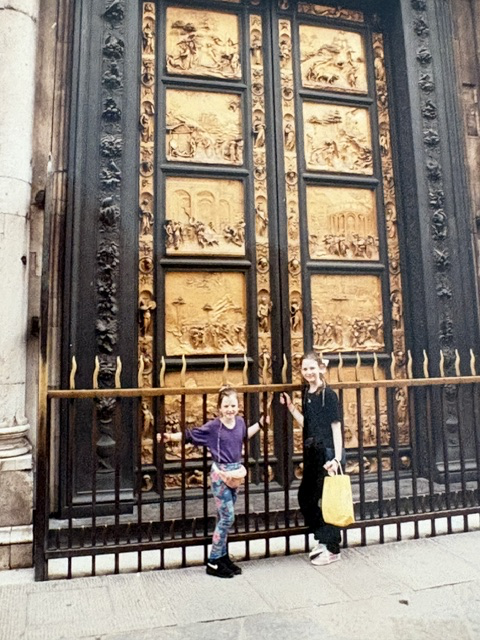
The Gates of Paradise
One of the highlights of our visit to Florence was seeing the magnificent bronze doors of the Baptistery of Saint John. As Emily and Erin stood before them, they were looking at one of the most celebrated masterpieces of the Italian Renaissance, a work that transformed bronze sculpture and influenced generations of artists. The east […]
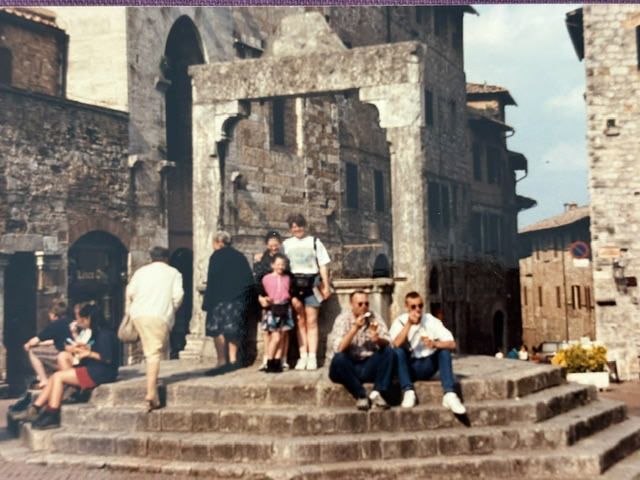
Medieval Square
Rising above the Tuscan countryside, San Gimignano is a remarkably preserved medieval hill town known for the towers that shape its skyline. Its location along the Via Francigena, the historic pilgrimage route leading to Rome, brought merchants, travelers, and pilgrims through the town and helped it grow into a prosperous center of trade. During the […]

