Cathedral of Santa Maria del Fiore
The Cathedral of Santa Maria del Fiore stands at the religious and historic center of Florence. Commonly known as the Duomo, it was created to replace the earlier Cathedral of Santa Reparata, which had become too small for the city’s growing population and increasing importance.
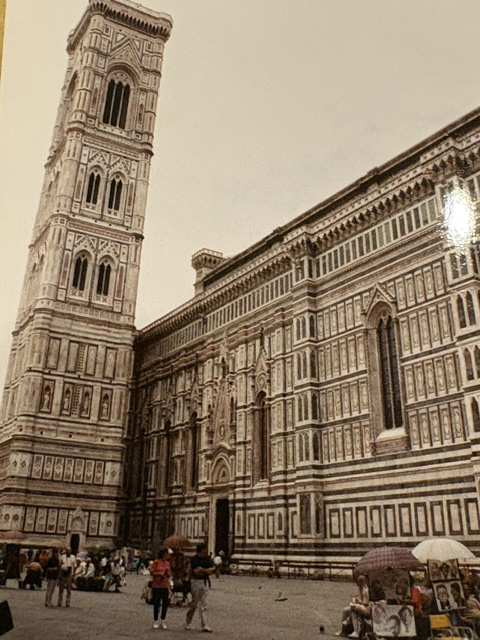
Construction began in 1296 under architect Arnolfo di Cambio. The project continued for more than a century, passing through the hands of several architects and generations of craftsmen. Its enormous scale reflected Florence’s prosperity and the determination of its citizens to create a cathedral worthy of their city.
The exterior is covered with geometric patterns of white, green and red marble. Pointed arches, sculpted panels, decorative columns and elaborate borders cover the walls. Although the cathedral dates primarily from the medieval and Renaissance periods, its present façade was designed by Emilio De Fabris and completed during the nineteenth century.
The cathedral’s greatest engineering achievement is the dome designed by Filippo Brunelleschi. When construction reached the crossing, builders faced the challenge of spanning an opening approximately 140 feet across without the wooden supports traditionally used to construct large domes. Brunelleschi developed an innovative double-shell structure reinforced with stone and iron chains. He also arranged the bricks in a herringbone pattern to help stabilize the dome as it rose.
Constructed between 1420 and 1436, Brunelleschi’s dome became a turning point in architectural history. Its design demonstrated how knowledge of mathematics, engineering and ancient building practices could be applied to solve a problem that had challenged Florentine builders for decades. It remains the largest masonry dome ever constructed.
The cathedral was consecrated by Pope Eugene IV in 1436. Its interior contains important works of art, including the vast painted decoration inside the dome depicting the Last Judgment, begun by Giorgio Vasari and completed by Federico Zuccari.
Santa Maria del Fiore became a symbol of Florence’s religious faith, civic ambition and artistic achievement. Its construction brought together architects, engineers, sculptors and painters whose work helped establish Florence as one of the principal centers of the Italian Renaissance.
Read More From Nancy
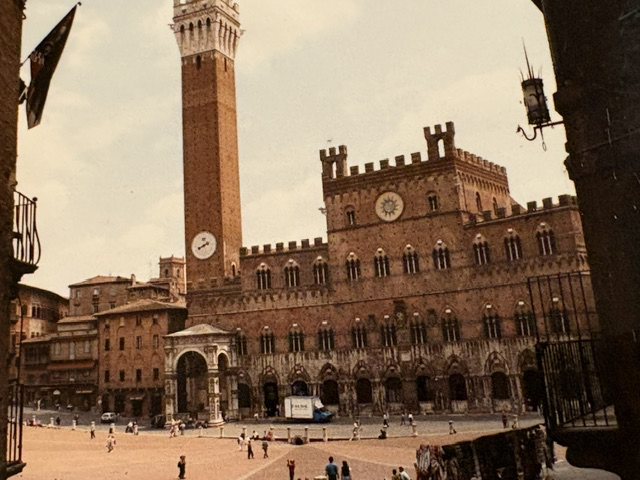
Piazza del Campo and Palazzo Pubblico
After walking through Siena’s narrow medieval streets, we emerged into the broad open space of the Piazza del Campo. The contrast was immediate. Confined passageways and closely grouped stone buildings suddenly gave way to a sweeping public square surrounded by centuries of civic architecture. The Piazza del Campo developed as the center of Siena’s political […]
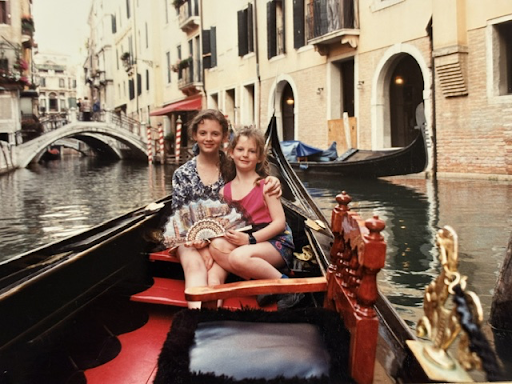
Gondola Ride
First trips to Italy almost must include Venice, and for us that meant experiencing the city the way generations of Venetians have done for centuries, by boat. A gondola ride through the canals quickly became one of the highlights of our journey and remains one of those family memories that has not fad. Venice itself […]
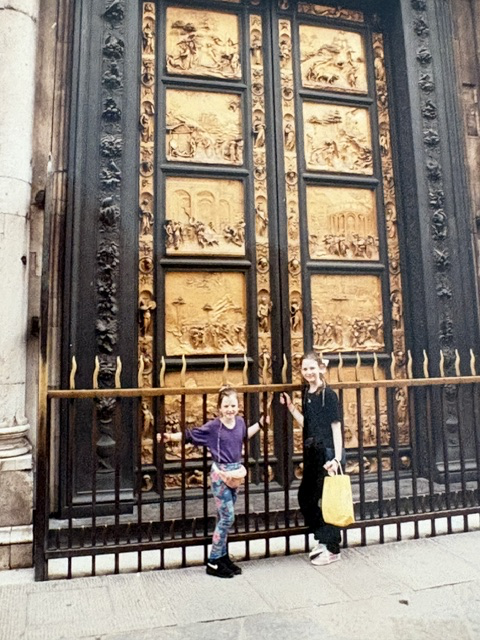
The Gates of Paradise
One of the highlights of our visit to Florence was seeing the magnificent bronze doors of the Baptistery of Saint John. As Emily and Erin stood before them, they were looking at one of the most celebrated masterpieces of the Italian Renaissance, a work that transformed bronze sculpture and influenced generations of artists. The east […]

