Provost Guard Duty Office
This room recreates a very different aspect of life in Harpers Ferry during the Civil War. The exhibit is based on a description written by Charles Moulton, who served as a clerk here during the war, giving us an unusual firsthand glimpse into the military administration of the town.
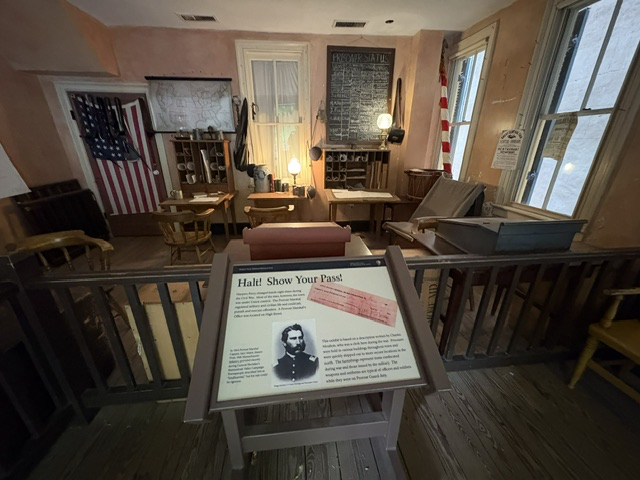
During the war, Harpers Ferry was repeatedly occupied by military forces, and maintaining order required more than soldiers on the battlefield. Provost guards performed military police duties, enforcing regulations, guarding prisoners, maintaining order and dealing with the constant movement of soldiers and civilians through this strategically important town.
Prisoners were held in various buildings throughout Harpers Ferry rather than in one permanent prison. Because the town was vulnerable to attack and changed hands during the war, prisoners were generally not kept here for long. They were quickly transported to more secure facilities farther north.
The furnishings in the room have been selected to represent the kinds of objects that would have been found in such a wartime office. Some represent property confiscated during the war, while others are typical of equipment and supplies issued by the military. The weapons and uniforms represent those used by officers and soldiers assigned to provost guard duty.
Through Charles Moulton’s description, this recreated room gives us a glimpse of that daily wartime activity in Harpers Ferry, a part of the Civil War that took place not on the battlefield, but inside offices and buildings throughout the town.
Read More From Nancy
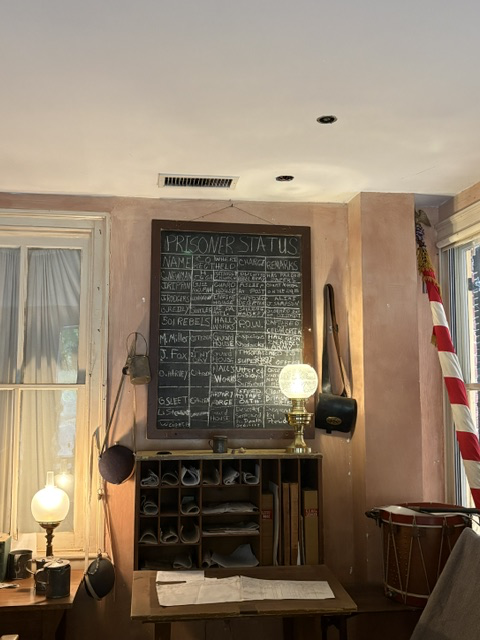
Prisoner Status
The large chalkboard labeled “Prisoner Status” immediately caught my attention in this recreated Civil War provost office. It provides a glimpse into the practical problem faced by the military authorities in Harpers Ferry: how do you keep track of a constantly changing population of prisoners during wartime? The board is arranged almost like a nineteenth-century […]
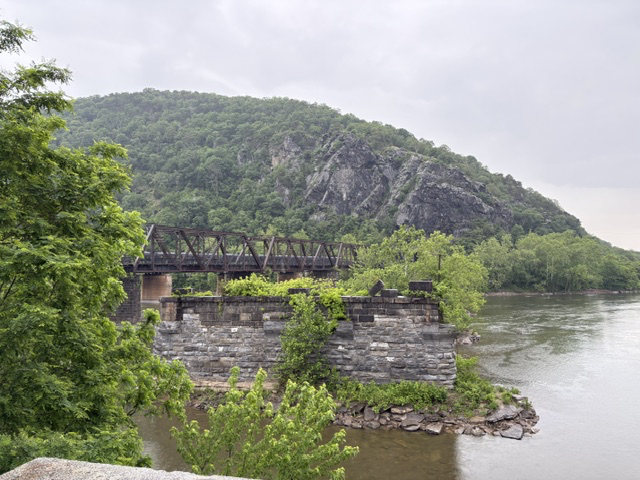
The Remains of the Railroad Bridge
These stone piers standing in the Potomac are remnants of the long transportation history that made Harpers Ferry such an important crossroads. The narrow opening through the Blue Ridge created by the Potomac provided a natural route through the mountains, and in the nineteenth century the Baltimore & Ohio Railroad used that route as it […]
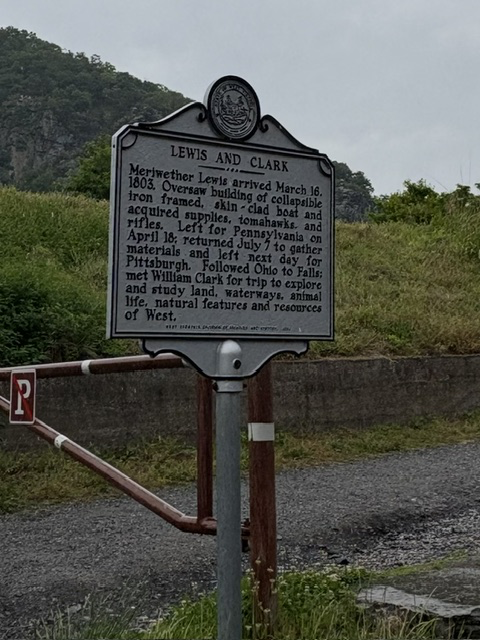
Harpers Ferry and the Lewis and Clark Expedition
This historical marker adds another piece to the Meriwether Lewis story in Harpers Ferry. Before the famous Lewis and Clark Expedition began its journey across the continent, Lewis spent several weeks here gathering equipment and working with the skilled craftsmen of the United States Armory. Meriwether Lewis arrived in Harpers Ferry on March 16, 1803. […]

