Plymouth Rock
Few objects in American history are as instantly recognizable—or surrounded by as much legend—as Plymouth Rock. Sitting today beneath its granite portico on the edge of Plymouth Harbor, the rock has come to symbolize the arrival of the Mayflower passengers and the beginnings of Plymouth Colony in 1620. Yet there is no contemporary account stating that the Pilgrims actually stepped onto this particular rock when they came ashore.
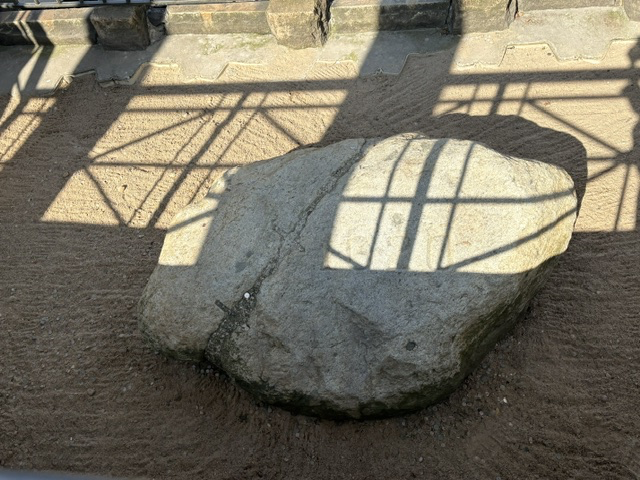
The story did not emerge until more than a century later. In 1741, when a wharf was going to be built over the site, 94-year-old Thomas Faunce reportedly identified the rock as the place where the Pilgrims had first landed. Faunce’s father had arrived in Plymouth in 1623, and according to tradition, the story had been passed down through the earliest generations of the colony. Whether his recollection was historically accurate can never be proven, but from that moment the rock became an increasingly important symbol.
Plymouth Rock itself has had quite a journey. In 1774, as revolutionary sentiment was growing, townspeople attempted to move it to Plymouth’s town square. During the effort, the rock split in two. One portion remained near the waterfront while the other was moved to the square and later to Pilgrim Hall. In 1880, the pieces were reunited at the waterfront, and the date “1620” was carved into the rock. The classical granite portico we are standing beside was completed in 1921 as part of Plymouth’s 300th anniversary commemorations.
After centuries of paintings, stories, school lessons, and mythology, the actual rock is relatively small. Perhaps that is part of what makes standing here so interesting. Its importance has never really been about its size, or even about proving that a Pilgrim stepped upon it. Plymouth Rock has endured because generations of Americans chose this simple piece of stone as a physical connection to a story that began here more than four centuries ago.
Read More
Read More From Nancy
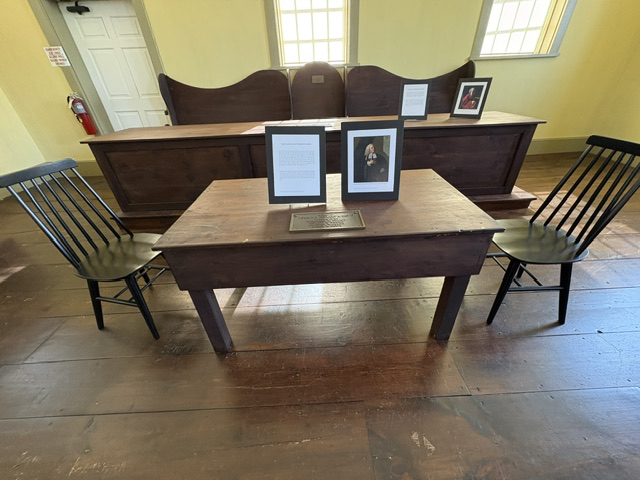
Clerk and Attorney’s Table
Directly in front of the justices’ bench in Plymouth’s 1749 Court House sits the clerk and attorneys’ table. Its position at the center of the courtroom reflects the important work that took place here as each case moved through the colonial court. The court clerk was responsible for creating the official written record of the […]
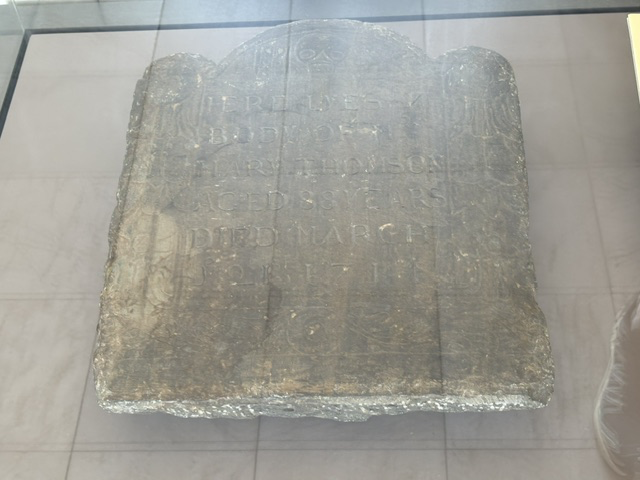
Mary Cooke Thompson Gravestone
Among the artifacts at Pilgrim Hall Museum is this early New England gravestone for Mary Cooke Thompson, a woman with a direct connection to one of the Mayflower families. Mary was the daughter of Mayflower passenger Francis Cooke and his wife, Hester Mahieu. Mary was born in Leiden in the Netherlands, where the English Separatist […]
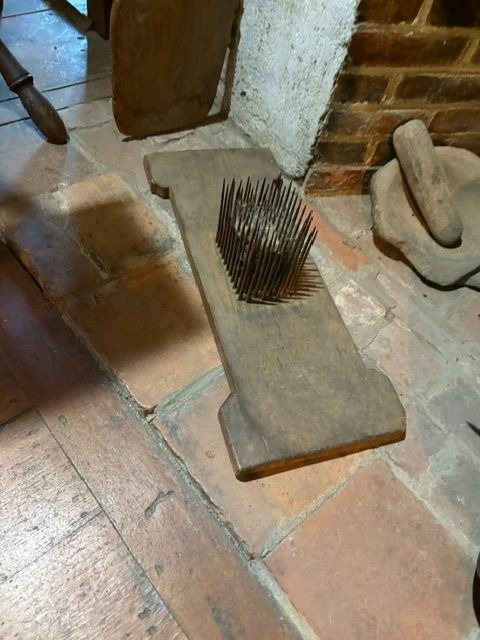
The Flax Hackle
A wooden board fitted with sharp iron teeth preserves one step in the long process of making linen. Known as a hackle, or hetchel, this tool combed flax fibers before they were spun into thread. Its simple construction conceals the skill and repeated effort required to turn a harvested plant into useful cloth. Linen comes […]

