Brewster Chair
Among the objects in the Pilgrim Hall Museum, this simple wooden chair caught my attention. Known as the Brewster Chair and dating from approximately 1630–1670, it is believed to have belonged to William Brewster, one of the Mayflower passengers and the spiritual leader of Plymouth Colony.
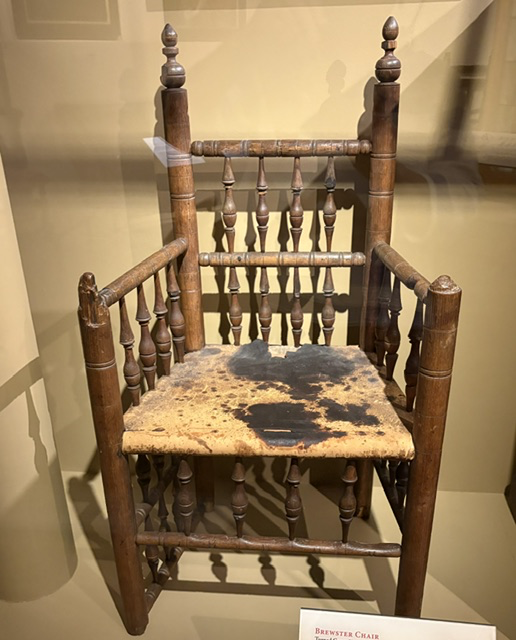
Brewster was already about 54 years old when he sailed aboard the Mayflower in 1620. He had been an important leader of the Separatist congregation during its years in Leiden and continued that role in Plymouth. Although he was not an ordained minister, Brewster served as the colony’s ruling elder, leading worship and providing spiritual guidance during the difficult years when the Plymouth church frequently had no permanent minister.
The museum identifies this as a “great chair”, a type of chair associated with men of authority and standing in a 17th-century community. At a time when many people sat on stools, benches, or simpler seating, a large turned chair with arms and a high back carried meaning beyond its practical purpose. Its elaborate turned spindles and imposing shape reflected the position of the person who occupied it.
The chair also has an unusually long connection to Brewster’s family. Pilgrim Hall received it in 1838 as a gift from Daniel Brewster, more than two centuries after William Brewster lived in Plymouth. That family history is part of what makes objects like this so fascinating. Long before museums began collecting Pilgrim artifacts, descendants were preserving possessions that had been handed from one generation to another.

Read More From Nancy
The Jury Box
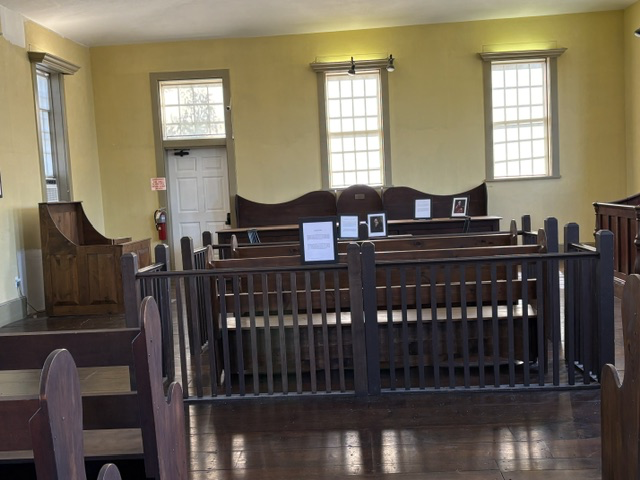
The jury box in Plymouth’s 1749 Court House gives us another glimpse into how justice was administered in colonial Massachusetts. Enclosed by a wooden railing and positioned directly before the justices, this was where local citizens sat to listen to testimony, consider the evidence, and reach a verdict. Serving on a jury was considered an […]
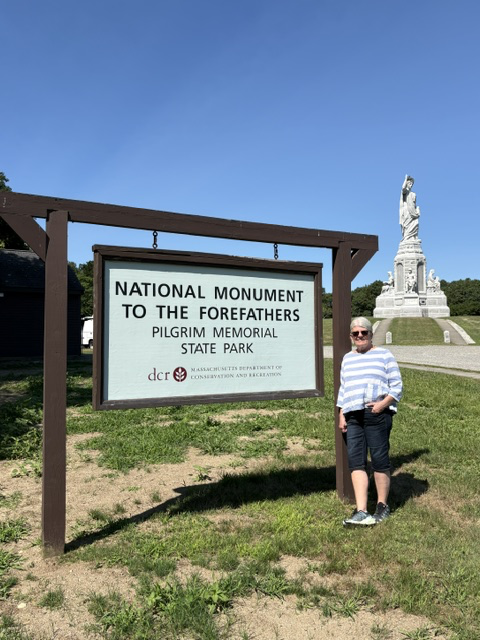
National Monument to the Forefathers
We have visited Plymouth many times over the years, so I am still amazed that it took us this long to discover the National Monument to the Forefathers. When we finally visited this year, I found it almost mind-blowing. Rising more than 80 feet above us, the monument is enormous, intricately sculpted, and filled with […]
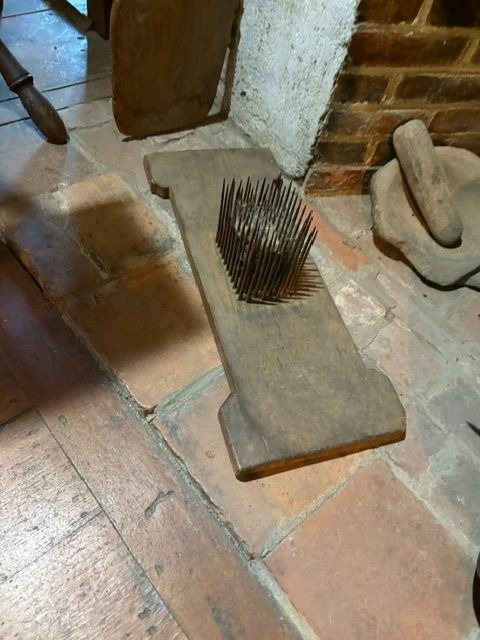
The Flax Hackle
A wooden board fitted with sharp iron teeth preserves one step in the long process of making linen. Known as a hackle, or hetchel, this tool combed flax fibers before they were spun into thread. Its simple construction conceals the skill and repeated effort required to turn a harvested plant into useful cloth. Linen comes […]

