Edward Everett
Standing on Boston Common is a statue of a man whose name is no longer familiar to many Americans, yet during the nineteenth century he was one of the nation’s most admired public figures. This monument honors Edward Everett, a Massachusetts scholar, educator, diplomat, governor, U.S. senator, Secretary of State, and one of the greatest orators of his generation.
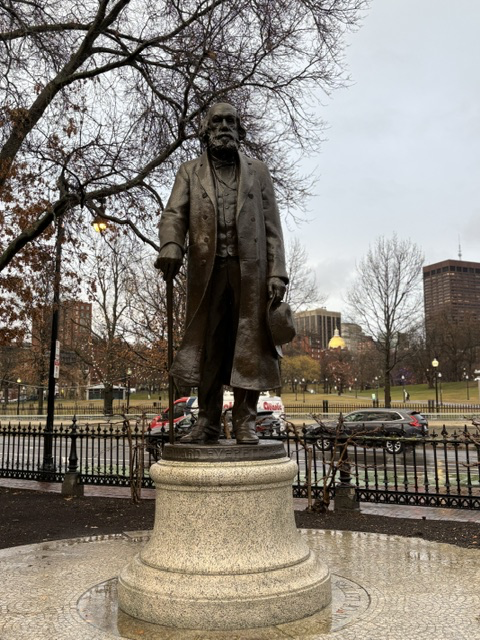
Born in Dorchester in 1794, Everett graduated from Harvard at the age of seventeen and went on to become a minister, professor of Greek literature, and eventually president of Harvard University. His career in public service was equally remarkable. He served in Congress, as Governor of Massachusetts, as Minister to Great Britain, as President Millard Fillmore’s Secretary of State, and later as a United States senator. Few Americans have held such a wide range of distinguished positions.
Today, however, Edward Everett is remembered most often for an event in which he was not the principal speaker. On November 19, 1863, at the dedication of the Soldiers’ National Cemetery in Gettysburg, Everett delivered the featured address. His speech lasted nearly two hours and was considered a masterpiece of public oratory. When he finished, President Abraham Lincoln rose to offer what was intended to be only a few remarks. Those 272 words became the Gettysburg Address, one of the most famous speeches in American history.
Everett himself immediately recognized Lincoln’s achievement. Writing to the President the following day, he graciously observed, “I should be glad if I could flatter myself that I came as near to the central idea of the occasion in two hours as you did in two minutes.” His generous acknowledgment reflects the character of a man who valued the power of ideas more than personal recognition.
The City of Boston recognized Edward Everett’s extraordinary contributions soon after his death. Sculpted by William Wetmore Story, the bronze statue was dedicated in 1867, only two years after Everett passed away. Originally placed in the Boston Public Garden, it was later moved several times before finding its present home near Boston Common. It was one of the earliest public monuments in Boston dedicated to honoring a civilian rather than a military hero, reflecting the city’s deep respect for scholarship, education, and public service.
As I stood before this monument, I found myself thinking less about Gettysburg and more about the remarkable breadth of Edward Everett’s life. Professor, university president, governor, congressman, diplomat, senator, Secretary of State, and one of the greatest orators of his generation. Few Americans have served their country in so many ways.
Read More From Nancy
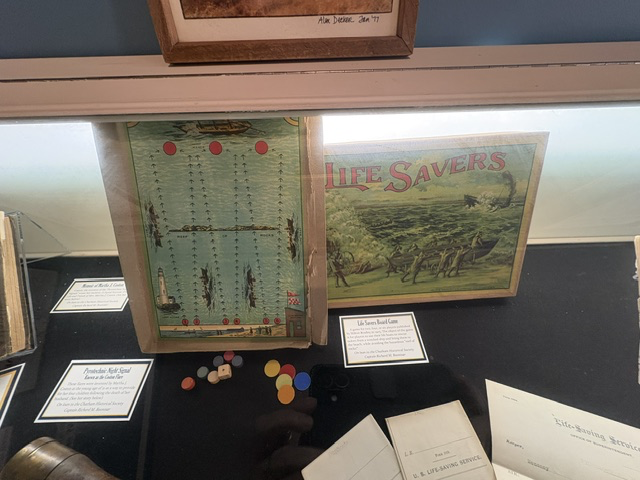
Life Savers and the Rise of American Board Games
The game Life Savers transformed the dangers of a shipwreck into a contest of rescue. Produced by the Milton Bradley Company near the turn of the twentieth century, the game challenged players to send lifeboats to a wrecked vessel, rescue its sailors, and return them safely to shore. Its illustrated cover, playing board, spinner, and colored pieces […]
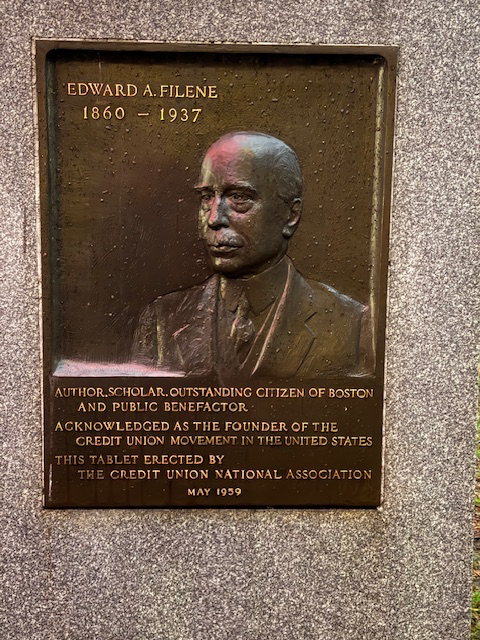
Edward A. Filene Plague
Walking along the fence surrounding the Boston Common, I came across this bronze plaque honoring Edward A. Filene. While many people recognize the Filene name from the famous Boston department store, few realize the tremendous influence he had beyond retail. Filene believed that ordinary working families deserved access to affordable credit and financial opportunity. His […]
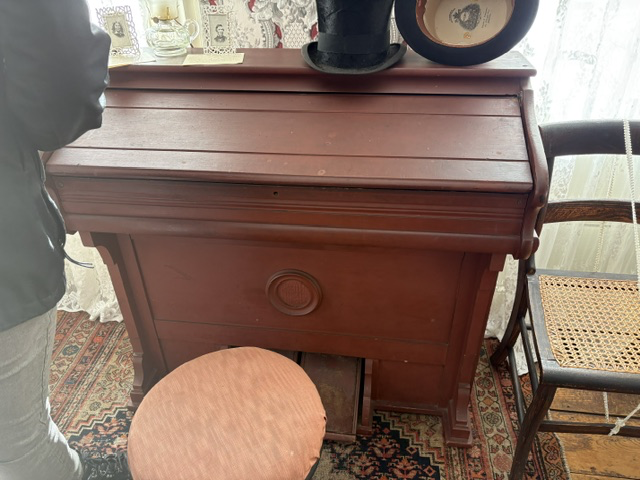
The Melodeon
I found this small wooden instrument in the Wayland History Museum. At first, it could easily be mistaken for a small upright piano, but it is actually a melodeon, or reed organ, made by Mason & Hamlin. The melodeon became a popular way of bringing keyboard music into American homes during the nineteenth century. Unlike […]

