Life Savers and the Rise of American Board Games
The game Life Savers transformed the dangers of a shipwreck into a contest of rescue. Produced by the Milton Bradley Company near the turn of the twentieth century, the game challenged players to send lifeboats to a wrecked vessel, rescue its sailors, and return them safely to shore. Its illustrated cover, playing board, spinner, and colored pieces created a miniature version of the dramatic rescues regularly reported along the American coast.
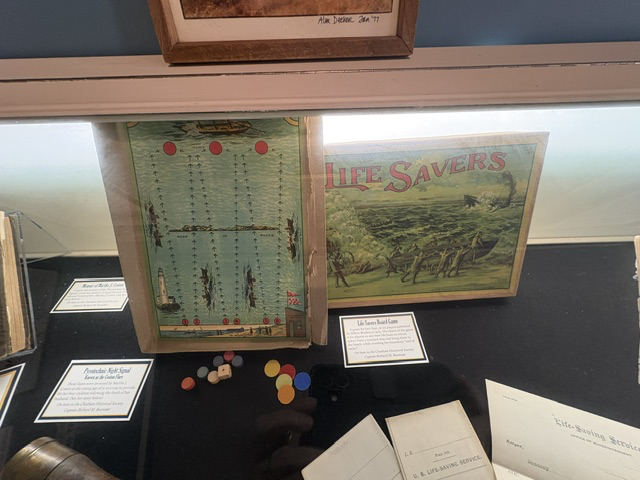
The game would have had meaning on Cape Cod, where shifting sandbars, heavy fog, powerful storms, and strong currents caused hundreds of vessels to run aground. Crews of the United States Life-Saving Service patrolled the beaches and responded when ships were in distress. Depending upon the conditions, they launched surfboats or fired rescue lines from shore so that passengers and sailors could be brought to safety. Old Harbor Life-Saving Station was constructed in Chatham in 1897, during the same era in which the game was produced.
Board games became increasingly popular in American homes during the nineteenth century. Improvements in printing and color lithography made it possible for manufacturers to create inexpensive games with elaborate boards and brightly illustrated boxes. Companies such as Milton Bradley and Parker Brothers recognized that games could provide family entertainment while also teaching lessons about geography, history, occupations, personal conduct, and current events.
Many early American games promoted values that parents wanted children to learn. Players advanced through qualities such as honesty, industry, courage, and responsibility while attempting to avoid idleness, dishonesty, or poor decisions. Because dice were often associated with gambling, some manufacturers used numbered spinners to determine movement. Although later games increasingly emphasized amusement and competition, they continued to reflect the interests and attitudes of the societies that produced them.
Life Savers combined entertainment with a subject familiar to coastal communities. Its players were not conquering territory or accumulating wealth; they were racing to save people from the sea. The game presented the work of lifesaving crews as heroic, organized, and worthy of imitation while introducing children to the hazards faced by sailors.
Historic board games preserve more than the ways earlier generations entertained themselves. Their rules, illustrations, and objectives reveal what people admired, feared, and wanted children to understand. Life Savers reflects a period when shipwrecks remained a constant danger and the courage of coastal rescue crews held an important place in American life.
Read More From Nancy
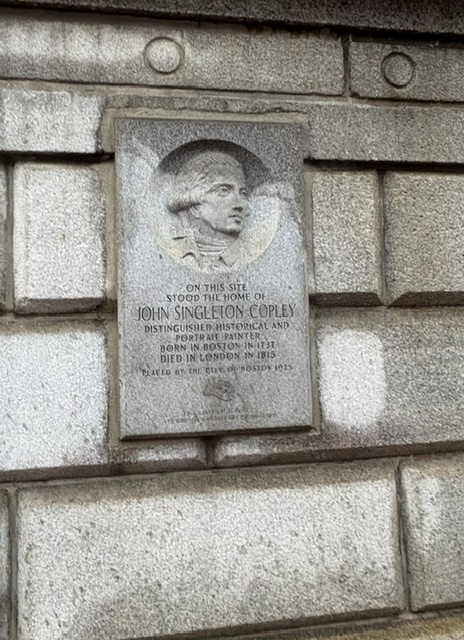
John Singleton Copley
Walking through Boston, I came across this plaque marking the site where the home of John Singleton Copley once stood. The house itself is gone, but the plaque preserves the connection between this location and one of the most important artists of colonial America. Copley was born in Boston in 1738, although the plaque gives […]
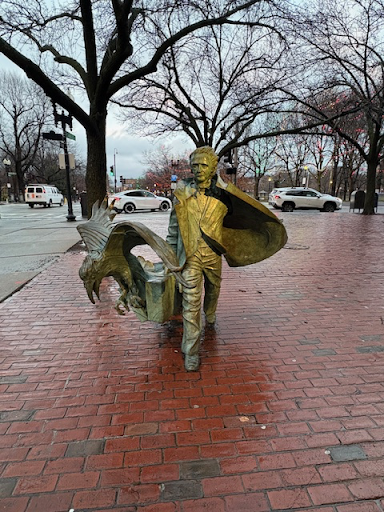
Edgar Allen Poe Statue
This is a statue of Edgar Allan Poe on the sidewalk along Boylston Street in Boston. He is caught in mid-stride, coat swirling with a raven perched atop a stack of books at his feet. The placement of this statue is intentional and rooted in Poe’s relationship with the city where his life began. Poe […]
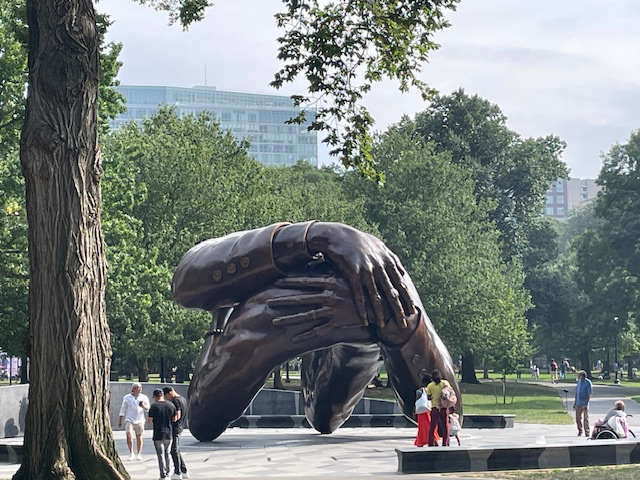
The Embrace
On Boston Common stands a powerful and modern tribute to Dr Martin Luther King, Jr and Coretta Scott King. The memorial is called: The Embrace. Unveiled in 2023, the sculpture does not depict faces in full figures. Instead, it focuses on a moment, an embrace. Two sets of arms, joined together, rising in bronze. The design […]

