A Chinese Tea Box
Among the many furnishings displayed in the historic Golden Ball Tavern in Weston, Massachusetts, this small Chinese tea box caught my attention. It tells a remarkable story about international trade, the value of tea, and the surprising connections between colonial New England and Asia.
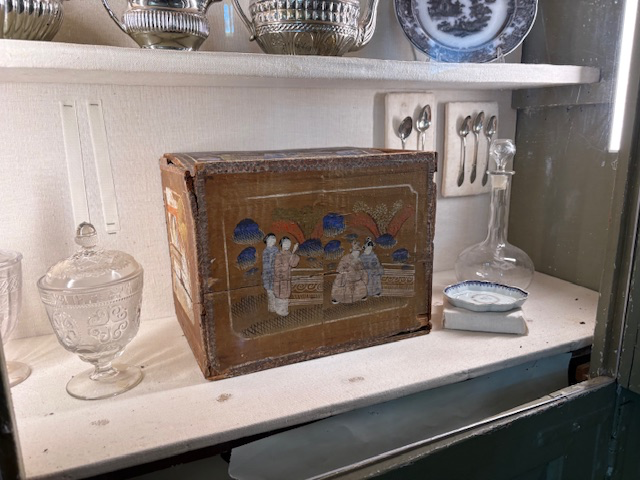
The box was crafted in China during a time when Chinese artisans produced finely decorated goods specifically for the export market. Throughout the eighteenth century, ships of the British East India Company, and later American merchants following the Revolution, brought tea, porcelain, lacquerware, silks, and other luxury items from Canton to Europe and North America. Objects like this tea box found their way into homes and taverns throughout New England, where they became prized possessions.
Tea itself was one of the most valuable commodities in the colonial world. It was expensive enough that families often stored it in decorative tea caddies or boxes, protecting both the tea and the beautiful container that held it. The painted decoration on this box transformed an everyday household object into a work of art, reflecting the skill of Chinese craftsmen whose work was admired around the world.
Tea was at the center of one of the defining events in American history. The Boston Tea Party of 1773 transformed tea from a simple beverage into a symbol of resistance against British taxation. Yet after the Revolution, Americans quickly resumed trading with China. In fact, the voyage of the Empress of China in 1784 marked the beginning of direct American trade with China, ensuring that beautifully crafted Chinese goods like this continued to find their way into American homes.
Read More From Nancy
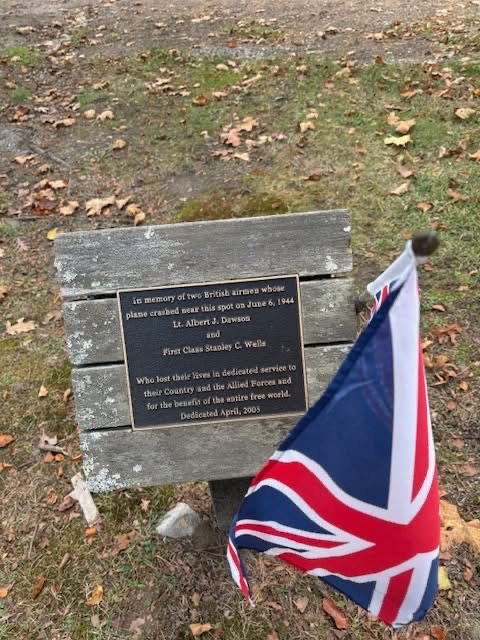
The Flag That Sparked Curiosity: Discovering History Hidden in Plain Sight
It was curiosity that led me there. Every day, on my drive to Wellesley Chiropractic Office, I noticed a small British flag beside a marker in the middle of an island. What was a British flag doing in the suburbs of MA? My first assumption was a simple one: perhaps it marked a site from colonial […]
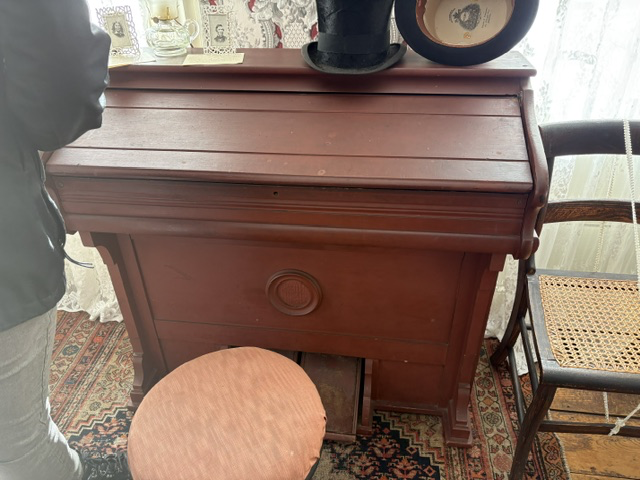
The Melodeon
I found this small wooden instrument in the Wayland History Museum. At first, it could easily be mistaken for a small upright piano, but it is actually a melodeon, or reed organ, made by Mason & Hamlin. The melodeon became a popular way of bringing keyboard music into American homes during the nineteenth century. Unlike […]
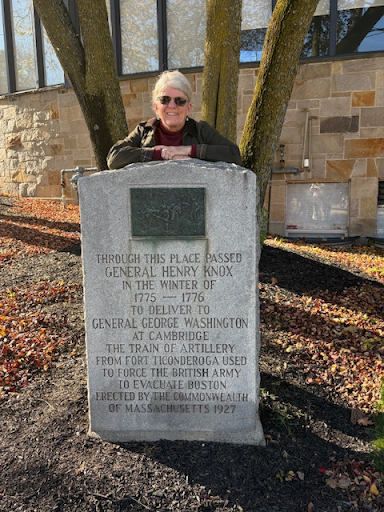
Henry Knox in Framingham
In Framingham, Massachusetts, there stands a granite block bearing an inscription that is easy to pass by without a second glance. Yet the words carved into this stone marks one of the most daring feats of the American Revolution: “Through this place passed Henry Knox in the winter of 1775–1776 to deliver to General George Washington […]

