The Music Hall
The ornate facade of the Music Hall rises above the storefronts below with decorative brickwork, pointed finials, and the vertical “Music Hall” sign still prominently centered on the building. This building reflects a period in the late 19th and early 20th centuries when prosperous manufacturing cities built halls like this for concerts, lectures, theatre prosecutions, dances, political meetings and later silent films.
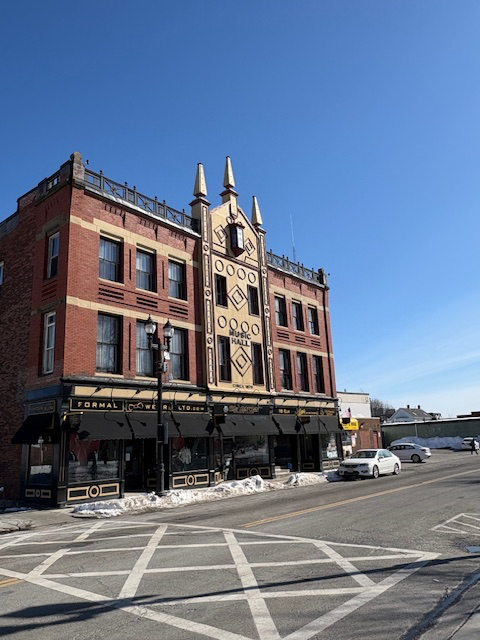
During Waltham’s industrial peak, the city was known as “Watch City” because of the Waltham Watch Company, whose factories helped transform Waltham into one of the important manufacturing centers of New England. Workers filled the streets, trolley lines connected neighborhoods to downtown. Buildings like the Music Hall were once the cultural heart of cities like Waltham.
What makes the building especially meaningful is that it survived. Many local music halls and opera houses across New England disappeared through fire, demolition or redevelopment. Yet this structure still stands as a reminder of the era when downtown Waltham was not only an industrial center, but also a vibrant social and cultural destination.

Read More From Nancy
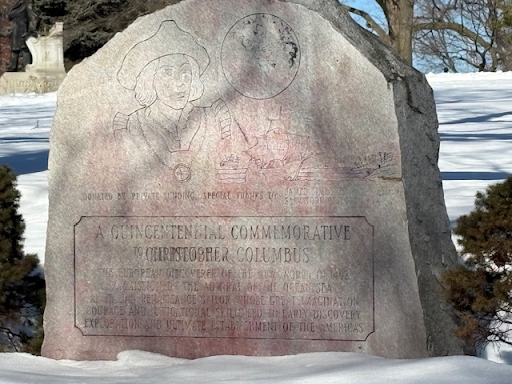
Monument to Columbus
On the Common in Waltham, there is a granite stone set quietly among the other memorials that mark the town’s history. It does not rise high but if you stop and read it, the inscription reads: “A Quincentennial Commemorative to Christopher Columbus. The European discoverer of the New World in 1492…….” The wording continues in a […]
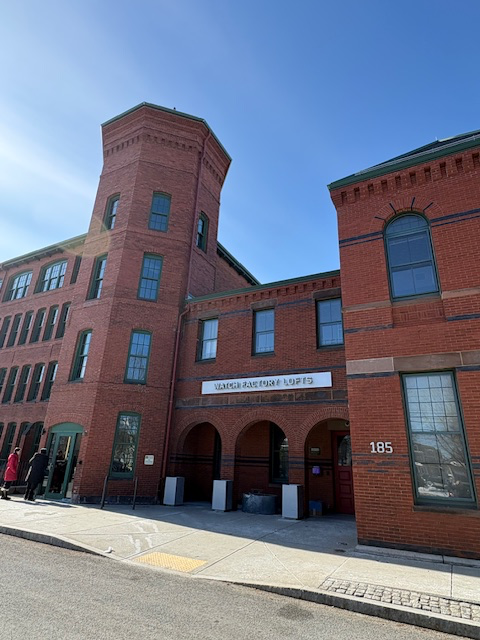
Waltham Watch Company
The great brick factory along the Charles River was once the heart of the Waltham Watch Company, founded in 1850 as the American Horologe Company. It became the first company in the United States to successfully manufacture watches using interchangeable parts, pioneering precision mass production and helping launch the American Industrial Revolution. At its height in […]
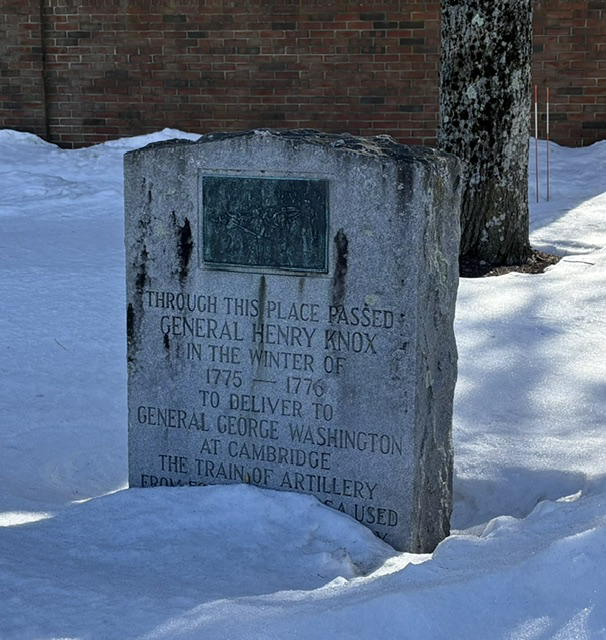
Henry Knox Marker
I have written about General Henry Knox and his remarkable journey across Massachusetts with the “Noble Train of Artillery.” Whenever I come across one of the historical markers commemorating this expedition, I make it a point to stop and photograph it. Although each marker tells the same story, each represents another community that played a […]

