The Castle at La Salette
With its rounded towers, steep gables, and imposing masonry walls, this building earned its familiar nickname, “the Castle”. It began as Solomon’s Sanatorium, which opened in 1903. James Solomon, an herbal-remedy practitioner known locally as “Dr. Solomon,” envisioned a place where people would seek treatment for cancer. Although he lacked formal medical training, he secured financial backing for an ambitious building with approximately 200 rooms and 21 fireplaces.
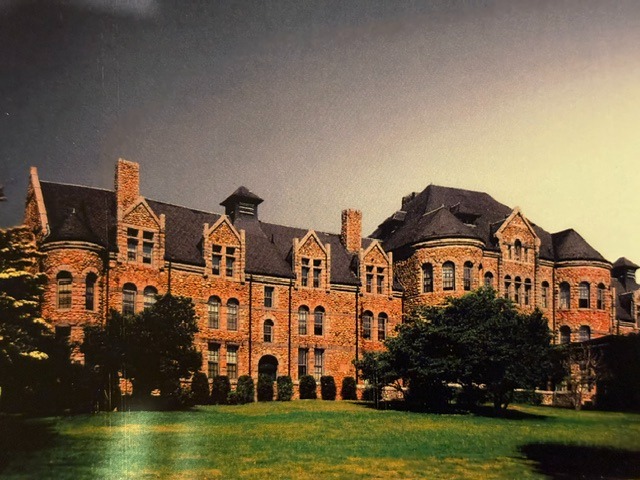
The dedication on April 25, 1903, was a major occasion in Attleboro. A band concert on Attleboro Common was followed by a parade to the grounds. After darkness fell, approximately 1,800 electric lights outlined the building, while a rooftop searchlight cast a beam reportedly visible for four miles. The dedication program listed 309 windows, 3,254 panes of glass, and 27 miles of electrical wiring—details that convey the scale of Solomon’s undertaking.
Financial difficulties brought changes in ownership. In 1919, the Methodist Church purchased the property and renamed it Attleboro Springs, after a natural spring on the grounds. That operation closed in 1938. Four years later, the La Salette Missionaries purchased the property for use as a major seminary, beginning another chapter in the Castle’s history.
The Shrine of Our Lady of La Salette officially opened on December 8, 1953. Its opening celebration included an outdoor Nativity scene, which grew into the Christmas Festival of Lights familiar to generations of visitors. The Castle remained a prominent presence on the grounds, serving the religious community as the shrine developed around it.
On November 5, 1999, a devastating fire destroyed the building and claimed the life of visiting Carmelite priest Father Paul O’Brien. The Castle was never rebuilt. Its loss removed one of Attleboro’s most distinctive buildings, remembered for its architecture and its successive roles as a sanatorium, seminary, and home for clergy.
Read More From Nancy
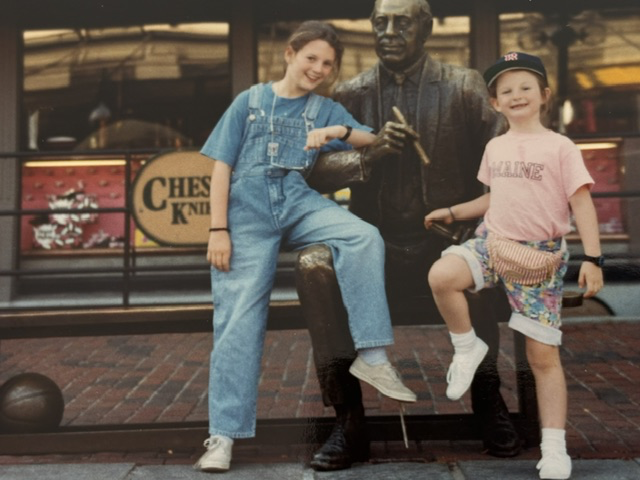
Red Auerbach
This bronze statue honors Arnold “Red” Auerbach, the coach and executive who helped establish the Boston Celtics as one of the most successful franchises in professional sports. Auerbach coached the Celtics from 1950 through 1966, leading the team to nine NBA championships, including an unprecedented eight consecutive titles from 1959 through 1966. Auerbach’s influence extended […]
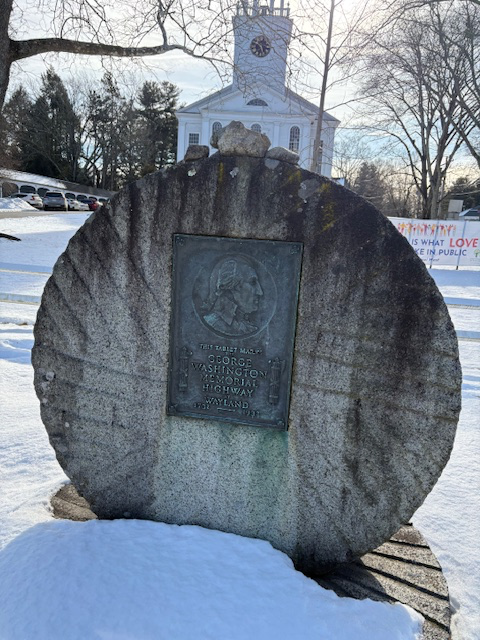
George Washington Marker
Driving through the town of Wayland, there is the round stone monument that sits along the roadside. Unlike grand statues that make historic events, this one is modest, a cylindrical stone pillar with a bronze marker identifying it as part of the George Washington Memorial Highway. The roadside marker reflects an interesting moment in American history when […]
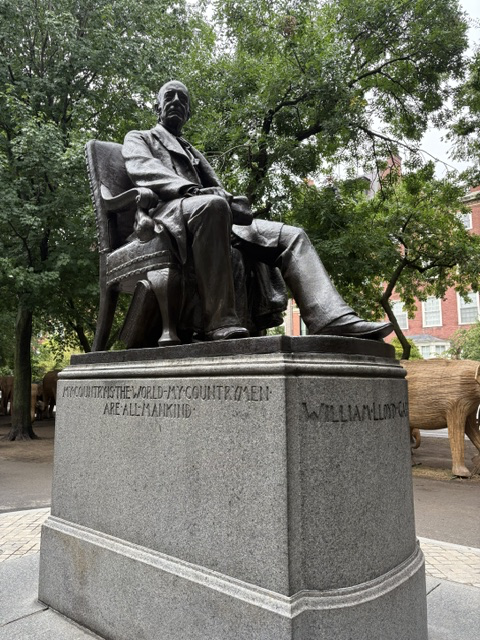
William Lloyd Garrison Memorial
I love walking along Commonwealth Avenue in Boston and stopping at the different sculptures and memorials placed along its tree-lined central mall. Each one introduces another person or event connected with the city’s history. Among them is the seated bronze figure of William Lloyd Garrison, one of the nation’s most influential voices against slavery. Born […]

