George Washington Marker
Driving through the town of Wayland, there is the round stone monument that sits along the roadside. Unlike grand statues that make historic events, this one is modest, a cylindrical stone pillar with a bronze marker identifying it as part of the George Washington Memorial Highway.
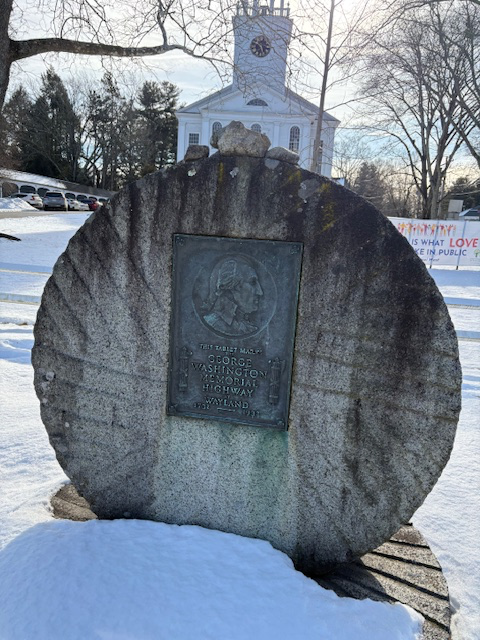
The roadside marker reflects an interesting moment in American history when the country was trying to connect its past to a rapidly changing present.
In the early decades of the twentieth century, the automobile was transforming how Americans traveled. Roads that had one been colonial paths or wagon routes were becoming highways for a new generation of motorists. Civic groups and historical organizations saw an opportunity to link these emerging roadways with the nation’s founding story. One of the results was the creation of commemorative routes honoring George Washington.
Markers like the one in Wayland were installed along these routes to designated portions of the George Washington Memorial Highway. Many were placed during the patriotic surge surrounding the 1932 bicentennial of Washington’s birth, when communities across the country erected monuments, plaques and memorial highways in the honor.
The marker’s presence in Wayland is not accidental. The roads that run through this quiet Massachusetts town were once part of the early transportation network connecting inland farming communities with Boston. Long before automobiles sped along these routes, travelers, merchants and soldiers moved along these same corridors by horse and carriage.
By placing a Washington Memorial Highway marker here, the designers of the project were reminding motorists that the roads beneath their tires followed paths that were already centuries old.
Today, the small monument in Wayland stands quietly beside a modern road, easily overlooked by passing cars. Yet it serves as a subtle reminder that even ordinary roads can carry extraordinary history.
Read More From Nancy
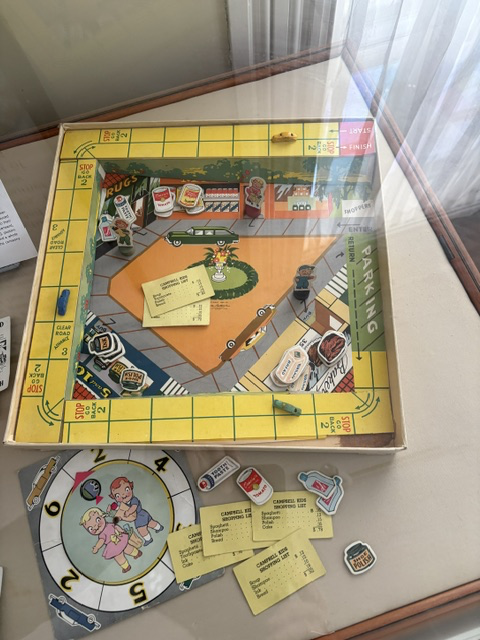
The Campbell Kids Shopping Game
One of the things I enjoy most about visiting local history museums is discovering artifacts that tell the story of everyday life. Community museums often preserve the objects that filled ordinary homes. This 1955 Campbell Kids Shopping Game is one of those treasures. Produced by Parker Brothers in partnership with the Campbell Soup Company, the […]
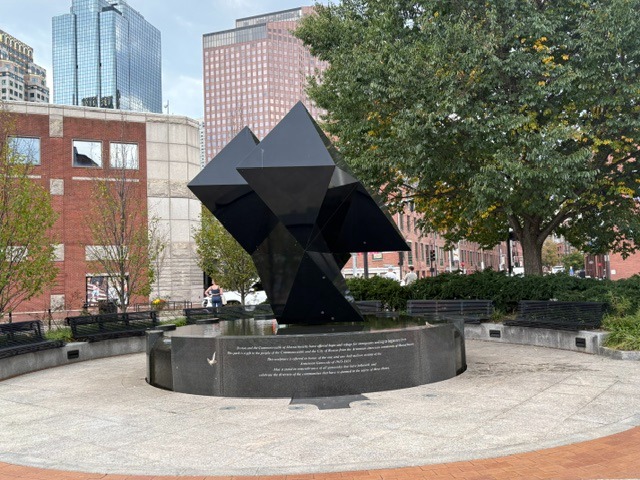
Armenian Heritage Park
During our walk around Boston, we stopped at Armenian Heritage Park on the Rose Kennedy Greenway. Its angular sculpture offers a different kind of memorial: one whose form changes while its purpose remains rooted in remembrance. The sculpture honors the lives lost during the Armenian Genocide of 1915–1923 and the genocides that followed. The park […]
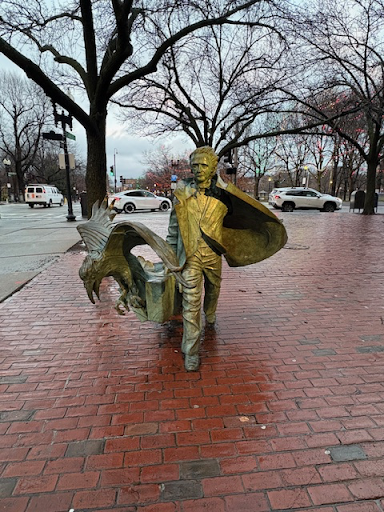
Edgar Allen Poe Statue
This is a statue of Edgar Allan Poe on the sidewalk along Boylston Street in Boston. He is caught in mid-stride, coat swirling with a raven perched atop a stack of books at his feet. The placement of this statue is intentional and rooted in Poe’s relationship with the city where his life began. Poe […]

