Red Auerbach
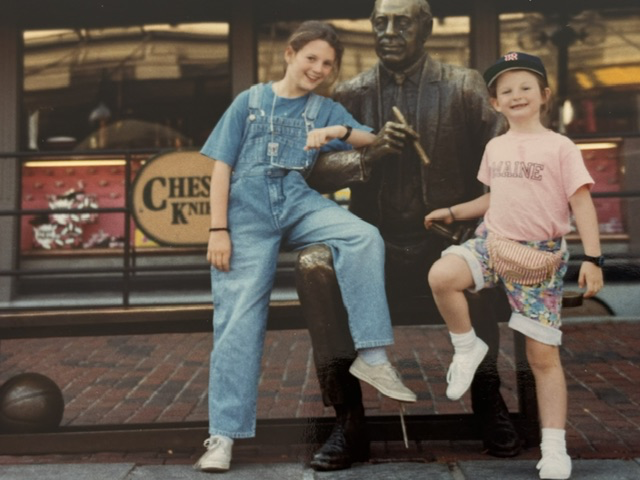
This bronze statue honors Arnold “Red” Auerbach, the coach and executive who helped establish the Boston Celtics as one of the most successful franchises in professional sports. Auerbach coached the Celtics from 1950 through 1966, leading the team to nine NBA championships, including an unprecedented eight consecutive titles from 1959 through 1966.
Auerbach’s influence extended beyond the team’s championship record. In 1950, the Celtics selected Chuck Cooper, the first Black player drafted by an NBA team. During the 1964–65 season, Auerbach fielded the league’s first all-Black starting lineup. When he retired from coaching in 1966, he appointed Bill Russell as his successor, making Russell the first Black head coach of a major professional sports team in the United States.
The cigar in Auerbach’s hand became one of his most familiar trademarks. He would light one near the end of a game when he believed a Celtics victory was secure. What began as a personal ritual became a lasting symbol of the team’s remarkable success during his years in Boston.
The statue was created by sculptor Lloyd Lillie and dedicated at Faneuil Hall Marketplace on September 20, 1985, Auerbach’s sixty-eighth birthday. Rather than placing him on a high pedestal, the sculpture presents him seated on a bench, allowing visitors to sit beside him and become part of the memorial.
During one of our family visits to Boston, our daughters sat beside Red Auerbach, joining the many visitors who have shared his bench over the years. The statue is characteristic of Boston, where reminders of the people who shaped the city are woven into places we encounter during an ordinary day.
Read More From Nancy
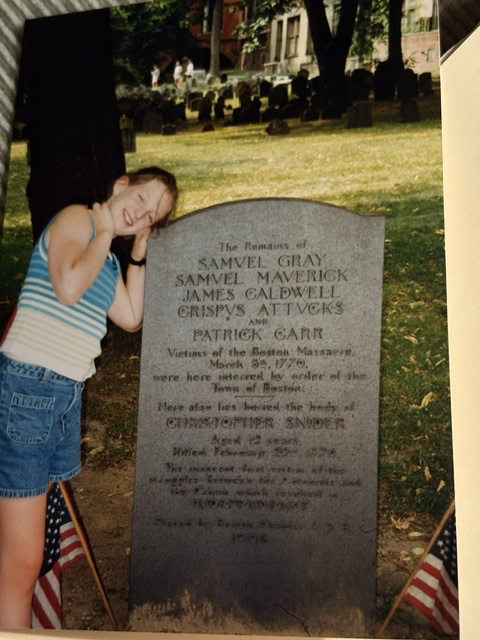
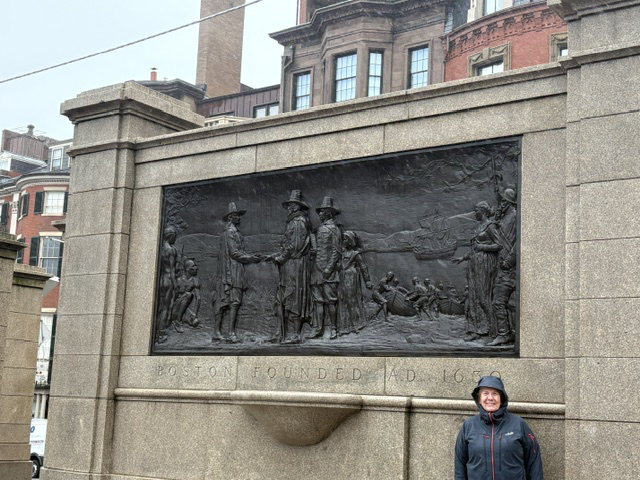
Grave of the Boston Massacre Victims
We were walking Boston’s Freedom Trail after studying this period of American history with our daughters. When we entered the Granary Burying Ground, Erin knew exactly whose grave she was standing beside and why this place mattered. This was one of the great benefits of visiting historic sites as a family: the people and events […]
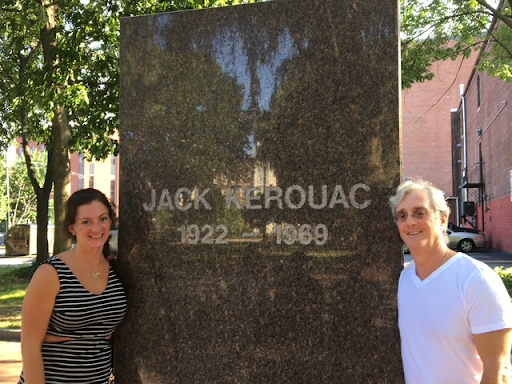
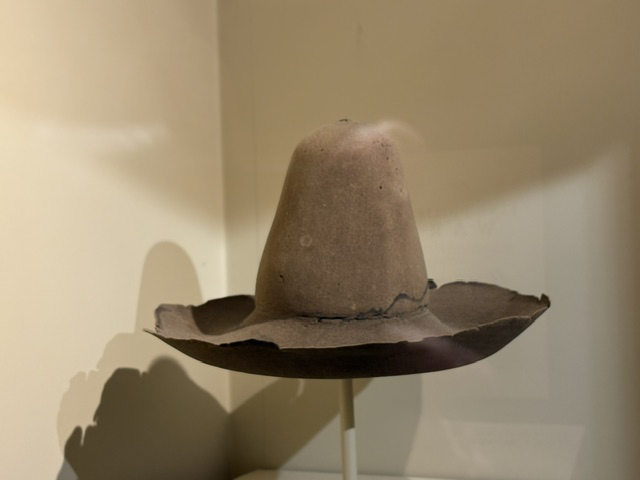
Jack Kerouac Memorial
Born in Lowell in 1922, Jean-Louis Lebris de Kérouac was the son of French-Canadian immigrants and grew up speaking French before learning English. His working-class upbringing and the close-knit ethnic neighborhoods of Lowell would later appear throughout his writings. Although he became famous for his travels across America, he never lost his During a visit to […]
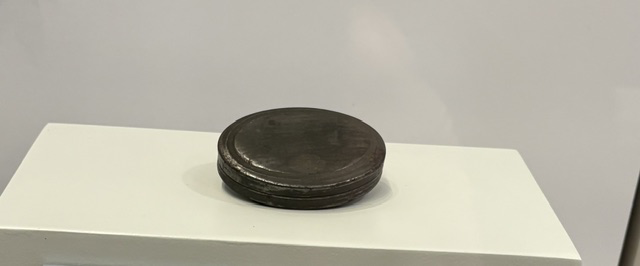
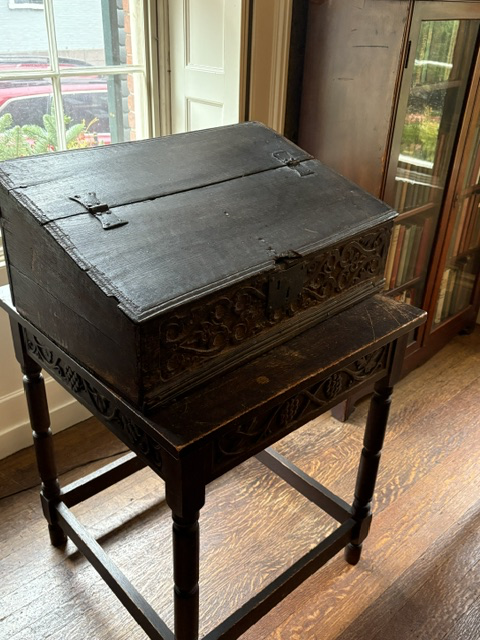
Caleb Harrington’s Tobacco Box
Among the artifacts preserved in Lexington is this small tobacco box, an ordinary object made extraordinary by the events of April 19, 1775. This box belonged to Caleb Harrington, one of the eight militiamen killed by British troops on Lexington Common during the opening moments of the American Revolution. The box was found in his pocket […]

