The Pilgrim Monument
Rising high above Provincetown Harbor, the Pilgrim Monument is the most recognizable landmark on Cape Cod. Standing 252 feet tall atop High Pole Hill, it is the tallest all-granite monument in the United States and can be seen for miles in every direction. Its design was inspired by the Torre del Mangia in Siena, Italy, giving it a distinctive silhouette unlike any other monument in New England. Construction began in 1907, with President Theodore Roosevelt laying the cornerstone, and the completed monument was dedicated by President William Howard Taft in 1910.
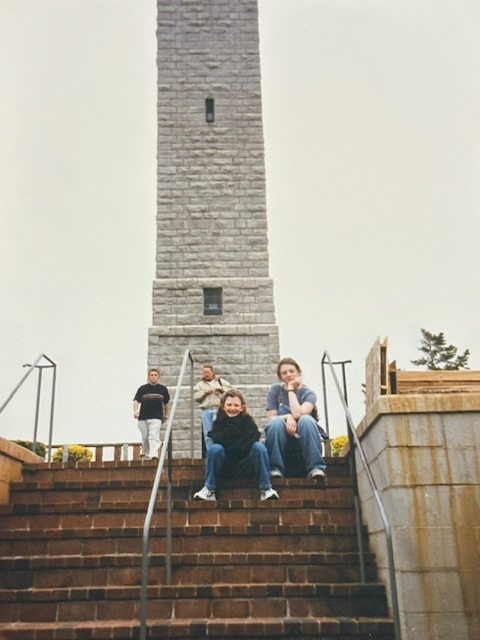
Although many people associate the Pilgrims with Plymouth, their first landfall in New England was actually Provincetown Harbor on November 11, 1620. The Mayflower remained anchored here for more than five weeks while exploring the Cape and searching for a suitable place to establish a permanent settlement. During that time, the passengers signed the Mayflower Compact aboard ship, an agreement that became one of the earliest expressions of self-government in colonial America. The monument was built to commemorate those events before the Pilgrims continued across Cape Cod Bay to Plymouth.
Inside the monument, visitors climb a series of 116 steps and 60 gently sloping ramps that wind upward through the granite tower. The design allows for a gradual ascent rather than a continuous staircase, making the climb surprisingly manageable. From the observation deck at the top, the views extend across Provincetown Harbor, Cape Cod Bay, the Atlantic Ocean, the dunes of the Cape Cod National Seashore, and, on exceptionally clear days, even toward Boston.
Many people travel to Cape Cod for its beautiful beaches, charming villages, thriving arts community, and fresh seafood. Those are certainly part of its appeal, but when our daughters were growing up, I often planned our family trips around history.
This visit was one of those adventures. Rather than spending the day at the beach, we climbed High Pole Hill to explore the Pilgrim Monument and learn about the place where the Mayflower first anchored in New England. We wanted our girls to understand that before there was Plymouth, there was Provincetown, and that the story of America’s beginnings started here.
Looking at this photograph today, I realize we weren’t simply taking a family outing—we were taking a history field trip. Those experiences became some of our family’s greatest adventures. I hope that by introducing our daughters to places like this, they came to appreciate that history is not confined to the pages of a textbook. It lives in the landscapes we explore, the monuments we climb, and the stories we choose to discover together.
The Pilgrim Monument reminds us of a defining moment in American history. This photograph reminds me of something equally important: some of the best lessons our children learn are found not in a classroom, but by standing together in the places where history happened.
Read More From Nancy
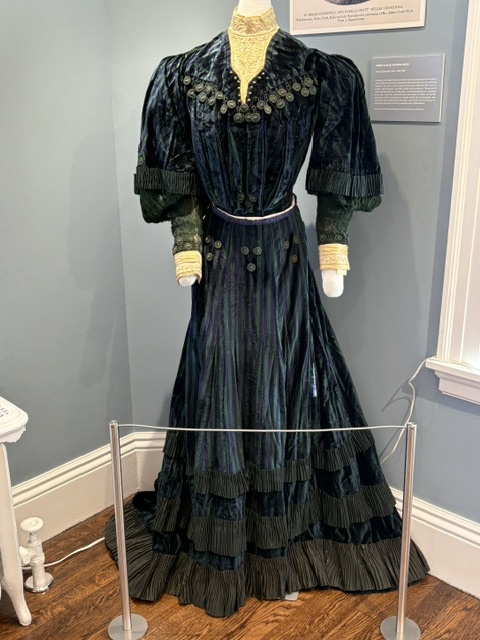
A Dress from Paris
One of the exhibits that caught my attention at the Wellesley Historical Society was this elegant green and blue striped dress, a reminder that fashion can tell us as much about history as letters, photographs, or documents. Created by the House of Doeuillet in Paris between 1905 and 1906, the dress was worn by a […]
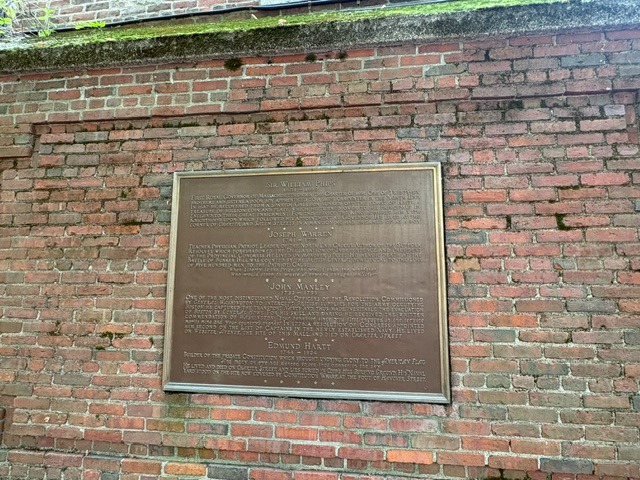
Dr. Joseph Warren
Among the memorial plaques along Paul Revere Mall is one honoring Dr. Joseph Warren, a physician whose work placed him at the center of Boston’s growing resistance to British rule. His name may be less familiar than those of Paul Revere or Samuel Adams, but his leadership helped shape the events that brought Massachusetts into […]
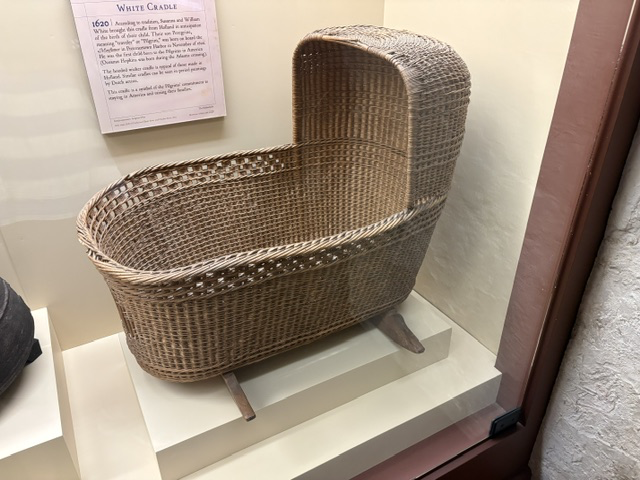
The White Cradle
Among the objects we encountered while exploring Plymouth was this simple wicker cradle. According to tradition, it belonged to Susanna and William White and was brought with them from Holland when they sailed aboard the Mayflower in 1620. Susanna White was pregnant during the Atlantic crossing. The Mayflower left Plymouth, England, in September with more […]

