A Dress from Paris
One of the exhibits that caught my attention at the Wellesley Historical Society was this elegant green and blue striped dress, a reminder that fashion can tell us as much about history as letters, photographs, or documents.
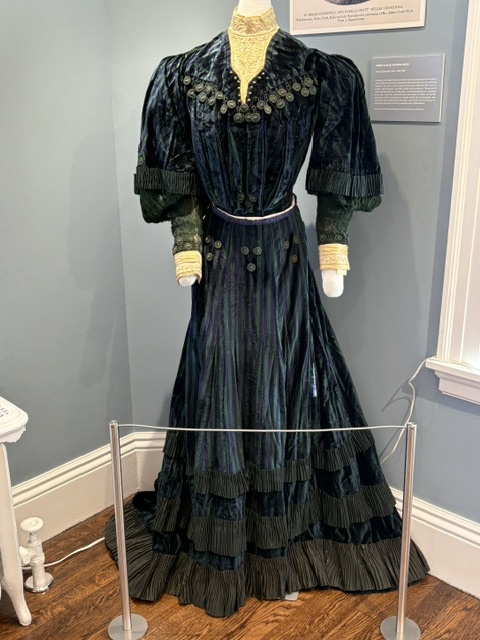
Created by the House of Doeuillet in Paris between 1905 and 1906, the dress was worn by a member of Wellesley’s prominent Hunnewell family. Actually, it appears to be an elaborate gown reserved for special occasions. It was considered a less formal daytime dress, worn for luncheons, informal dinners, and overseeing the daily affairs of a large household.
The amount of luxurious velvet in the dress suggests it was intended for the winter season. According to the museum, Mrs. Hunnewell likely purchased the fabric during a shopping trip to Paris, where she would have selected the material and had the dress custom-made by one of the city’s leading fashion houses. At the beginning of the twentieth century, wealthy American families often traveled to Paris, then recognized as the fashion capital of the world, to purchase the latest styles.
The House of Doeuillet was one of the respected Parisian couture houses of the era, known for elegant designs that reflected the transition from the highly structured fashions of the Victorian period to the lighter, more graceful silhouettes of the Edwardian age. Dresses like this were not simply clothing. They were expressions of craftsmanship, social status, and the international influence of French fashion.



Read More From Nancy
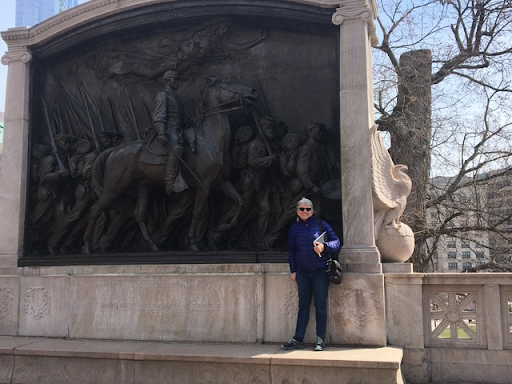
Shaw Memorial
Every time I visit Boston Common, I find myself stopping to admire this remarkable relief by Augustus Saint-Gaudens. Not only is it one of the finest works of public art in America, but it captures its subject with extraordinary power and dignity. Rather than glorifying war, the sculpture honors the courage, sacrifice, and determination of […]

Samuel Adams
Standing beside the grave of Samuel Adams at Boston’s Granary Burying Ground offers an opportunity to remember a man whose influence extended far beyond the familiar name associated with a modern beer company. Samuel Adams was one of the most determined political organizers of the American Revolution and an early advocate for independence from Great […]

The Pilgrim Monument
Rising high above Provincetown Harbor, the Pilgrim Monument is the most recognizable landmark on Cape Cod. Standing 252 feet tall atop High Pole Hill, it is the tallest all-granite monument in the United States and can be seen for miles in every direction. Its design was inspired by the Torre del Mangia in Siena, Italy, […]

